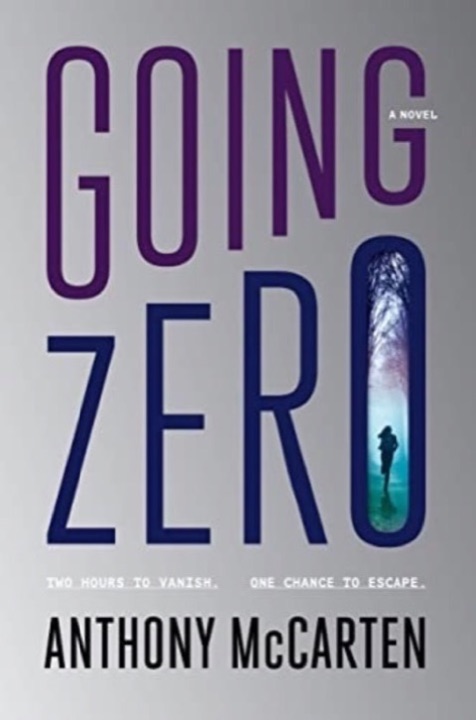
Going Zero
While I don't have specific information about "Going Zero" by Anthony McCarlen, I can offer some general advice on how to apply lessons from a book to your life. Here are some steps you might consider:
-
Identify Key Themes: Reflect on the main themes or messages of the book. Consider how these themes relate to your own experiences and values. For instance, if the book emphasizes resilience or self-discovery, think about how these concepts resonate with your personal journey.
-
Reflect on Personal Growth: Consider how the book's lessons can contribute to your personal growth. You mentioned being in a constant state of beta and aspiring to be a lifelong learner. Use the book's insights to further this mindset and explore new perspectives.
-
Set Goals: Based on the lessons from the book, set specific, actionable goals for yourself. Whether it's improving a particular skill, adopting a new habit, or changing your perspective on a certain issue, having clear goals can help you apply the book's teachings effectively.
-
Incorporate Lessons into Daily Life: Find ways to integrate the book's lessons into your daily routine. This could involve practicing mindfulness, engaging in self-reflection, or making conscious decisions that align with the book's messages.
-
Share and Discuss: Discuss the book and its lessons with friends or family. Sharing your insights can deepen your understanding and provide new perspectives. It can also strengthen your relationships by fostering meaningful conversations.
-
Evaluate and Adjust: Periodically evaluate how well you're applying the book's lessons and make adjustments as needed. Reflect on your progress and consider any challenges you encounter. This ongoing process can help you stay aligned with the book's teachings.
By thoughtfully engaging with the book's lessons and considering how they align with your values and experiences, you can apply its insights to enrich your life and personal growth.
What the book covers
"Going Zero" by Anthony McCarten is a high-octane techno-thriller that explores the terrifying reach of modern surveillance in a world where digital footprints are nearly impossible to erase. The plot centers on a high-stakes beta test where ten ordinary citizens are challenged to disappear for thirty days to win a massive cash prize, all while being hunted by a state-of-the-art tracking system. As the game unfolds, the narrative shifts between the clinical brilliance of the hunters and the desperate ingenuity of the hunted, ultimately questioning the cost of absolute security in the digital age.
Summary:
-
The Beta Test and the Fusion Project: - Cy Baxter, a visionary tech billionaire, partners with the CIA to launch a revolutionary surveillance program called FUSION. To prove the software's efficacy before signing a government contract, Baxter initiates a contest where ten "Zeros" are challenged to vanish for thirty days. - Contestants are given a two-hour head start before every digital tool—from facial recognition to satellite imagery—is deployed to find them. The prize for remaining undetected is three million dollars, but for Cy, the goal is proving that no one can hide from his algorithm.
-
The Diverse Cast of Fugitives: - The ten contestants include survivalists and tech-savvy gamers, each believing they have a strategy to beat the system. However, Baxter’s team, operating from a high-tech "Fusion Center," begins picking them off almost immediately. - Most "Zeros" fall victim to their own digital habits or the ubiquity of modern technology. The hunters utilize predictive analytics and social engineering to turn the fugitives' personal histories and psychological profiles against them, proving how difficult it is to break digital patterns.
-
Kaitlyn Day’s Analog Defiance: - Among the participants is Kaitlyn Day, a quiet librarian who relies on "analog" methods and historical knowledge rather than tech. Her strategy involves avoiding all electronic devices and utilizing physical camouflage, demonstrating that the greatest weakness of AI is unpredictable human behavior. - As she evades capture week after week, she becomes an obsession for Baxter, who cannot understand how a simple librarian is outperforming his sophisticated software. Her ability to remain "dark" exposes the limitations of a system built to track digital signals rather than human grit.
-
The Escalation of the Hunt: - As the pool of contestants shrinks, the pressure on Baxter intensifies, as his CIA deal depends on a 100% success rate. The Fusion Center begins to push legal boundaries, using invasive techniques that bypass traditional warrants and ethical constraints. - Kaitlyn’s journey across the country becomes a tense cat-and-mouse game, highlighting the claustrophobia of a world where every camera is a silent witness. The narrative illustrates the dangerous "mission creep" inherent in mass surveillance programs.
-
Unveiling the Hidden Agenda: - It is eventually revealed that Kaitlyn did not enter the contest for the money, but for a personal reason involving her husband and a past injustice. Her participation is a calculated attempt to expose the dangers of the FUSION program on a national stage. - This subplot shifts the focus from a simple game to a battle for the right to remain private. Kaitlyn’s backstory provides the emotional core of the book, contrasting Baxter’s cold logic with the heat of human grievance.
-
The Moral Cost of Total Transparency: - The book explores the philosophical arguments surrounding the "end of privacy," with Baxter arguing that a world without secrets is safer. He views his technology as a tool for security, while the narrative portrays it as a tool for ultimate control. - The tension between national security and civil liberties is a recurring theme. The story forces readers to confront how much freedom they have already traded for the convenience of a connected world.
-
The Final Confrontation: - The climax occurs in a remote setting where Kaitlyn and Cy finally face off, leading to twists that challenge the characters' assumptions. The resolution of the contest has far-reaching implications for the future of global surveillance. - Ultimately, the story questions whether true disappearance is possible or if we are all destined to be permanent data points. The finale underscores that while technology can track bodies, it cannot map the human heart.
"Going Zero" is a significant work in the contemporary thriller genre because it moves beyond mere entertainment to provide a searing critique of the surveillance-industrial complex. McCarten masterfully weaves technical detail with edge-of-your-seat suspense, making the abstract concept of data privacy feel visceral and urgent. By grounding the high-tech hunt in the relatable struggle of a woman fighting for justice, the novel serves as a powerful reminder that human intuition and moral conviction remain the ultimate counters to an increasingly automated world.