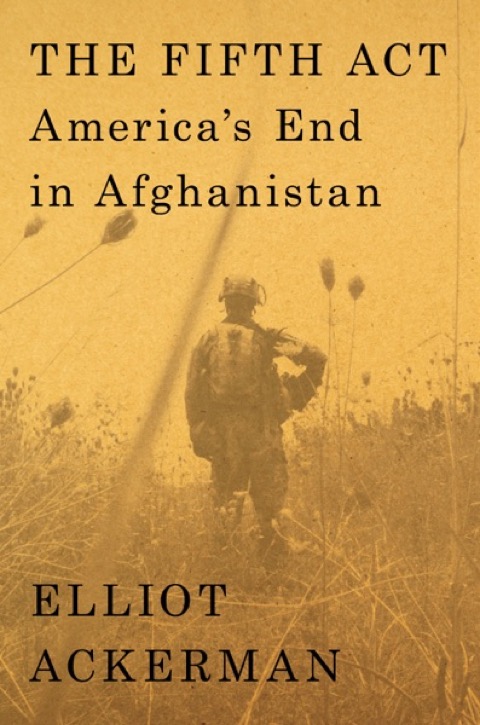
The Fifth Act: America's End in Afghanistan
Applying the lessons from "The Fifth Act: America’s End in Afghanistan" by Elliot Ackerman to your life can be a transformative exercise in understanding the gravity of leadership and the necessity of moral clarity in times of crisis. Here are some ways you might integrate these lessons:
- Lead with Personal Responsibility: - In your roles as a physician or executive, you will face situations where the systems you rely on fail your colleagues or patients. Like the volunteers of the "digital Dunkirk," you must be prepared to step outside of traditional structures to do what is ethically right, recognizing that true leadership often requires taking personal ownership of the lives and well-being of those you serve.
- Avoid the Trap of the Middle Act: - As an entrepreneur or venture capitalist, it is easy to get caught in the momentum of a project without a clear exit strategy or definition of success. You should regularly evaluate whether your current actions align with your ultimate objectives, ensuring that you aren't just managing a process but are working toward a sustainable and honorable conclusion.
- Maintain Decisiveness Amidst Chaos: - The evacuation of Kabul highlights how quickly order can vanish; whether in an emergency room or a cockpit, you must maintain the ability to process overwhelming information and make critical decisions. You should practice a form of "mental triage," focusing on the most vital tasks while acknowledging that you cannot control every variable in a complex, failing system.
- Address and Heal Moral Injury: - Recognize that failure—whether in business, law, or medicine—can leave lasting psychological scars on you and your team. You must create space to process these experiences with humility, understanding that "staying hungry" includes the drive to rebuild trust and purpose after a significant setback or an ethical compromise.
- Prioritize the Human Element Over Bureaucracy: - Technology and administrative systems often obscure the human elements of professional work; Ackerman reminds us that relationships are the true currency of any mission. You should prioritize the people behind the data points, ensuring that your professional legacy is built on the loyalty and support you show to your partners and allies across all your various fields of endeavor.
By integrating these lessons, you can cultivate a leadership style that is both resilient and deeply humane, ensuring that your professional and personal acts are guided by a steadfast commitment to your principles and the people you lead. This approach transforms the tragedy of failure into a foundation for more ethical and effective leadership in the future.
What the book covers
"The Fifth Act: America’s End in Afghanistan" by Elliot Ackerman is a haunting first-hand account of the chaotic U.S. withdrawal from Afghanistan in August 2021. Blending his perspective as a former Marine and CIA officer with his real-time efforts to evacuate allies from afar, Ackerman reflects on the tragic culmination of a twenty-year war. The book serves as both a visceral memoir of the conflict's final days and a philosophical meditation on the nature of American involvement in the region and the structural failures of modern warfare.
Summary:
- The Architecture of Tragedy: - Ackerman frames the Afghan War through the lens of a five-act play, suggesting that the conclusion was the inevitable result of two decades of inconsistent policy and shifting objectives. He reflects on his own multiple deployments to the region, juxtaposing his memories of the war’s early tactical successes with the stark, brutal reality of its collapse.
- The Digital Dunkirk: - A central narrative thread follows Ackerman’s involvement in an ad-hoc, volunteer-led evacuation network during the fall of Kabul. Operating via encrypted messaging apps from a vacation home in Italy, he coordinates the movements of Afghan friends and former colleagues through Taliban checkpoints to the airport gates, highlighting the desperate, decentralized nature of the rescue efforts.
- The Fall of Kabul: - The book captures the terrifying speed with which the Taliban regained control and the subsequent panic at the Hamid Karzai International Airport. Ackerman describes the breakdown of civil order and the moral weight carried by those on the outside trying to navigate a rigid bureaucratic system that seemed designed to fail the very people it was intended to protect.
- The Moral Injury of Withdrawal: - Ackerman delves into the concept of "moral injury" experienced by veterans who watched the country they fought for fall back into the hands of the enemy. He argues that the abandonment of Afghan partners is a profound stain on the American conscience, creating a sense of betrayal that transcends political affiliation or military rank.
- Strategic and Tactical Misalignment: - The narrative critiques the massive disconnect between the high-level policy decisions made in Washington and the ground-level realities faced by soldiers and civilians. Ackerman examines how the absence of clear victory conditions led to a perpetual "middle act" that eventually became politically and socially unsustainable for the United States.
- The Interconnectedness of Memory and History: - Through various vignettes, the author connects the end in Afghanistan to broader themes of American identity and the cyclical nature of history. He reflects on how the war shaped a generation of leaders and how its ending serves as a mirror for the internal divisions currently facing American society.
This memoir is more than a war story; it is a profound meditation on the responsibilities of power and the enduring impact of conflict on the human soul. Ackerman’s prose is both spare and evocative, offering a definitive account of a historical turning point that will resonate for decades to come as a lesson in both heroism and hubris.