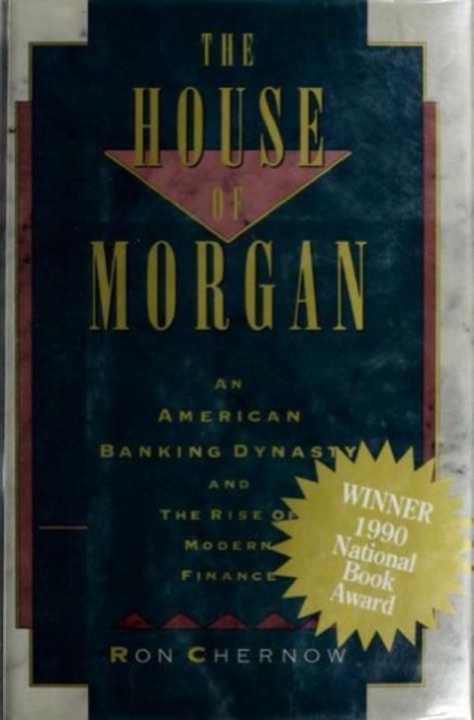
The House of Morgan: An American Banking Dynasty and the Rise of Modern Finance
Applying the lessons from "The House of Morgan" to your life can be insightful, especially considering your diverse experiences and values. Here are some ways you might integrate these lessons:
-
Adaptability and Innovation: Just as the Morgans adapted to changing financial landscapes, you can continue to embrace change and innovation in your personal and professional life. Whether it's exploring new hobbies like skydiving or leveraging technology for social good, staying open to new experiences and ideas can help you grow and achieve your aspirations.
-
Influence of Leadership: Reflect on the leadership styles of figures like J.P. Morgan and how they navigated crises. In your role as a physician and in your advocacy work, you can apply strong, decisive leadership to inspire and guide others, especially in challenging situations.
-
Ethics and Responsibility: The Morgans faced ethical dilemmas, much like the ones you encounter in your medical practice and advocacy work. Continue to prioritize kindness and empathy, balancing your professional responsibilities with your ethical beliefs to make a positive impact on those around you.
-
Impact of Regulation: Understanding how regulatory changes affected the Morgans can inform your approach to navigating societal and professional challenges. Stay informed about changes in your field and advocate for policies that align with your values, such as equality and social justice.
-
Globalization of Finance: The interconnectedness of global economies highlighted in the book can parallel your interest in leveraging technology for the betterment of mankind. Consider how you can contribute to global issues, perhaps through your advocacy work or by supporting initiatives that promote equality and technological advancement.
By integrating these lessons into your life, you can continue to evolve and make meaningful contributions to your community and beyond, while staying true to your core values of kindness and empathy.
What the book covers
"The House of Morgan: An American Banking Dynasty and the Rise of Modern Finance" by Ron Chernow is a comprehensive historical account of the influential Morgan banking empire, tracing its evolution from the 19th century through the late 20th century. The book is divided into three parts, each focusing on a different era of the Morgan legacy: the Baronial Age, the Diplomatic Age, and the Casino Age.
Summary:
Part One: The Baronial Age
This section covers the early years of the Morgan banking dynasty, beginning with the founding of J.S. Morgan & Co. in London by Junius Spencer Morgan. It highlights the rise of his son, John Pierpont Morgan (J.P. Morgan), who played a pivotal role in shaping the American financial landscape. J.P. Morgan's influence extended beyond banking; he was instrumental in the creation of General Electric and U.S. Steel, and he helped stabilize the American economy during the Panic of 1907. This era is characterized by the consolidation of industries and the establishment of the Morgans as financial titans.
Part Two: The Diplomatic Age
The second part of the book explores the period following J.P. Morgan's death in 1913, when the firm transitioned into a more diplomatic role in international finance. Under the leadership of J.P. Morgan Jr., the bank played a crucial role in financing the Allies during World War I and was involved in post-war reparations and reconstruction efforts. This era saw the Morgans navigating complex geopolitical landscapes and maintaining their influence through strategic partnerships and negotiations.
Part Three: The Casino Age
The final section examines the transformation of the Morgan empire in the latter half of the 20th century, as the firm adapted to the rapidly changing financial environment. This period is marked by deregulation, the rise of investment banking, and increased competition. The book details the challenges faced by the Morgans, including the Glass-Steagall Act, which separated commercial and investment banking, and the eventual merger of Morgan Stanley with Dean Witter in 1997. This era reflects the shift from traditional banking to a more speculative, risk-oriented approach.
Key Takeaways and Lessons:
-
Adaptability and Innovation: The Morgans' ability to adapt to changing economic and political landscapes was crucial to their longevity and success. Their willingness to innovate and embrace new financial instruments and strategies allowed them to maintain their influence over a century.
-
Influence of Leadership: The leadership styles of key figures like J.P. Morgan and his successors had a profound impact on the firm's direction and legacy. Strong, decisive leadership was essential in navigating crises and seizing opportunities.
-
Ethics and Responsibility: The book highlights the ethical dilemmas faced by the Morgans, particularly in balancing profit motives with broader social responsibilities. The Panic of 1907 and the firm's role in stabilizing the economy underscore the importance of ethical leadership in finance.
-
Impact of Regulation: Regulatory changes, such as the Glass-Steagall Act, significantly affected the structure and operations of financial institutions. The Morgans' experience illustrates the ongoing tension between regulation and innovation in the financial sector.
-
Globalization of Finance: The Morgans' involvement in international finance, particularly during the Diplomatic Age, underscores the interconnectedness of global economies and the role of financial institutions in shaping international relations.
Overall, "The House of Morgan" provides a detailed exploration of the evolution of modern finance through the lens of one of its most influential dynasties, offering valuable insights into the complexities and challenges of the banking industry.