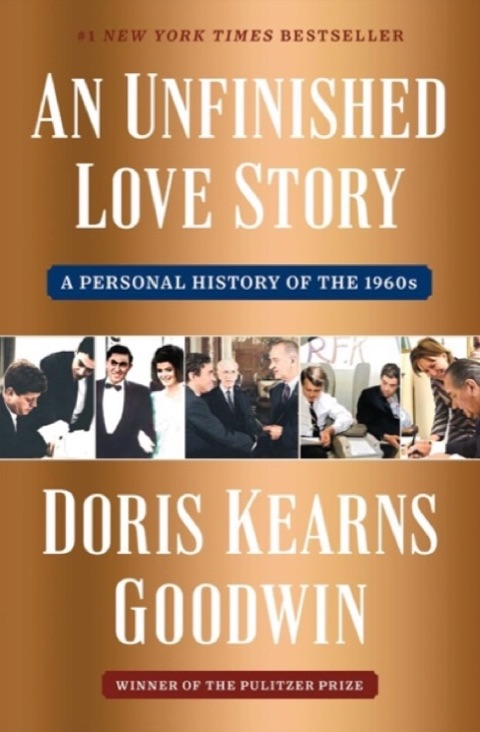
An Unfinished Love Story: A Personal History of the 1960s
Applying the lessons from "An Unfinished Love Story: A Personal History of the 1960s" by Doris Kearns Goodwin to your life can be a transformative exercise in understanding how personal purpose aligns with historical shifts. Here are some ways you might integrate these lessons:
-
Master the Art of the Narrative: - As a leader in medicine and business, you must recognize that facts alone rarely move people; it is the story you tell that creates impact. Dick Goodwin’s ability to frame "The Great Society" illustrates how a powerful vision, articulated with precision, can align thousands toward a common goal. Invest in your ability to communicate the "why" behind your ventures to inspire teams and patients.
-
Maintain an Archival Mindset: - Throughout your career in law, aviation, and healthcare, you have generated a wealth of institutional knowledge. You should proactively document your processes and triumphs, much like the Goodwins did with their records. This practice provides a vital data set for reflection, allowing you to analyze your decision-making patterns and refine your leadership style over decades of service.
-
Navigate the Friction of Dissent: - The fracture over Vietnam shows that true leadership requires the courage to break with institutions when they veer off course. In your roles as a physician and CEO, you will face moments where loyalty conflicts with your ethical compass. You must develop the fortitude to voice dissent and the wisdom to know when a pivot is necessary for organizational integrity.
-
Cultivate Collaborative Synergy: - The partnership between Doris and Dick highlights how a strong collaborator can amplify your intellectual reach. You should seek out partners who challenge your assumptions and fill your blind spots, fostering an environment where ideas are improved through rigorous debate. Recognizing that your greatest successes are collaborative is essential to staying humble and effective in your ventures.
-
Stay Hungry for Historical Context: - Goodwin proves that the past is a resource for solving modern problems. By studying historical shifts, you can better anticipate the cyclical nature of market trends and societal needs. Apply this "long-view" perspective to Xcellerant Ventures, looking for innovations that don't just solve a temporary problem but address enduring human requirements throughout the history of healthcare.
-
Embrace the Unfinished Work: - Your mantra "Stay Hungry, Stay Humble" aligns with the book’s theme that the work of improvement is never finished. You must approach your career as an evolving manuscript, where each chapter builds on the last but remains open to revision. Embracing this sense of perpetual growth ensures that you remain an active participant in your own story.
By integrating these lessons, you can bridge the gap between your professional achievements and your long-term legacy, ensuring that your various roles—from the ER to the cockpit—are part of a cohesive and meaningful narrative. Just as the Goodwins found clarity by revisiting their history, you can find greater purpose by intentionally connecting your past experiences to your future goals.
What the book covers
"An Unfinished Love Story: A Personal History of the 1960s" by Doris Kearns Goodwin is a poignant blend of memoir and history that chronicles the author's final years with her husband, Richard (Dick) Goodwin. The narrative follows the couple as they delve into more than 300 boxes of letters, diaries, and memos from Dick’s time as a speechwriter and advisor to John F. Kennedy and Lyndon B. Johnson. It serves as both a tribute to a monumental marriage and an insider’s look at the transformative decade of the 1960s. By weaving personal reminiscence with historical documentation, Goodwin provides a unique perspective on the power of idealism and the weight of political legacy.
Summary:
-
Unlocking the Archival Legacy: - The narrative begins with Doris and Dick Goodwin tackling a mountain of more than 300 boxes that had remained sealed for over fifty years, containing the raw material of history. These containers held personal letters, draft speeches, and internal memos that documented Dick's meteoric rise as a key advisor to two presidents, providing a primary-source roadmap of the decade. - As they sorted through these artifacts, the process transformed from a mere historical exercise into a deep, emotional excavation of their shared past and the public service that defined their youth. This "unfinished" story represents their joint effort to make sense of the turbulent events that shaped both their marriage and the American consciousness.
-
The New Frontier and JFK: - Goodwin explores the idealistic fervency of the early 1960s, a period when Dick served as a brilliant young speechwriter for John F. Kennedy, helping to craft the intellectual electricity of the "Best and the Brightest." The book highlights Dick's contributions to the "City on a Hill" rhetoric and his work on Latin American policy through the Alliance for Progress. - Through the lens of the archived documents, readers witness the inner workings of the White House during the Cuban Missile Crisis and the profound national shock following the assassination in Dallas. This era established the couple's foundational belief in government as a potent force for moral and social progress.
-
Architecting the Great Society: - Following JFK's death, Dick became a central figure in Lyndon B. Johnson’s administration, famously coining the phrase "The Great Society" and helping to draft the landmark 1965 Howard University speech. The book details the frenetic energy of the LBJ years, where Dick and the President worked in a complex, often volatile partnership to pass historic civil rights legislation. - Goodwin provides an intimate look at the drafting of the Voting Rights Act, illustrating how political willpower and rhetorical precision can be used to dismantle systemic injustice. This section reveals LBJ’s domestic genius while foreshadowing the complications that would eventually sever his bond with Dick as the war in Vietnam intensified.
-
The Shadow of Vietnam: - As the 1960s progressed, the escalating conflict in Vietnam began to overshadow domestic triumphs and strain the relationship between the Goodwins and the Johnson administration. The boxes reveal Dick’s growing internal conflict as he witnessed the war’s toll on the nation’s resources and the President’s increasingly defensive psyche. - Eventually, this dissent led to Dick's departure from the White House, marking a painful transition from insider influence to outside opposition. This period serves as a critical case study in the tension between personal loyalty to a powerful leader and one's moral responsibility to the country’s future.
-
1968 and the Loss of Hope: - The narrative covers the chaotic and tragic events of 1968, from Eugene McCarthy’s anti-war challenge to the campaign and subsequent assassination of Robert F. Kennedy. Dick was deeply involved in both campaigns, and Goodwin describes the visceral sense of possibility followed by the crushing weight of loss that permeated the political landscape. - The couple’s shared memories of these events highlight the fragility of political movements and the enduring impact of "what might have been" for the American trajectory. This section underscores the resilience required to maintain historical hope in the face of national trauma and personal grief.
-
A Collaborative End: - The book’s emotional core lies in the final years of Dick’s life as he and Doris collaborated on this retrospective, using the boxes to reconcile different memories and find peace. It was a race against time as Dick’s health declined, making the completion of the project a testament to their enduring love and mutual respect for the craft of history. - This collaboration allowed them to transform a collection of dusty papers into a living legacy of their commitment to one another and the American experiment. The process of looking back enabled them to see the 1960s not just as a time of tragedy, but as a period of profound growth and necessary awakening.
By documenting the process of revisiting a life’s work, Goodwin creates a masterpiece that is simultaneously a political history and a love letter. The book stands as a powerful reminder that while individuals pass away and eras end, the records we leave behind and the stories we tell ensure that the quest for a more perfect union remains a continuous, albeit unfinished, journey.