Biplane
Applying the lessons from "Biplane" by Richard Bach to your life can be a powerful way to realign your professional drive with your personal sense of purpose and wonder. Here are some ways you might integrate these lessons:
- Prioritize Authenticity Over Comfort: In your journey as an entrepreneur or physician, it is easy to become shielded by layers of technology and administrative systems. You should occasionally strip away these comforts to engage directly with the core of your work, ensuring you never lose the "feel" for what you do. - By seeking out raw, unmediated experiences, you maintain a level of mastery and passion that those who rely solely on modern conveniences can never achieve.
- Develop Technical Intimacy: Whether you are analyzing a venture capital deal or performing a complex medical procedure, strive to understand the "mechanics" of your field as intimately as Bach understood his engine. This depth of knowledge allows you to anticipate issues and move with a confidence born of expertise. - You should view your professional tools and systems not just as means to an end, but as extensions of your own skill that require constant attention and refinement.
- Navigate by Core Values: When faced with the fog of market uncertainty or legal complexity, rely on your internal landmarks rather than just external data. Just as Bach used the land to find his way, you must use your fundamental principles to guide your decision-making when the path ahead is unclear. - This practice builds resilience and ensures that even when you are forced off-course, you have the tools to find your way back to your primary goals.
- Embrace the Growth Found in Risk: Recognize that significant breakthroughs in medicine, law, or business require stepping into the open cockpit of vulnerability. You must accept the risks inherent in innovation, knowing that the reward is a more vibrant and impactful professional life. - Learning to manage fear and maintain composure under pressure is a skill that translates from the cockpit to the boardroom, providing a competitive edge in any high-stakes environment.
- Seek Deliberate Solitude: Carve out time for reflection away from the noise of a high-octane career. Use this altitude to assess your progress and reconnect with the reasons you started your journey, ensuring that your hunger for success is balanced by a humble appreciation for the process. - This mental space is where true creativity and strategic thinking flourish, allowing you to return to your work with renewed clarity and vigor.
- Respect the Elements: Always maintain a healthy respect for the external forces—whether they be market cycles, physiological limits, or legal precedents—that are beyond your control. Approaching these challenges with humility allows you to adapt quickly and survive where others might falter through hubris.
By integrating these lessons, you move beyond the pursuit of mere efficiency and toward a life of profound craftsmanship and meaning. Bach’s experience teaches you that true success is found in the quality of the journey and the depth of your engagement with the world around you.
What the book covers
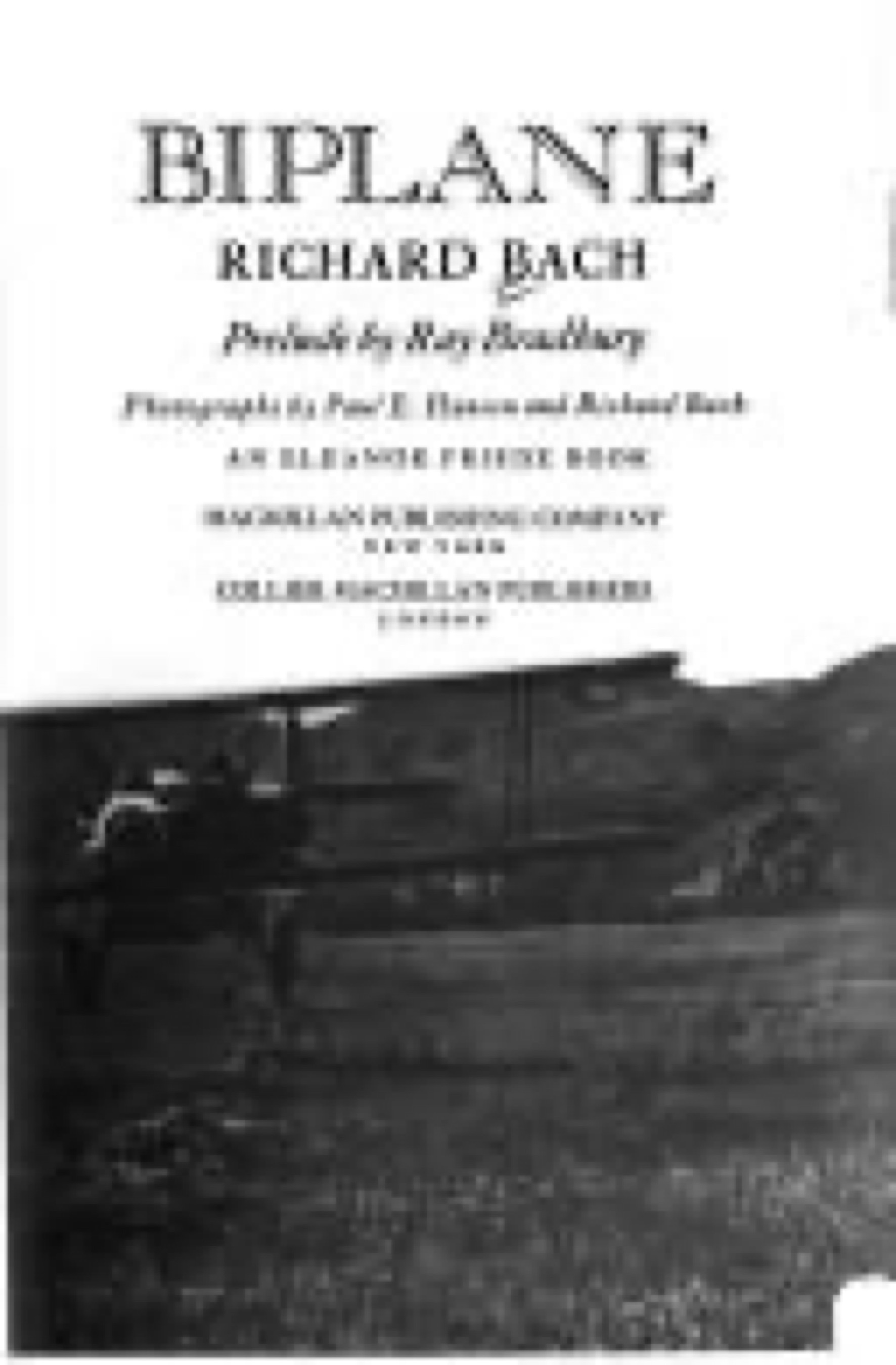
"Biplane" by Richard Bach is an evocative and philosophical memoir that chronicles the author's 1966 journey across the American landscape in a vintage 1929 Detroit-Parks P-2A Speedster. In this narrative, Bach recounts his decision to trade the reliability of a modern aircraft for the raw, sensory-rich experience of an open-cockpit antique, seeking to rediscover the soul of aviation. Through his descriptive prose, he explores the profound connection between a pilot and their machine, presenting flight not just as a mode of transport but as a transcendental way of being. The book serves as both a technical tribute to the golden age of flight and a meditative reflection on the search for authenticity in a technological world.
Summary:
- The Call of the Antique: The narrative begins with Bach’s dissatisfaction with his modern Fairchild 24, which he finds too comfortable and disconnected from the sky. He describes the impulsive but deeply felt decision to swap it for a 1929 biplane, a move that represents a conscious return to a more demanding and honest form of flying. - This transition highlights the central conflict of the book: the trade-off between modern safety and the vivid, unmediated experiences of the past. Bach argues that by insulating ourselves from the elements, we lose the very essence of the activities we claim to love.
- The Wright Whirlwind Spirit: Much of the book is dedicated to the relationship Bach develops with the Speedster’s engine and airframe. He treats the aircraft not as a tool, but as a living entity with a distinct personality, quirks, and a history that must be respected. - He provides detailed accounts of the mechanical maintenance and the physical sensations of flight, from the smell of castor oil to the vibrations of the wooden propeller, illustrating how deep technical knowledge is a prerequisite for spiritual connection.
- Navigation and Vulnerability: Without radio or modern navigation aids, Bach is forced to navigate the United States using only maps and his eyes. This return to "barnstorming" methods makes him acutely aware of the geography and weather, turning every flight leg into a high-stakes puzzle. - He discusses the intense focus required to track landmarks like water towers and railroad tracks, suggesting that this level of vulnerability heightens one's perception and makes the pilot more present in the moment.
- Encounters on the Ground: Throughout his journey from North Carolina to Los Angeles, Bach lands in cow pastures and small-town airfields, drawing crowds of curious onlookers. These interactions serve as a bridge between the aviator and the common man, reflecting a shared nostalgia for the romantic era of flight. - These moments underscore the communal aspect of aviation and how a piece of history can act as a catalyst for conversation and human connection across different walks of life.
- The Philosophy of Risk: Bach does not shy away from the dangers of flying an old plane through unpredictable weather and mechanical failures. He frames these risks as necessary components of a life well-lived, arguing that avoiding all danger leads to a sterile and unrewarding existence. - He describes specific instances of near-disaster with a calm, analytical tone, emphasizing that composure and skill are the only things standing between the pilot and catastrophe, which mirrors the challenges faced in any high-stakes profession.
- The Solitude of the Open Cockpit: The environment of the biplane provides a unique form of isolation that Bach uses for deep introspection. Away from the distractions of the modern world, he contemplates the nature of freedom and the importance of following one's own internal compass. - This solitude allows him to reach a state of flow where the boundary between self and aircraft blurs, leading to insights about the importance of passion and the pursuit of excellence for its own sake.
"Biplane" remains a seminal piece of aviation literature because it captures the intangible magic of flight that technical manuals cannot. It stands as a powerful reminder that the most meaningful journeys are often those that take us back to the basics, challenging us to engage fully with the world and our own capabilities.