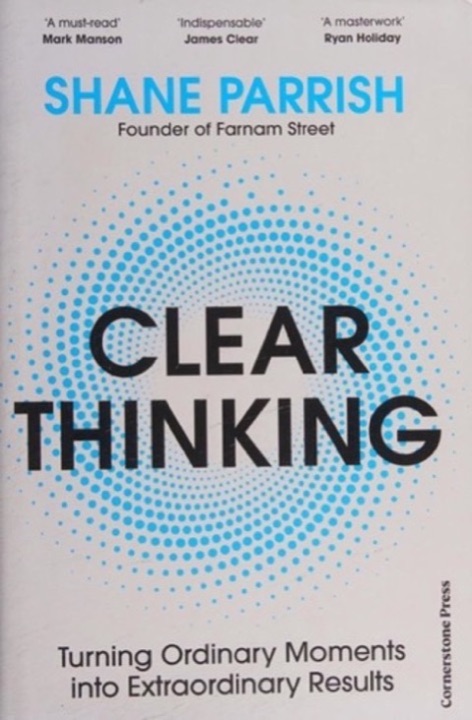
Clear Thinking: Turning Ordinary Moments into Extraordinary Results
Based on the themes and principles likely covered in Shane Parrish's "Clear Thinking: Turning Ordinary Moments into Extraordinary Results," here are some ways you might apply the lessons from the book to your life:
-
Leverage Mental Models: Given your diverse experiences and interests, you can enhance your decision-making by consciously applying mental models. For instance, when facing complex situations, draw from your knowledge of different fields, such as medicine, aviation, and philosophy, to gain a well-rounded perspective.
-
Improve Decision-Making: You already have a strong foundation in quick decision-making, especially in high-pressure situations. To further refine this skill, consider actively identifying and mitigating cognitive biases. This could involve seeking diverse opinions or using decision-making frameworks to evaluate options more thoroughly.
-
Embrace Continuous Learning: Your commitment to lifelong learning aligns well with Parrish's emphasis on intellectual curiosity. Continue to explore new areas of interest, such as skydiving, and engage with challenging material to broaden your understanding and keep your mind agile.
-
Reflect and Seek Feedback: Regularly reflect on your experiences, both successes and failures, to extract valuable lessons. Given your openness to feedback, continue to seek input from others to refine your thinking and actions.
-
Think Independently: Your ability to think for yourself and question conventional wisdom is a strength. Encourage this by exploring diverse perspectives and challenging your assumptions, especially in areas where you feel strongly, such as social issues and politics.
-
Focus on Process Over Outcome: While you have a results-oriented mindset, consider placing more emphasis on refining your decision-making processes. This approach can lead to better long-term outcomes and help you navigate complex situations with greater confidence.
-
Live in the Moment: Since living in the moment is an aspiration for you, practice mindfulness techniques to enhance your presence and awareness in everyday situations. This can help you appreciate ordinary moments and transform them into extraordinary experiences.
-
Apply Kindness and Empathy: Your core values of kindness and empathy are central to your interactions. Use these values to guide your decision-making and problem-solving, ensuring that your actions positively impact those around you.
-
Balance Humor and Seriousness: Your humor is a key part of your personality, but you also recognize the importance of balance. Apply critical thinking to assess when humor is appropriate and when a more serious approach is needed, especially in professional or sensitive situations.
-
Adapt and Evolve: Embrace the idea of being in a constant state of beta, as you already do. This mindset will help you adapt to new challenges and opportunities, ensuring that you continue to grow and evolve throughout your life.
By integrating these principles into your daily life, you can enhance your ability to turn ordinary moments into extraordinary results, aligning with your personal philosophy and aspirations.
What the book covers
"Clear Thinking: Turning Ordinary Moments into Extraordinary Results" by Shane Parrish is a book that delves into the art and science of decision-making and critical thinking. While I don't have access to the full text of the book, I can provide a general overview based on Shane Parrish's known themes and principles, as well as the typical content of his work.
Overview
Shane Parrish, known for his Farnam Street blog, focuses on mental models, decision-making, and improving cognitive processes. In "Clear Thinking," Parrish likely explores how individuals can harness the power of clear and structured thinking to transform everyday situations into opportunities for success and growth.
Key Themes
-
Mental Models: Parrish emphasizes the importance of mental models—frameworks that help us understand and interpret the world. By using a diverse set of models, individuals can approach problems from multiple angles and make more informed decisions.
-
Decision-Making: The book likely covers strategies for improving decision-making skills, such as recognizing cognitive biases, weighing probabilities, and considering second-order consequences.
-
Critical Thinking: Parrish probably discusses the importance of questioning assumptions, seeking out diverse perspectives, and thinking independently to arrive at better conclusions.
-
Continuous Learning: A recurring theme in Parrish's work is the value of lifelong learning and intellectual curiosity. He likely advocates for reading widely, engaging with challenging material, and learning from a variety of disciplines.
-
Reflection and Feedback: The book may highlight the role of reflection and feedback in personal and professional growth. By regularly evaluating past decisions and outcomes, individuals can refine their thinking processes.
Key Takeaways and Lessons
-
Cultivate a Toolbox of Mental Models: Develop a broad set of mental models to approach problems from different perspectives and avoid narrow thinking.
-
Recognize and Mitigate Biases: Be aware of cognitive biases that can cloud judgment and strive to mitigate their impact on decision-making.
-
Embrace Complexity: Accept that the world is complex and resist the urge to oversimplify. Consider the interconnectedness of factors and the potential ripple effects of decisions.
-
Prioritize Learning: Commit to continuous learning and intellectual growth. Read widely and seek knowledge from diverse fields to enhance your understanding.
-
Reflect and Adapt: Regularly reflect on your decisions and seek feedback to improve your thinking processes. Be willing to adapt and change your mind when presented with new evidence.
-
Think Independently: Cultivate the ability to think for yourself, question conventional wisdom, and develop your own informed opinions.
-
Focus on Process Over Outcome: Concentrate on refining your decision-making process rather than fixating solely on outcomes, as good processes can lead to better results over time.
By integrating these principles into daily life, readers can transform ordinary moments into opportunities for extraordinary results, enhancing both personal and professional success.