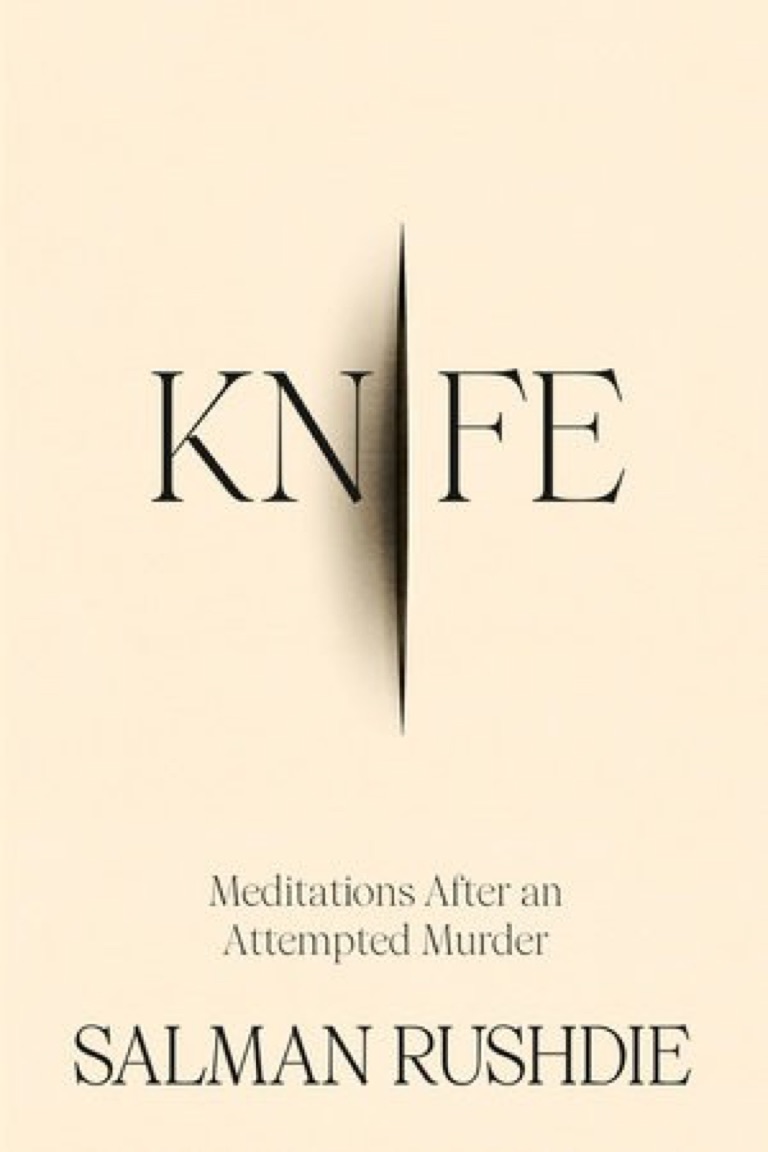
Knife: Meditations After an Attempted Murder
Applying the lessons from "Knife: Meditations After an Attempted Murder" by Salman Rushdie to your life can be a transformative exercise in resilience, reminding you that your response to catastrophe defines your future more than the catastrophe itself. Here are some ways you might integrate these lessons:
-
Mastery Through Narrative: - As an entrepreneur or leader, you will face "attacks"—market crashes, lawsuits, or personal setbacks. By documenting and articulating these challenges, you regain agency; you transition from being a victim of circumstance to being the author of your own recovery.
-
The Precision of Crisis Management: - In medicine and aviation, the initial response determines the outcome. Acknowledge that while you cannot control the onset of a crisis, your preparation and the quality of the experts you surround yourself with—your "trauma team"—are what make survival possible.
-
Resilience in Adaptation: - Loss, whether it is physical health or a business venture, requires a total recalibration of how you view the world. You must learn to "see" with what remains, using your remaining strengths to compensate for what was lost, much like Rushdie learned to navigate the world with one eye.
-
The Value of Intangible Support: - Never underestimate the role of your inner circle. In high-stakes fields like law and venture capital, it is easy to focus on metrics, but your ultimate endurance depends on the strength of your personal relationships and the people who will stand by you when you are at your most vulnerable.
-
Intellectual Courage and Integrity: - Stay hungry for the truth and stay humble in the face of your own mortality. Rushdie’s refusal to stop writing or speaking out, even after the attack, serves as a powerful reminder to lead with conviction and never let fear dictate your professional or personal trajectory.
-
Reclaiming Time: - Every day post-crisis is a "bonus" period. Use this perspective to cut through the noise of daily stressors and focus on high-impact work and meaningful experiences, ensuring that your energy is spent on things that contribute to your legacy.
By integrating these lessons, you develop a robust framework for handling adversity that emphasizes proactive recovery over passive suffering. Embracing the vulnerability of the human condition while maintaining a fierce commitment to your life's work allows you to turn even the most devastating events into a source of wisdom and renewed purpose.
What the book covers
"Knife: Meditations After an Attempted Murder" by Salman Rushdie is a harrowing and deeply personal account of the 2022 assassination attempt that left the author blind in one eye and permanently scarred. Far more than a mere retelling of a crime, the book explores the arduous journey of physical and psychological recovery through the lens of a master storyteller. It serves as a philosophical defense of free speech and a testament to the resilience of the human spirit when confronted by senseless violence.
Summary:
-
The Day of the Attack: - Rushdie recounts the terrifying moments on August 12, 2022, at the Chautauqua Institution, where a young man lunged at him with a knife just as he was about to speak. He describes the initial shock, the physical sensation of the stabs, and the immediate, courageous intervention of the audience and event organizers who saved his life.
-
The Medical Battle for Survival: - The narrative delves into the grueling weeks spent in the hospital, detailing the complex surgeries required to address fifteen wounds across his neck, chest, and eye. Rushdie provides a clinical yet poetic look at the fragility of the body, the expertise of his medical team, and the visceral reality of losing his sight in one eye and the use of his left hand.
-
The Role of Love and Partnership: - A central pillar of the book is Rushdie’s relationship with his wife, Rachel Eliza Griffiths, whose strength and devotion became the foundation of his recovery. He reflects on how their love transformed from a private joy into a public shield, illustrating the vital importance of a support system during the darkest periods of one's life.
-
Imaginary Conversations with 'The A.': - Rather than focusing on the actual trial, Rushdie engages in a series of imagined dialogues with his attacker, whom he refers to simply as "the A." This creative exercise allows him to confront the vacuum of thought and the radicalization that drove a man who had barely read any of his work to attempt murder.
-
The Long Shadow of the Fatwa: - Rushdie reflects on the thirty-three years spent under the shadow of the Iranian fatwa, noting the irony that the attack occurred long after he had begun to live a relatively normal, open life. He explores the psychological weight of being a symbol of free speech while simultaneously being a target for those who wish to silence it.
-
The Power of Language Over Violence: - The memoir concludes with the realization that the only way to defeat the knife is through the pen. By writing this book, Rushdie reclaims the narrative of his own life, proving that art and memory are more durable than the physical wounds inflicted by hatred.
This memoir is a profound meditation on the value of life and the necessity of standing by one's principles regardless of the cost. It stands as a landmark work in the literature of resilience, offering a unique perspective on how a person can rebuild their identity after it has been violently shattered.