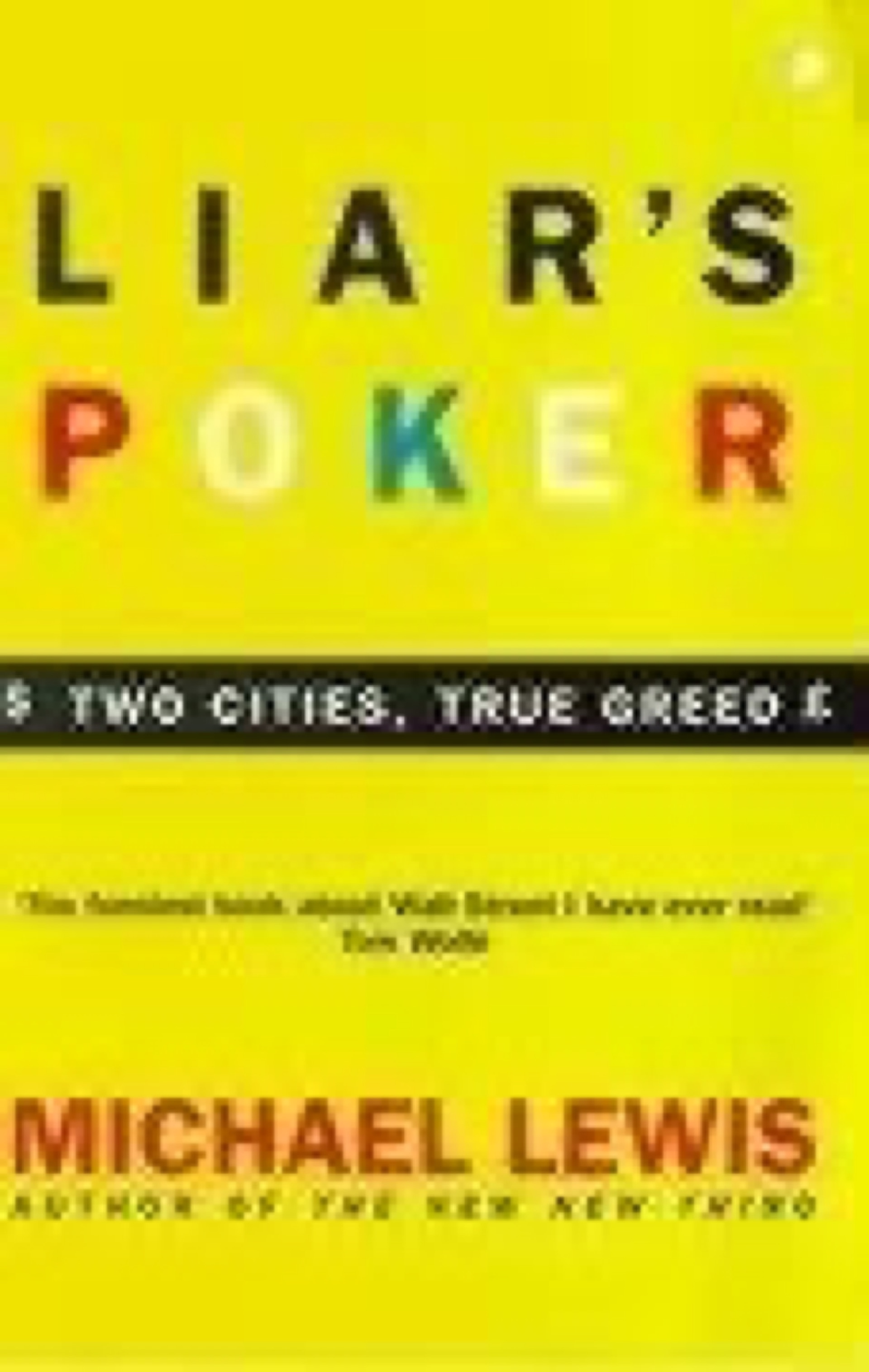
Liar's Poker: Rising Through the Wreckage on Wall Street
Applying the lessons from "Liar's Poker: Rising Through the Wreckage on Wall Street" by Michael Lewis to your life can be a powerful way to navigate the complexities of high-stakes industries like medicine, law, and venture capital. Here are some ways you might integrate these lessons:
-
Decipher the Incentive Landscape: - You must recognize that every professional environment has a hidden "game" governed by specific incentives. Whether you are navigating a hospital system or evaluating a startup for Xcellerant Ventures, understanding what truly drives rewards—be it volume, innovation, or risk-mitigation—allows you to navigate the system without losing your ethical compass.
-
Cultivate Skepticism of Complexity: - In your roles as a physician and attorney, you frequently encounter highly complex systems and products. Lewis demonstrates that complexity is often used as a shield for poor value; you should always strive to peel back the layers of any deal or technology to ensure the core value proposition is sound and not merely a sophisticated bluff.
-
Identify the "Liar’s Poker" in Decision Making: - In both aviation and law, the stakes of being wrong are exceptionally high. You can apply the book's central metaphor to identify when counterparts are over-leveraging their position or acting on bravado rather than data, helping you to read the "tells" of the market and avoid unnecessary risks.
-
Champion Integrity-Based Leadership: - The toxic culture Lewis describes eventually led to the erosion of a once-great firm. By contrast, you can apply your mantra of staying humble to build organizational cultures that prioritize long-term sustainability and transparency over the short-term, ego-driven gains that define the "Big Swinging Dick" mentality.
-
Capitalize on Structural Inefficiencies: - Just as the mortgage department saw untapped potential in home loans, you can find success by looking at the overlooked sectors of healthcare. Use your multidisciplinary background to spot opportunities where others see only bureaucratic hurdles, and innovate in areas where the current market is stagnant or inefficient.
-
Master the Power of Narrative: - Lewis succeeded as a salesman because he could tell a story that made mundane bonds appear vital. As a serial entrepreneur and author, you should continue to use compelling storytelling to bridge the gap between complex medical or legal concepts and your audience, ensuring your vision resonates and drives meaningful action.
By integrating these lessons, you can sharpen your ability to spot systemic risks and opportunities while reinforcing the humility and integrity necessary for long-term leadership. Recognizing the pitfalls of an unchecked Wall Street mindset allows you to build ventures that are not only profitable but also fundamentally sound and aligned with your personal values.
What the book covers
"Liar's Poker: Rising Through the Wreckage on Wall Street" by Michael Lewis is a seminal work of financial journalism that chronicles the author’s tenure as a bond salesman at Salomon Brothers in the late 1980s. It serves as both a semi-autobiographical account of Lewis's rapid ascent and a scathing critique of the greed and toxicity that defined Wall Street's "Big Bond Daddy" era. The book provides a front-row seat to the birth of mortgage-backed securities and the aggressive corporate culture that eventually reshaped the global economy.
Summary:
-
The Culture of Salomon Brothers: - The narrative introduces a visceral corporate environment dominated by the "Big Swinging Dick" ethos, where aggression and risk-taking were the primary measures of professional worth. The firm's CEO, John Gutfreund, epitomized this culture, famously challenging his top trader to a million-dollar game of Liar's Poker, a bluffing game that serves as the central metaphor for the firm’s competitive and often reckless spirit.
-
The Innovation of Mortgage-Backed Securities: - Lewis Ranieri, the boisterous leader of the mortgage department, is credited with revolutionizing finance by bundling home loans into tradeable bonds. This innovation turned a sleepy, ignored corner of the financial market into a massive profit engine, fundamentally changing how capital moved through the American housing market and establishing the precursors for modern securitization.
-
The Indoctrination of Trainees: - Lewis recounts his time in the Salomon training program, where young MBAs were subjected to psychological pressure and "hazing" by senior partners. He illustrates a rigid internal hierarchy where "front-row" trainees vied for the most lucrative desks, revealing how the firm conditioned its employees to prioritize personal profit and firm loyalty over ethical considerations or client welfare.
-
The Art of the Bond Salesman: - Once on the trading floor, Lewis learned to exploit the information asymmetry between the bank and its clients to move product. He details the specific tactics used to offload underperforming assets—often referred to as "blowing up" a client—and the relentless pressure from management to generate commissions regardless of the long-term impact on the investor.
-
Internal Strife and the Decline of Dominance: - The book explores the friction between different departments, particularly the rivalry between the old-school bond traders and the new mortgage innovators. As greed and internal politics began to fracture the leadership, the firm saw a significant talent drain and a loss of the cultural cohesion that had previously made Salomon Brothers the most feared entity on Wall Street.
-
The 1987 Market Crash: - Lewis provides a firsthand account of the chaos surrounding the October 1987 stock market crash and the subsequent reaction within the bond market. He highlights the detachment of the traders from the broader economic reality, as they viewed the global financial panic primarily as an opportunity to exploit price discrepancies and maximize their own gains.
"Liar's Poker" remains a foundational text in business literature because it was one of the first to pull back the curtain on the modern financial machine. It humanizes the figures who built the complex financial instruments that still govern global markets today while serving as a timeless warning about the dangers of unchecked corporate ego.