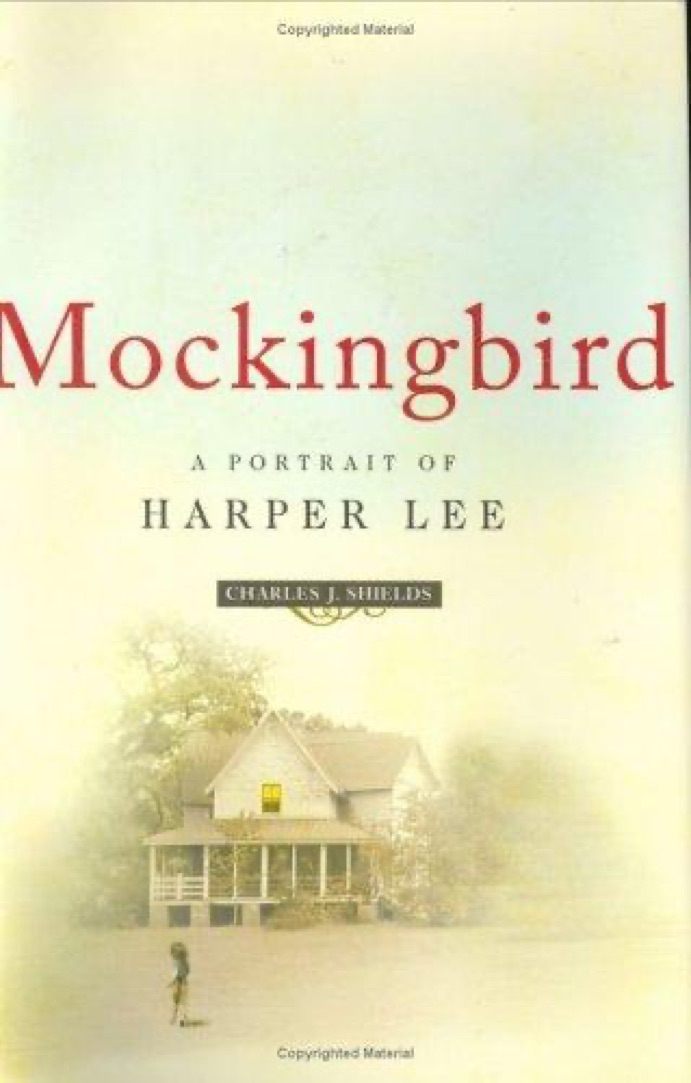
Mockingbird: A Portrait of Harper Lee
Applying the lessons from "Mockingbird: A Portrait of Harper Lee" by Charles J. Shields to your life can be a transformative exercise in balancing public achievement with private integrity. Here are some ways you might integrate these lessons:
-
Mastering the Art of Deep Observation: - Just as Lee used her childhood experiences to construct a vivid world, you must develop a keen eye for underlying structures. In medicine, this means noticing subtle patient cues; in law, it means understanding courtroom dynamics; and in leadership, it involves anticipating challenges before they arise. - By cultivating a diagnostic mindset, you can identify patterns that others miss, allowing you to act with greater precision and foresight in complex environments.
-
Leveraging Strategic Partnerships: - The relationship between Lee and Capote underscores the value of complementary skill sets. You should seek out partners who possess the traits you lack, whether that is the flamboyant vision to dream big or the grounded discipline to execute the details. - Recognizing that you needn't be the sole architect of every success allows for more robust collaborations. True leadership involves knowing when to take the lead and when to act as the essential support system for another’s vision.
-
The Discipline of Iteration: - Lee’s years of revising her manuscript remind you that first drafts are rarely ready for the market. Whether you are launching a healthcare startup or drafting a legal brief, the magic is in the editing and the willingness to pivot based on expert feedback. - You must embrace the grind of refinement, understanding that excellence is a marathon of small, incremental improvements rather than a single sprint of genius.
-
Protecting Your Personal Integrity: - Lee’s retreat from fame is a powerful lesson in staying humble. In a world demanding constant self-promotion, there is immense power in knowing when to step back and let your work speak for itself. - You should define success by your own internal metrics rather than the shifting winds of public opinion, ensuring your career remains aligned with your core values.
-
Empathetic Information Gathering: - Lee’s success in Kansas was rooted in her ability to listen and connect with people who were suspicious of outsiders. In entrepreneurship and medicine, the ability to build trust and gather ground-level intelligence is often the difference between success and failure. - Practicing active empathy allows you to gain insights no data set can provide, giving you a competitive edge in understanding the human element of any venture.
By integrating these lessons of observation, partnership, and humble discipline, you can navigate your professional journey with the same focus Lee applied to her craft. Whether you are in the cockpit, the courtroom, or the boardroom, the ability to stay grounded while pursuing excellence will ensure that your impact is as enduring and profound as the stories that shaped a generation.
What the book covers
"Mockingbird: A Portrait of Harper Lee" by Charles J. Shields is a meticulously researched biography that explores the life of the enigmatic author of one of America’s most beloved novels. Shields delves into the childhood of Nelle Harper Lee, her formative years in Alabama, and her subsequent move to New York City to pursue a literary career. The book examines her complex relationships, her role in the creation of Truman Capote’s "In Cold Blood," and the immense pressure that followed the global success of "To Kill a Mockingbird." It serves as a study of a writer who sought truth in fiction while retreating from the public eye that her work created.
Summary:
-
Monroeville and the Foundation of Maycomb: - Shields provides a detailed look at Lee’s childhood in Alabama, particularly her relationship with her father, Amasa Coleman Lee, a lawyer who served as the blueprint for Atticus Finch. The narrative illustrates how the social hierarchies of the 1930s South were not just background elements for her fiction but lived experiences that shaped her moral compass. - This section highlights Lee’s early development as an observer of human nature. Her rebellious nature and refusal to conform to the expectations of a "Southern lady" established the independent streak that would define both her personal life and her literary voice.
-
The Truman Capote Symbiosis: - One of the most compelling aspects of the book is the deep, lifelong connection between Lee and Truman Capote. Shields explores how these two childhood outcasts supported and challenged each other, from their early days in Monroeville to their eventual professional collaboration. - Their friendship was a mix of mutual dependence and rivalry. Shields documents how Lee’s grounded sensibility provided a necessary anchor for Capote during the most critical and volatile periods of his creative output.
-
The Struggle for Literary Recognition: - The biography follows Lee to New York City, where she worked as an airline reservation clerk while writing in her spare time. Shields captures the grit required to maintain a creative vision in the face of financial instability and repeated rejections from publishers. - This period illustrates how talent often requires a catalyst of external belief and resources to flourish. The narrative focuses on the Joy and Michael Brown family, whose financial gift allowed Lee to quit her job and write full-time for a year.
-
The Crafting of a Masterpiece: - Shields details the rigorous editorial process behind "To Kill a Mockingbird," particularly her work with editor Tay Hohoff. The book underwent significant transformations, evolving from a series of short stories into the powerful narrative that won the Pulitzer Prize. - This evolution shows that great work is rarely the result of a single burst of inspiration. Lee’s dedication to perfecting her prose reveals the high level of discipline and revision required to produce enduring art.
-
The Research of "In Cold Blood": - A significant portion of the book focuses on Lee’s role in researching Capote’s "In Cold Blood" in Kansas. Shields argues that without Lee’s ability to gain the trust of the local townspeople, Capote would have never been able to gather the intimate details necessary for the book. - This highlights Lee’s prowess as an interviewer and a "soft" intelligence gatherer. Her ability to navigate diverse social environments and her empathetic approach were crucial to the book's success, even if she remained in the shadows.
-
The Weight of Fame and the Choice of Silence: - After the success of her novel, Lee famously never published another book for decades. Shields examines the psychological toll of global celebrity and Lee’s conscious decision to withdraw from the spotlight to maintain her privacy. - This section explores the concept of staying humble in the face of acclaim. Lee’s retreat was a deliberate choice to prioritize her peace and integrity over the demands of the literary marketplace and the expectations of the public.
Ultimately, "Mockingbird: A Portrait of Harper Lee" provides a rare and intimate glimpse into the life of an author who preferred to remain a mystery. Shields succeeds in humanizing a literary icon, showing that her greatest contribution was not just a single book, but a life lived with a fierce commitment to truth and an unwavering sense of self. The biography remains an essential text for anyone seeking to understand the intersection of Southern history, American literature, and the burden of creative genius.