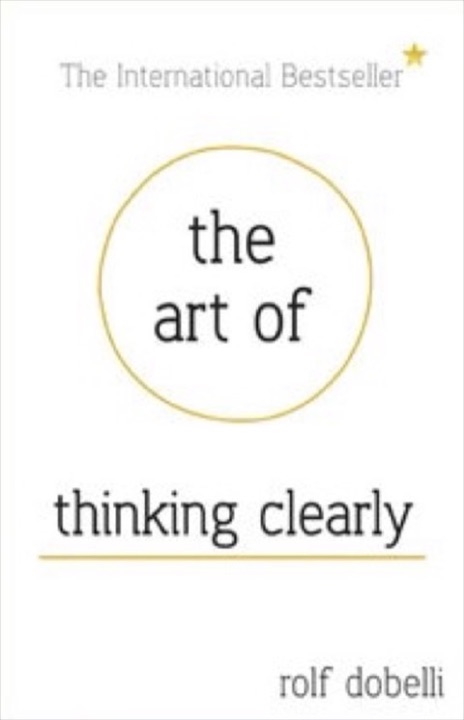
The Art of Thinking Clearly
Applying the lessons from "The Art of Thinking Clearly" by Rolf Dobelli to your life can enhance your decision-making and help you navigate complex situations with greater clarity. Here are some ways you might integrate these insights into your personal and professional life:
-
Awareness of Biases: Given your experiences and beliefs, being aware of cognitive biases can help you make more objective decisions. For instance, recognizing confirmation bias can encourage you to seek out diverse perspectives, especially in your advocacy work and when dealing with controversial issues.
-
Question Assumptions: Your independent political stance and openness to different viewpoints align well with questioning assumptions. Continuously challenging your beliefs can lead to more balanced and informed decisions, whether in your personal life or when engaging in social activism.
-
Embrace Uncertainty: Your experiences with near-death situations and your belief in living life fully resonate with embracing uncertainty. Accepting that not everything can be controlled can help you remain calm and composed, especially in high-pressure situations like those in the emergency department.
-
Avoid Emotional Decisions: Your emphasis on kindness and empathy suggests a strong emotional intelligence. Applying logical reasoning alongside your emotional insights can lead to more balanced decisions, particularly in your professional role as a physician.
-
Simplify Choices: With your busy lifestyle and varied interests, simplifying choices can prevent decision paralysis. Focus on what truly matters to you, such as family, personal growth, and advocacy, to streamline your decision-making process.
-
Learn from Mistakes: Your reflection on past experiences and the value you place on learning from failures align with this lesson. Continue to evaluate your actions and decisions, using them as opportunities for growth and improvement.
-
Seek Diverse Perspectives: Your appreciation for different viewpoints and your involvement in social issues highlight the importance of seeking diverse perspectives. Engaging with people from various backgrounds can enrich your understanding and help counteract personal biases.
-
Balance Humor and Seriousness: Your humorous communication style can be a strength, but it's important to balance it with seriousness when necessary. Recognize when humor is appropriate and when a more serious approach is required, especially in sensitive situations.
-
Reflect on Core Values: Your core values of kindness and empathy are central to your identity. Regularly reflecting on these values can help you stay grounded and make decisions that align with your beliefs.
-
Practice Mindfulness: Your aspiration to live in the moment can be supported by practicing mindfulness. This can enhance your awareness of biases and improve your ability to make clear, focused decisions.
By integrating these lessons into your life, you can enhance your decision-making skills, deepen your understanding of yourself and others, and continue to lead a fulfilling and purposeful life.
What the book covers
"The Art of Thinking Clearly" by Rolf Dobelli is a compelling exploration of cognitive biases and logical fallacies that cloud our judgment and decision-making processes. The book is structured into 99 short chapters, each dedicated to a specific bias or fallacy, making it accessible and easy to digest.
Summary:
-
Cognitive Biases: Dobelli delves into a wide array of cognitive biases that affect our thinking. These include confirmation bias, where we favor information that confirms our preconceptions, and the availability heuristic, where we overestimate the importance of information readily available to us.
-
Logical Fallacies: The book also covers logical fallacies that lead to poor reasoning. For example, the sunk cost fallacy, where we continue an endeavor due to the time or money already invested, even when it's no longer viable.
-
Decision-Making: Dobelli emphasizes the impact of these biases on decision-making. He illustrates how they can lead to errors in judgment, affecting everything from personal choices to business decisions.
-
Behavioral Economics: The book touches on principles from behavioral economics, explaining how irrational behavior often stems from these biases. Concepts like loss aversion, where losses are felt more intensely than gains, are explored.
-
Practical Examples: Each chapter is filled with practical examples and anecdotes that illustrate the biases in real-world scenarios. This approach helps readers recognize these biases in their own lives.
-
Psychological Insights: Dobelli provides insights into human psychology, explaining why these biases exist and how they have evolved. This understanding helps readers appreciate the complexity of human thought processes.
Key Takeaways and Lessons:
-
Awareness is Key: Recognizing and understanding cognitive biases is the first step toward mitigating their impact. Awareness allows for more rational and objective decision-making.
-
Question Assumptions: Constantly challenge your assumptions and seek out information that contradicts your beliefs to avoid confirmation bias.
-
Embrace Uncertainty: Accept that uncertainty is a part of life and that overconfidence can lead to poor decisions. Being open to new information and perspectives is crucial.
-
Avoid Emotional Decisions: Emotions can cloud judgment. Strive to make decisions based on logic and evidence rather than feelings.
-
Simplify Choices: Too many options can lead to decision paralysis. Simplifying choices can lead to better and more satisfying decisions.
-
Learn from Mistakes: Reflect on past decisions to understand where biases may have influenced outcomes. This reflection can lead to better future decision-making.
-
Seek Diverse Perspectives: Engaging with a variety of viewpoints can help counteract personal biases and lead to more balanced decisions.
Overall, "The Art of Thinking Clearly" serves as a guide to recognizing and overcoming the mental traps that hinder clear thinking. By understanding these biases, readers can improve their decision-making skills and lead more rational, fulfilling lives.