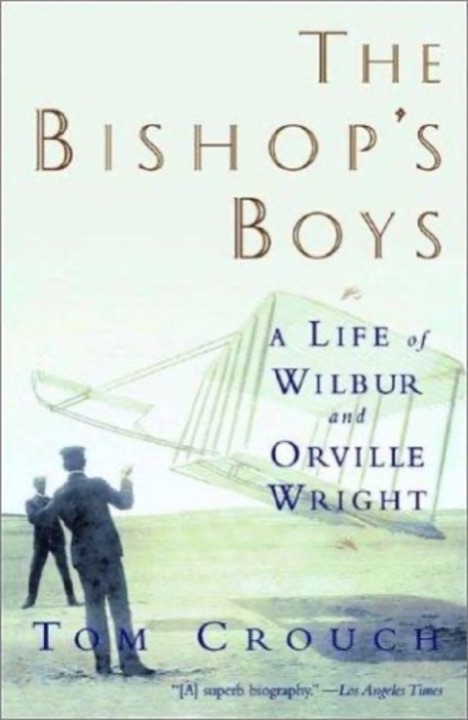
The Bishop's Boys
Applying the lessons from "The Bishop’s Boys" by Tom D. Crouch to your life can be a meaningful exercise, especially considering your rich personal experiences and values. Here are some ways you might integrate these lessons:
-
Persistence and Innovation: - Like the Wright brothers, continue to embrace persistence and innovation in your pursuits. Your resilience and ability to outlast challenges are already strong, but you can further apply this by exploring new hobbies or interests, such as skydiving, which you've always wanted to try.
-
Interdisciplinary Approach: - The Wright brothers' success was partly due to their ability to draw from various fields. You can apply this by leveraging your diverse interests and experiences, such as your medical background, love for flying, and passion for technology, to solve complex problems or embark on new projects.
-
Overcoming Skepticism: - You've faced skepticism and challenges in your life, much like the Wright brothers. Continue to trust in your vision and values, especially when advocating for social issues or standing up for what you believe in, as you did for your friend in the ED.
-
Collaboration and Teamwork: - The partnership between Wilbur and Orville highlights the importance of collaboration. You can apply this by fostering teamwork in your personal and professional life, perhaps by mentoring others or working closely with colleagues to achieve shared goals.
-
Ethical and Social Responsibility: - The book raises questions about the ethical implications of technological advancements. Given your passion for social issues and advocacy work, continue to approach these areas with a sense of responsibility, ensuring that your actions align with your values of kindness and empathy.
-
Living in the Moment: - One of your aspirations is to live in the moment. The Wright brothers' dedication to their work can inspire you to focus on being present and fully engaged in your daily activities, whether it's spending time with family, flying, or enjoying your hobbies.
By integrating these lessons into your life, you can continue to grow and make a positive impact, both personally and in the broader community.
What the book covers
"The Bishop’s Boys: A Life of Wilbur and Orville Wright" by Tom D. Crouch is a comprehensive biography that delves into the lives and achievements of the Wright brothers, who are credited with inventing and building the world's first successful airplane. The book provides an in-depth look at their personal lives, the challenges they faced, and the impact of their groundbreaking work on aviation.
Summary:
-
Early Life and Background: - The Wright brothers were born to Milton Wright, a bishop in the United Brethren Church, and Susan Koerner Wright. Their upbringing in a close-knit, intellectually stimulating environment in Dayton, Ohio, played a crucial role in shaping their inventive spirits. - Both brothers exhibited mechanical aptitude and curiosity from a young age, encouraged by their father’s support and their mother’s mechanical skills.
-
Path to Aviation: - The book details their early ventures, including a printing business and a bicycle shop, which provided them with the financial means and technical skills necessary for their aviation experiments. - Inspired by the work of aviation pioneers like Otto Lilienthal, the Wright brothers began their own experiments with flight in the late 1890s.
-
Development of the Airplane: - Crouch meticulously describes the brothers' methodical approach to solving the problems of flight, including their innovative use of wind tunnels and their development of three-axis control, which made fixed-wing powered flight possible. - Their breakthrough came on December 17, 1903, at Kitty Hawk, North Carolina, where they achieved the first powered, controlled, and sustained flight.
-
Challenges and Triumphs: - The book explores the numerous challenges the Wright brothers faced, including skepticism from the public and scientific community, patent battles, and competition from other inventors. - Despite these obstacles, they successfully demonstrated their aircraft in the United States and Europe, securing contracts and recognition.
-
Legacy and Impact: - Crouch highlights the lasting impact of the Wright brothers on aviation and their role in ushering in the age of flight. - The book also touches on their later years, including Wilbur’s untimely death in 1912 and Orville’s continued involvement in aviation until his death in 1948.
Key Takeaways and Lessons:
-
Persistence and Innovation: The Wright brothers' story is a testament to the power of persistence and innovation. Their success was not the result of a single moment of genius but rather years of dedicated research, experimentation, and refinement.
-
Interdisciplinary Approach: Their ability to draw on knowledge from various fields, including mechanics, physics, and engineering, was crucial to their success. This interdisciplinary approach is a valuable lesson for problem-solving in any field.
-
Overcoming Skepticism: The Wright brothers faced significant skepticism and resistance, yet they remained focused on their goals. Their story underscores the importance of resilience and confidence in one’s vision.
-
Collaboration and Teamwork: The partnership between Wilbur and Orville was central to their achievements. Their complementary skills and close collaboration highlight the importance of teamwork in achieving complex goals.
-
Ethical and Social Responsibility: The book also raises questions about the ethical implications of technological advancements, as the Wright brothers’ invention eventually led to military applications and warfare.
Overall, "The Bishop’s Boys" provides a detailed and engaging account of the Wright brothers' journey, offering insights into their character, their process of innovation, and their enduring legacy in the field of aviation.