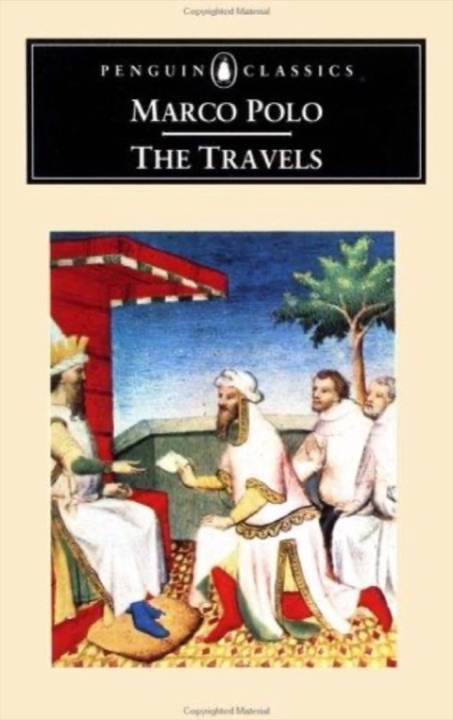
The Travels of Marco Polo
Applying the lessons from "The Travels of Marco Polo" to your life can be a meaningful way to enhance your experiences and perspectives. Here are some ways you might integrate these lessons:
-
Cultural Exchange and Open-Mindedness: - Embrace your love for travel and exploration by seeking out new cultures and experiences. Approach each journey with curiosity and a willingness to learn, much like Marco Polo did. This aligns with your belief in the importance of understanding and acceptance, as you recognize that everyone shares 99.9% of their genes.
-
Adaptability and Resilience: - Your life experiences, including surviving plane crashes, have already demonstrated your resilience. Continue to apply this adaptability in unfamiliar situations, whether in your personal life or professional endeavors. This can help you navigate challenges with the same perseverance that Marco Polo exhibited during his travels.
-
The Power of Storytelling: - Share your own stories and experiences, such as your near-death experiences and personal growth moments, to inspire and educate others. Your humorous and direct communication style can make these stories engaging and impactful, much like Marco Polo's accounts influenced future explorers.
-
Economic and Political Insights: - Use your understanding of historical and current political landscapes to inform your decisions and actions. Your independent political stance and advocacy for social issues can benefit from the insights gained through studying different systems, as Marco Polo did with the Mongol Empire.
-
Exploration and Discovery: - Continue to pursue new experiences and knowledge, whether through travel, learning new skills like skydiving, or engaging in activism. Your aspiration to live in the moment and be a lifelong learner aligns with the spirit of exploration that Marco Polo embodied.
By integrating these lessons into your life, you can further enrich your experiences and continue to grow as an individual who values kindness, empathy, and the pursuit of knowledge.
What the book covers
"The Travels of Marco Polo," also known as "Il Milione," is a 13th-century travelogue chronicling the journey of the Venetian merchant Marco Polo through Asia. The book was co-authored by Rustichello da Pisa, who helped Marco Polo compile his experiences during his travels, which lasted from 1271 to 1295. The narrative provides a detailed account of the geography, culture, and politics of the regions Polo visited, including the Middle East, Central Asia, China, and Southeast Asia.
Summary:
-
Departure and Journey to the East: - Marco Polo begins his journey with his father, Niccolò, and uncle, Maffeo, who were experienced merchants. They set out from Venice and traveled through the Middle East, crossing Armenia, Persia, and Afghanistan, before reaching the court of Kublai Khan in China.
-
Life at the Court of Kublai Khan: - Polo describes the grandeur and sophistication of Kublai Khan's court. He details the administrative efficiency, the use of paper money, and the postal system. Polo becomes a trusted envoy of the Khan, undertaking various missions across the empire.
-
Descriptions of the East: - The book provides vivid descriptions of the cities, cultures, and customs of the regions Polo visited. He writes about the wealth and splendor of cities like Hangzhou and Beijing, the religious practices of Buddhists, Hindus, and Muslims, and the diverse flora and fauna.
-
Return to Venice: - After spending 17 years in the service of Kublai Khan, the Polos decide to return to Venice. They travel by sea, visiting Sumatra, India, and the Arabian Peninsula before reaching home in 1295.
-
Impact and Legacy: - Upon his return, Marco Polo's tales were met with skepticism. However, his accounts provided Europeans with one of the first comprehensive views of the East, influencing future explorers like Christopher Columbus.
Key Takeaways and Lessons:
-
Cultural Exchange: - Polo's travels highlight the importance of cultural exchange and understanding. His observations provide insights into the diverse cultures and practices of the East, emphasizing the value of open-mindedness and curiosity.
-
Adaptability and Resilience: - The journey required significant adaptability and resilience. Polo's ability to navigate different cultures and political landscapes demonstrates the importance of flexibility and perseverance in unfamiliar environments.
-
The Power of Storytelling: - Despite initial skepticism, Polo's accounts eventually became influential. This underscores the power of storytelling in shaping perceptions and expanding knowledge.
-
Economic and Political Insights: - Polo's descriptions of the economic systems, such as the use of paper money, and the political structures of the Mongol Empire provide valuable historical insights into the functioning of one of history's largest empires.
-
Exploration and Discovery: - The book serves as an inspiration for exploration and discovery, encouraging readers to venture beyond their known world and seek new experiences and knowledge.
Overall, "The Travels of Marco Polo" is a seminal work that offers a fascinating glimpse into the medieval world and underscores the enduring human spirit of exploration and curiosity.