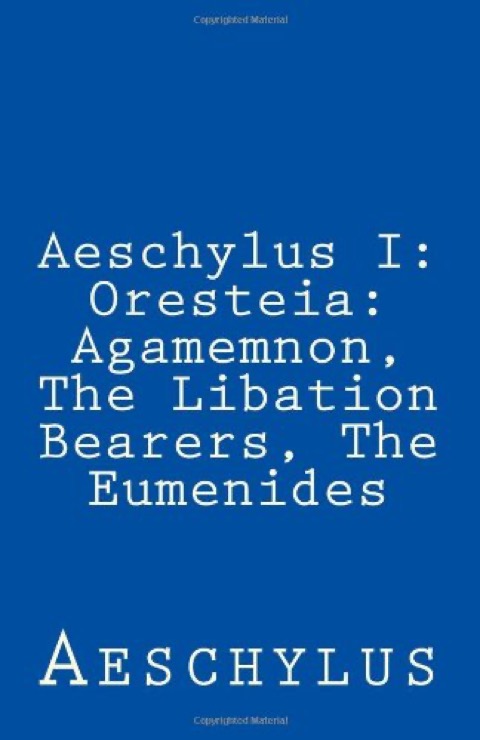
Aeschylus I: Oresteia
Applying the lessons from "Aeschylus I: Oresteia" by Aeschylus to your life can be a transformative exercise in understanding the necessity of institutional evolution and the ethical weight of systemic leadership. Here are some ways you might integrate these lessons:
- Break the Cycle of Retribution: - In leadership and entrepreneurship, you often inherit "blood feuds" or toxic cultures from previous management. You must consciously choose to break these cycles through systemic changes rather than perpetuating personal grievances, ensuring the organization moves toward a future defined by growth rather than past conflicts.
- Trust the Process of Due Process: - As an attorney and a physician, you know that high emotions can cloud judgment during a crisis. Lean on established protocols and collective deliberation—whether it is a medical peer review or a legal framework—to ensure that decisions are based on objective evidence rather than the reactive "furies" of the moment.
- Navigate the "No-Win" Moral Dilemma: - Orestes’ struggle mirrors the agonizing decisions required in emergency medicine or complex litigation where every choice has a cost. You must develop the fortitude to act decisively in ambiguous situations, while simultaneously seeking the structural support of a team or a board to validate and refine those actions.
- Institutionalize Your Competitive Instincts: - Just as Athena transformed the Furies into the Eumenides, you should find ways to harness the aggressive, protective, or competitive instincts of your team members. Instead of letting these forces create internal friction, channel them into structured roles that protect the integrity and competitive edge of your business ventures.
- The Power of the Tie-Breaking Vote: - In your role as a venture capitalist or board member, you will encounter deadlocks where reason is equally split. Athena’s example shows that leadership sometimes requires a final, mercy-based or vision-based intervention to move the system forward when traditional logic has reached an impasse.
- Acknowledge the Weight of Legacy: - Whether in aviation or healthcare, you are operating within systems built on the lessons of the past. Stay mindful of the "ancestral" history of your industry, and work to modernize the "curse" of outdated practices into streamlined, safer, and more equitable systems for the next generation.
By integrating these lessons, you can better navigate the complexities of modern leadership, whether in the emergency room, the courtroom, or the boardroom. Aeschylus reminds us that while conflict and the primal instincts of human nature are inevitable, the creation of robust, fair systems is the only way to ensure long-term progress and collective justice.
What the book covers
"Aeschylus I: Oresteia" by Aeschylus is a foundational collection of Greek drama that presents the only complete trilogy surviving from antiquity. This work explores the bloody culmination of the curse on the House of Atreus, detailing King Agamemnon's return from Troy, his subsequent murder, and the eventual trial of his son, Orestes. By dramatizing the shift from tribal blood-feuds to communal legal systems, Aeschylus provides a profound meditation on justice, governance, and the evolution of human society.
Summary:
- The Murder of Agamemnon: - In the first play, Agamemnon, the Greek king returns to Argos after a decade of war, only to be assassinated by his wife, Clytemnestra, and her lover, Aegisthus. This act is presented as a recursive cycle of violence, fueled by Agamemnon’s previous sacrifice of their daughter, Iphigenia, for military success. - Clytemnestra justifies the regicide as a righteous execution under the old laws of the lex talionis, where blood must be repaid with blood. This play establishes the destructive nature of unchecked personal retribution and the weight of inherited trauma.
- The Curse of the House of Atreus: - The narrative emphasizes that these murders are part of a multi-generational curse triggered by the crimes of Agamemnon’s ancestors. This thematic backdrop illustrates how past failures and ethical lapses can create a momentum of chaos that haunts subsequent leaders. - Aeschylus uses the chorus to reflect on the inevitability of suffering as a prerequisite for wisdom, suggesting that the characters are trapped in a system that requires a structural evolution to resolve.
- Orestes and The Libation Bearers: - In the second play, Agamemnon’s son, Orestes, returns from exile under the command of the god Apollo to avenge his father. Encouraged by his sister Electra, Orestes is forced into the impossible moral position of committing matricide to honor his father’s memory. - This play focuses on the internal and external pressure of duty; Orestes acts not out of personal malice but out of a perceived religious and social obligation, which highlights the agony inherent in choosing between two conflicting moral truths.
- The Pursuit by the Furies: - Immediately following the murder of Clytemnestra, Orestes is hounded by the Furies, ancient chthonic deities who punish those who shed kindred blood. Their relentless pursuit symbolizes the psychological and spiritual toll of operating within a system of vengeance that lacks a formal mechanism for resolution. - The Furies represent the "old ways" of the world—unyielding, primal, and focused solely on the act of the crime rather than the context or the intent behind it.
- The Trial in The Eumenides: - The final play shifts the setting to Athens, where the goddess Athena intervenes to settle the dispute. She establishes the Areopagus, a permanent court of human citizens, to hear the case against Orestes, marking the first literary representation of a jury trial. - During the proceedings, Apollo defends Orestes while the Furies act as prosecutors. This courtroom drama serves as a metaphor for the birth of a civilized legal system that replaces private vendettas with public deliberation.
- The Establishment of Civil Justice: - The jury’s vote results in a tie, which Athena breaks in favor of Orestes. This act signifies that mercy and the stability of the state must sometimes supersede the rigid demands of archaic retribution to allow a society to move forward. - This transition formalizes the idea that justice is a function of the community rather than the individual, providing a framework for social order that can survive the death of any single leader.
- The Transformation of the Furies: - To prevent further discord, Athena persuades the Furies to accept a new role as the "Eumenides" or "Kindly Ones," honored protectors of Athens. This conclusion illustrates the necessity of integrating primal forces into the social fabric rather than simply suppressing them. - By channeling the Furies' power into a constructive role within the state, Aeschylus shows how a mature civilization manages its most difficult and dangerous instincts through institutionalization.
The significance of Aeschylus I lies in its portrayal of the evolution of the human spirit and social structures. By moving the resolution of conflict from the hands of the individual to the judgment of the community, Aeschylus provides a blueprint for the legal and ethical frameworks that underpin Western civilization. It remains an essential study of how societies transform trauma and chaos into a sustainable and just peace.