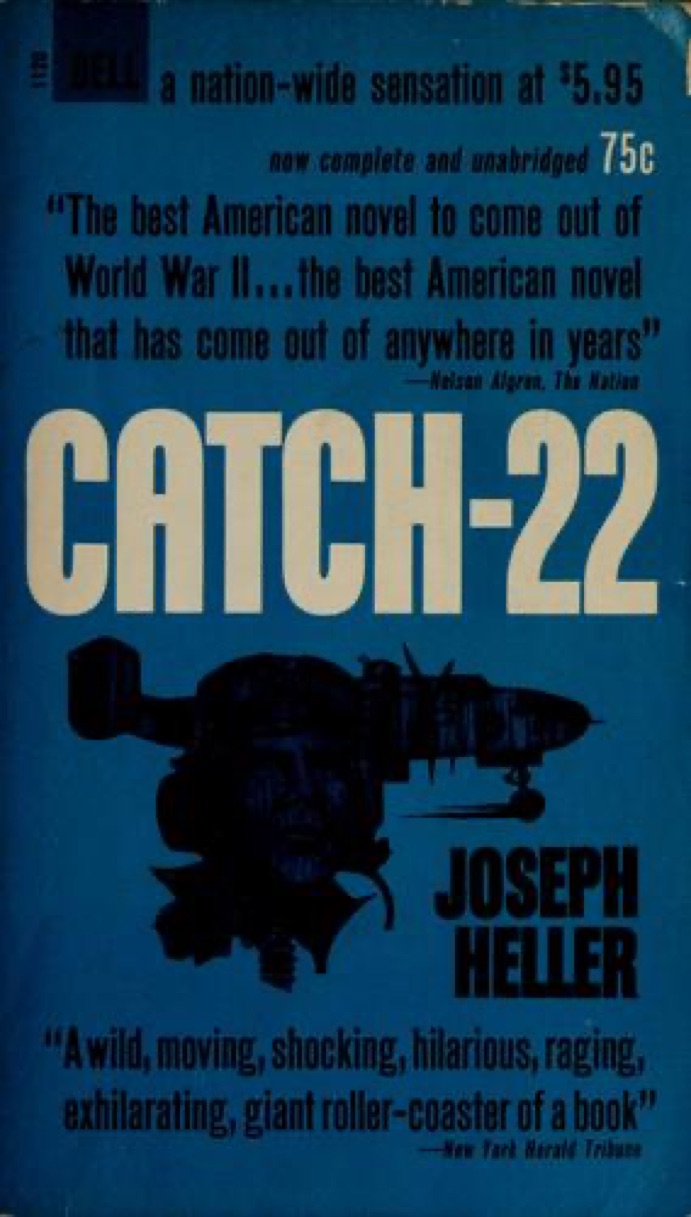
Catch-22
Applying the lessons from "Catch-22" by Joseph Heller to your life can be a transformative exercise in recognizing the structural paradoxes that often exist within large, complex organizations like healthcare systems, legal frameworks, and corporate enterprises. Here are some ways you might integrate these lessons:
-
Recognize and Challenge Systemic Paradoxes: - You must develop the critical thinking skills to identify "Catch-22" scenarios within your own professional life, such as redundant medical protocols that hinder patient care or legal structures that prioritize process over justice. By naming these paradoxes, you gain the clarity needed to advocate for common-sense reforms rather than becoming a passive victim of bureaucratic inertia.
-
Guard Against the Erosion of Purpose by Profit: - In your entrepreneurial ventures, use the character of Milo Minderbinder as a cautionary tale. Ensure that your "syndicate"—whether it is a medical practice or a VC firm—never loses sight of its primary mission in the pursuit of scale. Success should be measured by the value delivered to stakeholders and the integrity of the process, not just the optimization of the supply chain.
-
Prioritize People Over Vanity Metrics: - As a leader, avoid the "Colonel Cathcart" trap of making decisions based on how they will appear to external observers or superiors. Whether in the ER or the boardroom, your primary responsibility is the well-being and development of your team. Increasing the "mission count" for the sake of optics is a failure of leadership that leads to burnout and systemic failure.
-
Maintain Situational Awareness in High-Stakes Environments: - Borrowing from the aviation context of the novel, you must remain acutely aware of the "Snowden moments"—the raw, unvarnished realities of a situation that protocols might mask. In medicine and flight, a narrow focus on the visible problem can cause you to miss the underlying crisis; always look beneath the "flak suit" to understand the true state of the situation.
-
Cultivate Intellectual and Moral Autonomy: - Yossarian’s journey highlights the importance of maintaining your own moral compass when the surrounding environment turns irrational. You should strive to be the "sane person in the asylum," making decisions based on personal ethics and empirical evidence rather than falling prey to the groupthink often found in established institutions.
-
Embrace Human Centricity in Design: - When building healthcare technologies or legal strategies, ensure the systems serve the people, not the other way around. Every policy or piece of software should be interrogated to ensure it doesn't create a new bureaucratic hurdle that dehumanizes the user or the provider.
By integrating these lessons, you can navigate the inevitable absurdities of high-level professional life with a sense of humor and a steadfast commitment to your "Stay Hungry, Stay Humble" mantra, ensuring that you remain a pilot of your own destiny rather than a cog in an indifferent machine.
What the book covers
"Catch-22" by Joseph Heller is a masterpiece of satirical literature that examines the absurdity of war through the lens of a U.S. Army Air Forces bombardier squadron during World War II. Centered on the experiences of Captain John Yossarian, the novel utilizes a non-linear, fragmented narrative to highlight the logical paradoxes and bureaucratic insanity that govern military life. It remains one of the most influential works of the 20th century, introducing the eponymous phrase into the English lexicon to describe a no-win situation. Through dark humor and surrealist elements, Heller exposes the dehumanizing effects of institutional power and the struggle for individual survival in an irrational world.
Summary:
-
The Paradox of Catch-22: - The central theme of the novel is the "Catch-22," a bureaucratic rule that prevents airmen from being grounded for insanity. A pilot is considered insane if he continues to fly dangerous combat missions, but if he makes a formal request to be grounded based on his fear of death, his request is seen as proof of his sanity, and he is forced to continue flying. - This circular logic serves as the ultimate tool of institutional control, ensuring that the individual is always trapped by the system's rules, regardless of their own well-being or the objective reality of the situation.
-
Yossarian’s Quest for Survival: - Captain John Yossarian is a bombardier stationed on the island of Pianosa who becomes increasingly obsessed with the fact that people he has never met are trying to kill him. His rebellion is not born of cowardice but of a rational realization that the war is a senseless enterprise that devalues human life. - Yossarian’s attempts to escape duty—ranging from faking illnesses to moving the bomb line on the mission map—serve as a desperate protest against a system that views soldiers as expendable assets rather than human beings.
-
Milo Minderbinder and War Profiteering: - Milo Minderbinder, the mess officer, builds a global economic empire called M&M Enterprises by trading military supplies for profit. His character represents the intersection of capitalism and war, where ideology is secondary to the bottom line. - Milo’s actions become increasingly absurd, eventually leading him to contract his own squadron to bomb their own base for a profit, illustrating how unregulated corporate interests can subvert national and moral objectives.
-
Bureaucratic Incompetence and Vanity: - The military hierarchy is populated by officers like Colonel Cathcart and General Dreedle, who are more concerned with their own promotions, reputations, and "vanity metrics" than the lives of their men. Cathcart continually raises the number of required missions to impress his superiors, directly causing the deaths of his subordinates. - These characters embody the disconnect between leadership and the front lines, where the administrative desire for prestige overrides the fundamental mission and the ethical obligations of command.
-
The Trauma of the Chaplain and the Loss of Faith: - The squadron’s Chaplain, Anabaptist Tappman, undergoes a crisis of faith as he witnesses the cruelty of his superiors and the senseless deaths of the young airmen. He becomes a victim of the very system he is supposed to spiritually guide, eventually being interrogated for crimes he did not commit. - His journey reflects the moral vacuum of the war, where traditional values and spiritual comforts are rendered useless by the pervasive atmosphere of cynicism and administrative cruelty.
-
The Death of Snowden and the Reality of Mortality: - The death of a young radio-gunner named Snowden is the novel's emotional anchor, recounted in fragments throughout the story. When Yossarian attempts to treat Snowden’s visible wound, he discovers a much more gruesome, fatal injury beneath the soldier’s flak suit. - This moment serves as Yossarian’s epiphany: the realization that man is merely "matter" and that without the protection of a functioning society or moral order, the human body is terrifyingly fragile and easily discarded.
"Catch-22" is significant not only for its revolutionary structure and biting wit but for its profound indictment of the modern institutional state. It serves as a perennial warning against the dangers of blind obedience and the erosion of individual humanity in the face of systemic absurdity.