Utopia
Applying the lessons from Sir Thomas More's "Utopia" to your life involves reflecting on the themes and ideas presented in the book and considering how they align with your personal values and experiences. Here are some ways you might incorporate these lessons:
-
Critique of Contemporary Society: - Reflect on the societal issues you are passionate about, such as equality and civil rights. Use your platform and experiences to advocate for positive change, much like More critiqued his society.
-
The Role of Property: - Consider how communal values can be integrated into your life. This might involve fostering a sense of community and sharing resources with those around you, aligning with your belief in kindness and empathy.
-
Work-Life Balance: - Embrace the Utopian ideal of balancing work with leisure and personal development. Your routine already reflects this balance, but continue to prioritize activities that bring you joy, like flying, reading, and spending time with family.
-
Religious Tolerance: - Your spiritual beliefs already reflect a form of tolerance and openness. Continue to engage with diverse perspectives and encourage others to do the same, promoting understanding and acceptance.
-
Idealism vs. Realism: - While you are an eternal optimist, recognize the importance of balancing idealism with practicality. Use your experiences and insights to navigate the complexities of real-world challenges, striving for realistic improvements.
-
Satire and Irony: - Use humor and irony, as you often do, to engage with and critique societal norms. This can be a powerful tool for highlighting absurdities and encouraging others to think critically.
By integrating these lessons into your life, you can continue to live in alignment with your values and contribute to a more equitable and compassionate society.
What the book covers
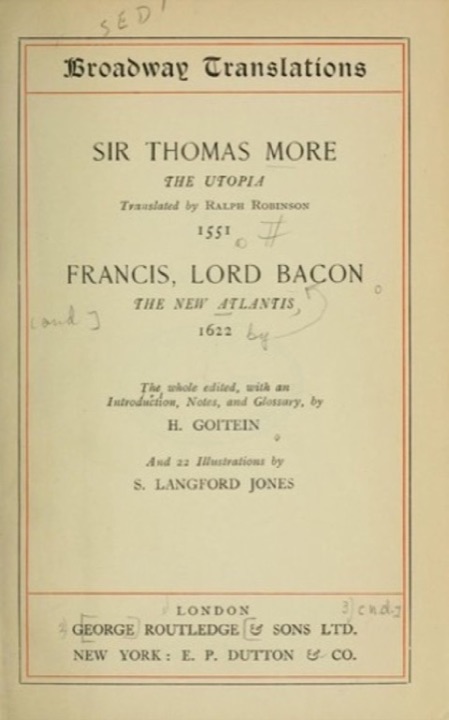
"Utopia," written by Sir Thomas More and published in 1516, is a seminal work of political philosophy and social satire. The book is structured as a frame narrative primarily composed of a dialogue between More himself and a fictional traveler named Raphael Hythloday, who describes the political and social structure of an imaginary island society called Utopia.
Summary
Book I: The Dialogue of Counsel
The first part of "Utopia" sets the stage for the discussion of the ideal society. It begins with a conversation between More, Hythloday, and Peter Giles, a mutual friend. Hythloday criticizes the social, economic, and political injustices of contemporary European societies, particularly focusing on the problems of poverty, crime, and the misuse of power by rulers. He argues that these issues are exacerbated by the enclosure movement, which displaces peasants and leads to theft and poverty. Hythloday suggests that the root of these problems lies in the private ownership of property.
Book II: Discourse on Utopia
In the second part, Hythloday describes the island of Utopia, which he claims to have visited. Utopia is depicted as a society founded on rational principles and communal ownership. Key features of Utopian society include:
-
Communal Property: There is no private property in Utopia. Goods are stored in warehouses, and citizens take what they need. This eliminates poverty and reduces crime.
-
Work and Leisure: All citizens work for six hours a day, which is sufficient to meet the needs of the community. The rest of the time is devoted to leisure, education, and personal development.
-
Education and Religion: Education is highly valued, and religious tolerance is practiced. Utopians believe in a single deity but allow for various religious practices.
-
Government and Law: Utopia is governed by a group of elected officials. Laws are simple and few, designed to be easily understood by all citizens.
-
Social Practices: Utopians practice a form of welfare, ensuring that everyone has access to healthcare and social services. Marriage is encouraged, and divorce is allowed under certain conditions.
Key Takeaways and Lessons
-
Critique of Contemporary Society: More uses Utopia to critique the social, economic, and political issues of 16th-century Europe, highlighting the disparities between the rich and the poor and the inefficiencies of governance.
-
The Role of Property: The book suggests that private property is a root cause of social injustice and that communal ownership could lead to a more equitable society.
-
Work-Life Balance: Utopia emphasizes the importance of balancing work with leisure and education, proposing that a reduced workday can lead to a more fulfilling life.
-
Religious Tolerance: The Utopian practice of religious tolerance reflects More's belief in the importance of allowing diverse beliefs to coexist peacefully.
-
Idealism vs. Realism: While Utopia presents an ideal society, it also raises questions about the feasibility of such a society in the real world. More's work encourages readers to reflect on the gap between idealism and practicality.
-
Satire and Irony: More's use of satire and irony invites readers to question the plausibility of Utopia and to consider the complexities of human nature and societal organization.
Overall, "Utopia" serves as both a critique of More's contemporary society and a platform for exploring ideas about justice, governance, and human fulfillment. It challenges readers to think critically about the structures of their own societies and the possibilities for reform.