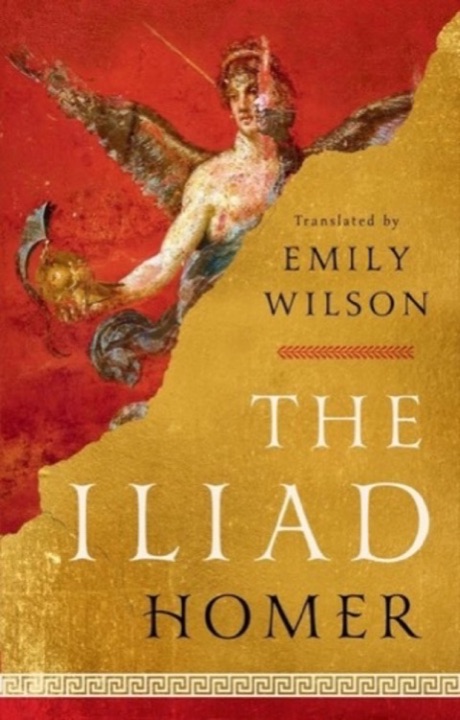
The Iliad and The Odyssey
Applying the lessons from "The Iliad and The Odyssey" by Homer to your life can be an essential study in the psychology of leadership and the necessity of persistence in the face of overwhelming odds. Here are some ways you might integrate these lessons:
- Mastering the Volatility of Ego: - You must recognize that, like Achilles, your personal pride can become your greatest liability if it blinds you to the needs of your organization or team. In high-stakes environments such as medicine or venture capital, allowing an "ego injury" to dictate your withdrawal from a project can lead to systemic failure; true leadership requires putting the mission's success above personal validation.
- Leveraging Strategic Cunning Over Force: - In your legal or entrepreneurial pursuits, you should prioritize "metis"—the Greek concept of cunning and strategic intelligence—over raw aggression. Odysseus succeeds where stronger men fail because he thinks three steps ahead, using innovation and misdirection to overcome obstacles that cannot be solved by force or capital alone.
- Resilience in Long-Duration Ventures: - As a pilot or a serial entrepreneur, you will inevitably face metaphorical storms that knock you off course for years at a time. You must maintain the resilience of Odysseus, understanding that a detour is not a defeat and that the path to a "homecoming"—whether that is a successful company exit or a career milestone—requires an unwavering focus on the destination despite constant setbacks.
- Maintaining the Integrity of the Home Base: - You should value the loyalty of those who, like Penelope, maintain the integrity of your "home base" while you are focused on external expansion. Success is rarely a solo endeavor; your ability to delegate and trust your inner circle allows you to focus on the external battles, knowing your foundation remains secure.
- Practicing Empathy in High-Stakes Negotiation: - In medicine and law, remember the meeting between Priam and Achilles, where enemies find common ground in their shared mortality. You can improve your negotiation and diagnostic skills by looking past the conflict to find the underlying human experience, fostering a level of understanding that can de-escalate even the most volatile situations.
- Maintenance of Core Competencies: - You must remain sharp and prepared for the moment when your specific expertise is required to reclaim your position or save a venture. Just as Odysseus had to be the only one capable of stringing his own bow, you must ensure that your skills—your distinctive competence—remain honed so that when the crisis peaks, you are the one capable of restoring order.
By integrating these lessons, you transform the ancient struggles of Trojan kings and wandering sailors into a modern blueprint for a life of purpose, ensuring that no matter how many "monsters" you encounter on your professional or personal journey, your path remains guided by wisdom and a commitment to your ultimate goals.
What the book covers
"The Iliad and The Odyssey" by Homer is a foundational collection of Western literature that chronicles the heights of human bravery and the depths of despair through the lens of ancient Greek mythology. These epics follow the brutal realities of the Trojan War and the subsequent ten-year journey of a hero trying to find his way back to his family and kingdom. Through W. H. D. Rouse’s clear and energetic prose translation, the ancient characters are stripped of archaic formality and presented as living, breathing figures grappling with pride, fate, and the will of the gods.
Summary:
- The Conflict of Egos and the Crisis of Command: - The narrative of the Iliad begins not with the start of the Trojan War, but with the "wrath of Achilles" during its final year. When King Agamemnon dishonors the great warrior Achilles by seizing his prize, Briseis, Achilles withdraws his support from the Greek army, leading to catastrophic losses and demonstrating how the personal pride of a single leader can jeopardize the success of an entire mission.
- The Heroic Code and the Tragedy of Hector: - As the Greeks suffer, the Trojan prince Hector emerges as the paragon of duty and family, contrasting with Achilles’ individualistic fury. The death of Patroclus, Achilles’ closest companion, finally drives the Greek hero back into battle, resulting in a vengeful duel that ends with Hector’s death and a profound exploration of the heavy cost of victory and the shared nature of human suffering.
- Divine Agency and the Limits of Human Control: - Throughout both epics, the Olympian gods act as both spectators and active participants, tilting the scales of battle or prolonging the hero’s voyage. Athena’s wisdom and Poseidon’s wrath represent the external forces—luck, nature, and systemic shifts—that leaders must navigate, suggesting that while fate determines many outcomes, the excellence of the individual is proven by their response to these uncontrollable variables.
- The Odyssey and the Trial of Professional Cunning: - Following the fall of Troy, the Odyssey shifts focus to the "man of many ways," Odysseus, as he attempts to return to Ithaca through a series of legendary obstacles. He faces the man-eating Cyclops, the enchanting Circe, and the deadly Sirens, using his legendary "metis" (cunning) to survive; these episodes serve as a series of tests for his ingenuity, proving that brute force is often less effective than strategic intelligence.
- Penelope and the Resilience of the Home Front: - While Odysseus wanders, his wife Penelope must defend their home against a mob of aggressive suitors who believe the king is dead. Her use of stalling tactics—such as the endless weaving and unweaving of a shroud—mirrors her husband's cunning and highlights the theme of fidelity, emphasizing that the struggles within an organization’s foundation can be just as perilous as those on the front lines.
- Recognition, Justice, and the Restoration of Order: - Disguised as a beggar by Athena, Odysseus returns to Ithaca and undergoes several tests of recognition by his son Telemachus and his old servants. The climax involves an archery contest that only the true king can win, leading to the swift execution of the suitors and the restoration of his kingship, which signifies the end of a twenty-year cycle of war, displacement, and restorative justice.
These epics remain significant because they established the primary archetypes of Western storytelling: the tragic hero and the wandering adventurer. They provide a profound exploration of the human condition, investigating the tension between individual desire and social responsibility while setting the standard for epic poetry and the moral inquiries that still define modern leadership.