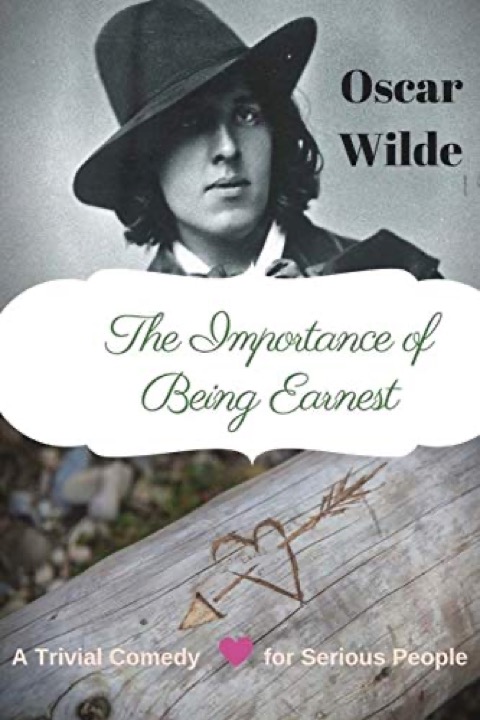
The Importance of Being Earnest: A Trivial Comedy for Serious People
Applying the lessons from "The Importance of Being Earnest: A Trivial Comedy for Serious People" by Oscar Wilde to your life can be a powerful exercise in maintaining authenticity amidst the complexities of a multi-hyphenate career. Here are some ways you might integrate these lessons:
-
Authenticity in Leadership and Medicine: - In your roles as a physician and executive, avoid the temptation of "Bunburying" or compartmentalizing your identity to suit different stakeholders. True leadership stems from a unified sense of self; when your patients, employees, and investors see the same person, you build a foundation of trust that no carefully constructed persona can replicate.
-
The Danger of Superficial Metrics: - Just as Gwendolen and Cecily were fixated on the name "Ernest" over the character of the men, many in the business and venture capital world focus on the "name" or the hype of a startup. You should continue to look past the superficial branding of a new healthcare venture to ensure there is substantive value and ethical integrity beneath the surface.
-
Challenging Institutional Rigidity: - Lady Bracknell represents the ultimate gatekeeper, using arbitrary rules to stifle progress and connection. As an attorney and innovator, you can use Wilde’s critique to identify when "the way things have always been done" is merely an empty social convention that needs to be disrupted to improve patient outcomes or legal efficiencies.
-
The Strategic Value of Humor: - Wilde used wit to deliver uncomfortable truths about society. In your advocacy and writing, remember that humor can be an effective tool for disarming critics and making complex medical or legal concepts more accessible, allowing you to influence others without the friction of self-importance.
-
Maintaining Intellectual Humility: - The play is a reminder that taking oneself too seriously can lead to the very absurdity one tries to avoid. Despite your achievements as a pilot and MBA, staying "humble" means recognizing the humor in the human condition and ensuring your accomplishments serve as a bridge to others rather than a barrier.
-
Diligence in Personal and Professional History: - The chaos of the play’s plot arises from a lack of transparency regarding origins and intentions. Whether you are conducting due diligence on a new investment or building a relationship with a mentee, prioritize radical clarity to prevent the "mistaken identity" of goals that leads to organizational misalignment.
By integrating these lessons, you ensure that your "earnestness" is not just a performance for the public eye but a genuine alignment of your diverse skills and values. In the high-stakes worlds of emergency medicine and venture capital, the ability to see through the trivialities of status and focus on what is truly important is what defines a legacy of impact.
What the book covers
"The Importance of Being Earnest: A Trivial Comedy for Serious People" by Oscar Wilde is a definitive masterpiece of Victorian satire and a cornerstone of the comedy of manners genre. The play centers on the intricate deceptions of two young gentlemen, Jack Worthing and Algernon Moncrieff, who create fictional personas to escape the stifling social obligations of 19th-century English society. Through razor-sharp wit and farcical plot twists, Wilde exposes the hypocrisy and superficiality of the aristocracy, delivering a narrative that is as much about the music of language as it is about social commentary.
Summary:
-
The Art of Bunburying and Double Lives: - The story begins in London with Jack Worthing, who has invented a rebellious younger brother named Ernest as an excuse to leave his country estate and visit the city. His friend Algernon Moncrieff reveals that he has a similar strategy involving a fictional, permanent invalid named Bunbury, whom he "visits" in the country to avoid dull social dinners. - This concept of "Bunburying" serves as the play's central metaphor for the masks people wear to navigate societal expectations. Both men prioritize the convenience of their lies over the weight of their actual responsibilities, highlighting a culture where appearance and freedom are often at odds with integrity.
-
The Proposal and the Barrier of Lineage: - Jack, under the name Ernest, proposes to Algernon’s cousin, Gwendolen Fairfax, who accepts primarily because she is obsessed with the name Ernest, believing it has a "music of its own." However, her mother, the formidable Lady Bracknell, forbids the union after discovering Jack was a foundling. - Lady Bracknell’s interrogation of Jack is one of the play's most famous scenes, satirizing the Victorian obsession with pedigree. Jack's admission that he was found in a leather handbag at Victoria Station’s Brighton line is treated by her not as a tragedy, but as a breach of social etiquette.
-
Cecily Cardew and the Arrival of "Ernest": - The action shifts to Jack's country estate, where his ward, Cecily Cardew, lives under the tutelage of Miss Prism. Algernon, intrigued by Jack's description of his "wicked" brother, arrives at the estate posing as Ernest Worthing to woo the young and imaginative Cecily. - Cecily, having already invented an entire romantic history with this fictional Ernest in her diary, quickly accepts his advances. This further complicates the web of lies as both men are now engaged to women who love them specifically for a name they do not legally possess.
-
The Collision of Fictions: - The comedy reaches a fever pitch when Gwendolen arrives at the country house and meets Cecily. The two women discover they are both engaged to a man named Ernest, leading to a polite but biting confrontation over afternoon tea. - When Jack and Algernon appear, their true identities are revealed, and the women realize they have been deceived. This moment serves to critique the shallow nature of the characters' romantic ideals, as the women are more upset by the loss of the name than the betrayal of trust.
-
The Revelation of the Handbag: - The arrival of Lady Bracknell and the subsequent identification of Miss Prism provides the play's climax. It is revealed that Miss Prism, years earlier, had accidentally left a baby in a handbag at a railway station while placing her manuscript in the perambulator. - This baby was Jack, who is discovered to be the son of Lady Bracknell’s sister and Algernon’s older brother. In a final twist of fate, it is revealed that his christened name was, in fact, Ernest all along, validating the women's desires through sheer coincidence.
-
The Triumph of the Trivial: - The play concludes with three couples—Jack and Gwendolen, Algernon and Cecily, and even Miss Prism and Reverend Chasuble—heading toward marriage. Jack ironically realizes the "vital Importance of Being Earnest," a pun on both the name and the virtue of sincerity. - This ending reinforces Wilde’s critique that in a world governed by rigid and often absurd social rules, the only way to survive with one's sanity intact is to treat the serious things in life with a certain degree of triviality.
Wilde’s work remains significant for its linguistic brilliance and its ability to deconstruct social hierarchies through humor. By turning Victorian morality on its head, "The Importance of Being Earnest" continues to challenge audiences to consider the distance between their public personas and their private truths.