Crime and Punishment
Applying the lessons from "Crime and Punishment" by Fyodor Dostoevsky to your life can be a transformative exercise in developing self-awareness and ethical resilience. Here are some ways you might integrate these lessons:
- Beware the Fallacy of Exceptionalism: - In leadership and entrepreneurship, it is easy to fall into the trap of believing that your vision or success exempts you from the standard rules of ethics or conduct. You must remain vigilant against the hubris that suggests the "greater good" justifies cutting moral corners, as this mindset eventually erodes the integrity of your mission and your character.
- Acknowledge the Psychological Weight of Decisions: - Whether in the operating room, the courtroom, or the boardroom, every significant choice carries a moral and emotional tax. You should recognize that suppressing the psychological impact of difficult decisions leads to burnout and alienation; instead, practice transparency and find healthy outlets to process the ethical gravity of your work.
- Value Compassion as a Diagnostic Tool: - Just as Sonia saw the suffering human behind the criminal, you should strive to see the humanity in every patient, client, or adversary. Cultivating deep empathy allows you to understand the underlying motivations and traumas of others, making you a more effective communicator, a more insightful leader, and a more compassionate healer.
- Practice Radical Accountability: - The novel demonstrates that true peace only comes after a full admission of fault. In your personal and professional life, avoid the urge to rationalize mistakes or hide failures behind complex justifications; by taking immediate and total ownership of your errors, you clear the path for genuine growth and the restoration of trust.
- Maintain Your Moral Compass Amidst Ambition: - Raskolnikov’s tragedy was his attempt to replace a traditional moral framework with a self-serving logic of utility. As you pursue ambitious goals in your career, ensure your "Stay Hungry" drive is always balanced by a "Stay Humble" foundation, keeping your actions anchored in timeless values rather than fleeting intellectual trends.
- Seek Redemption Through Service: - Dostoevsky suggests that suffering is not just a penalty but an opportunity for purification and renewal. When you face setbacks or personal failings, view them as an invitation to reset your priorities and dedicate yourself to the service of others, which is the most reliable path to personal and spiritual recovery.
By integrating these lessons, you will develop a more robust ethical framework that survives the pressures of high-stakes environments. Embracing the reality of your own fallibility and the necessity of moral law will not only make you a more grounded leader but will also ensure that your professional achievements are built on a foundation of genuine integrity and human connection.
What the book covers
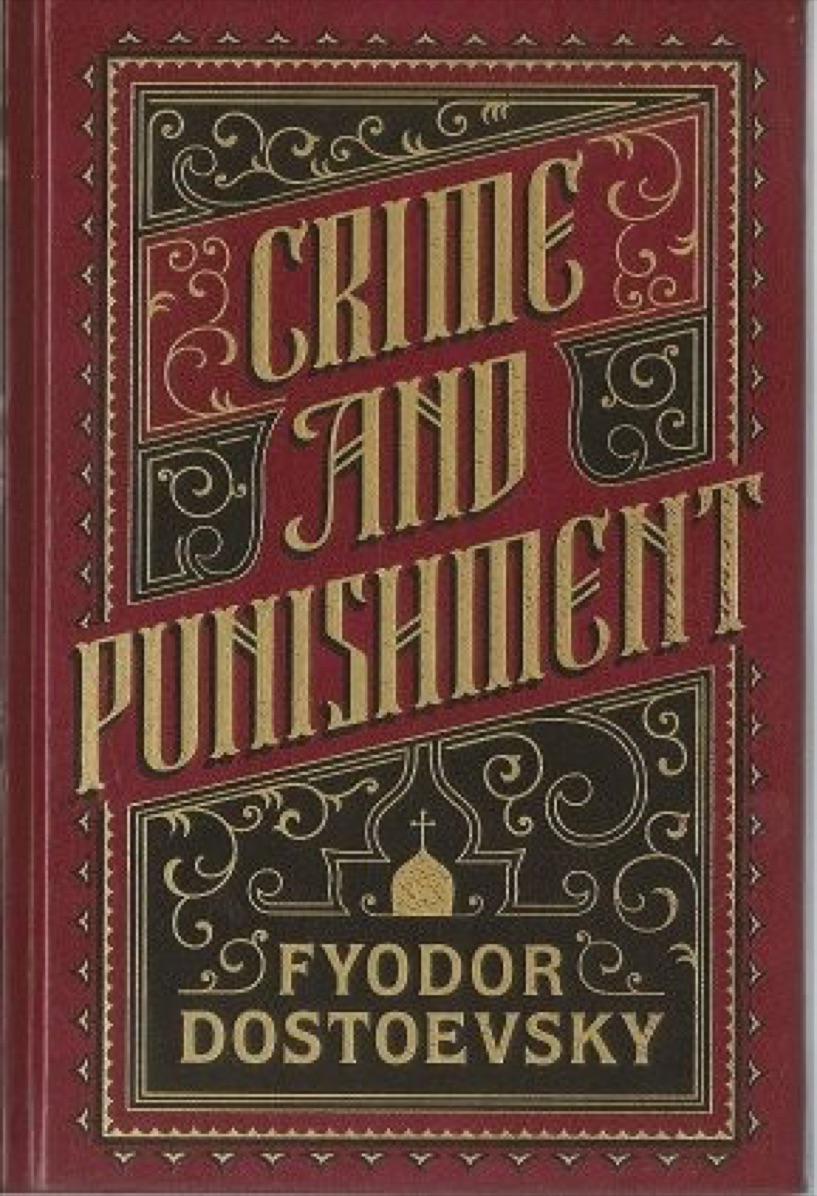
"Crime and Punishment" by Fyodor Dostoevsky is a profound psychological thriller and philosophical masterpiece that explores the moral dilemmas of a destitute student in St. Petersburg. The novel delves into the themes of guilt, redemption, and the consequences of one's actions through the eyes of its protagonist, Rodion Raskolnikov. It serves as a haunting examination of the human psyche and the social conditions of 19th-century Russia, ultimately questioning whether the ends can ever justify the means.
Summary:
- The Overman Theory: - Raskolnikov, a former law student living in extreme poverty, develops a theory that humanity is divided into two categories: the "ordinary" and the "extraordinary." He posits that extraordinary individuals, like Napoleon, have the right to transgress moral boundaries and even commit murder if their actions serve a higher, transformative purpose for humanity. - This intellectual arrogance drives him to test his own limits, as he desperately wants to prove he belongs to the elite class of people who are not bound by the common laws of morality or social convention.
- The Execution of the Crime: - To test his theory and solve his financial woes, Raskolnikov plans the murder of Alyona Ivanovna, an elderly, unscrupulous pawnbroker whom he views as a "louse" on society. During the act, however, he is forced to kill her innocent, developmentally disabled sister, Lizaveta, who stumbles upon the scene. - The botched nature of the crime and the unexpected second murder immediately begin to dismantle Raskolnikov’s sense of superiority, replacing his cold logic with a visceral, instinctive horror at his own actions.
- Psychological Fragmentation and Paranoia: - Following the murders, Raskolnikov descends into a state of semi-delirium, characterized by intense fever, paranoia, and social alienation. He becomes obsessed with the idea that every word spoken by his friends, family, or the police is a veiled accusation or a clue to his guilt. - His physical illness mirrors his spiritual decay, as he finds himself unable to bear the presence of his mother and sister, feeling that his crime has permanently severed his connection to the rest of humanity.
- The Investigative Cat-and-Mouse Game: - The magistrate Porfiry Petrovich becomes Raskolnikov’s primary intellectual antagonist, using psychological manipulation rather than physical evidence to corner him. Porfiry has read Raskolnikov’s article on the "extraordinary man" and recognizes the young man’s psychological state as a byproduct of his guilt. - These interactions highlight the tension between the legal system and the internal moral law, as Porfiry patiently waits for Raskolnikov’s own conscience to drive him toward a voluntary confession.
- The Influence of Sonia Marmeladov: - Raskolnikov meets Sonia, a young woman forced into prostitution to support her alcoholic father’s family. Despite her circumstances, Sonia maintains a deep, unwavering Christian faith and a sense of self-sacrifice that stands in stark contrast to Raskolnikov’s nihilism. - Sonia becomes the moral compass of the novel, eventually convincing Raskolnikov that the only path to healing is to confess his crime, accept his suffering, and seek reconciliation with both God and society.
- The Subplots of Pride and Seduction: - The narrative is enriched by the characters of Svidrigailov, a sensualist who represents the dark endpoint of Raskolnikov’s nihilism, and Luzhin, a narcissistic suitor to Raskolnikov’s sister Dunya. These figures serve as foils, showing different ways that ego and the objectification of others can destroy the soul. - Through Dunya’s resistance to these men, Dostoevsky emphasizes the themes of dignity and the refusal to be used as a means to an end, reinforcing the novel's central argument against utilitarian morality.
- Confession and the Path to Resurrection: - Driven by the weight of his isolation and the persistent urging of Sonia, Raskolnikov finally confesses his crime to the authorities. He is sentenced to eight years of hard labor in Siberia, where Sonia follows him to provide support and hope. - The novel concludes with the beginning of Raskolnikov’s spiritual rebirth; while he remains prideful for a long time in prison, he eventually experiences a breakthrough of love and humility, signaling his gradual reintegration into the human fold.
"Crime and Punishment" remains one of the most influential works in world literature because of its unparalleled depth in exploring the mechanics of the human conscience. Dostoevsky successfully bridges the gap between a gripping detective story and a complex philosophical treatise, challenging readers to consider the true source of moral authority. It serves as a timeless reminder that the human spirit cannot be reduced to a mathematical equation and that true greatness is found in humility and empathy rather than cold, calculated power.