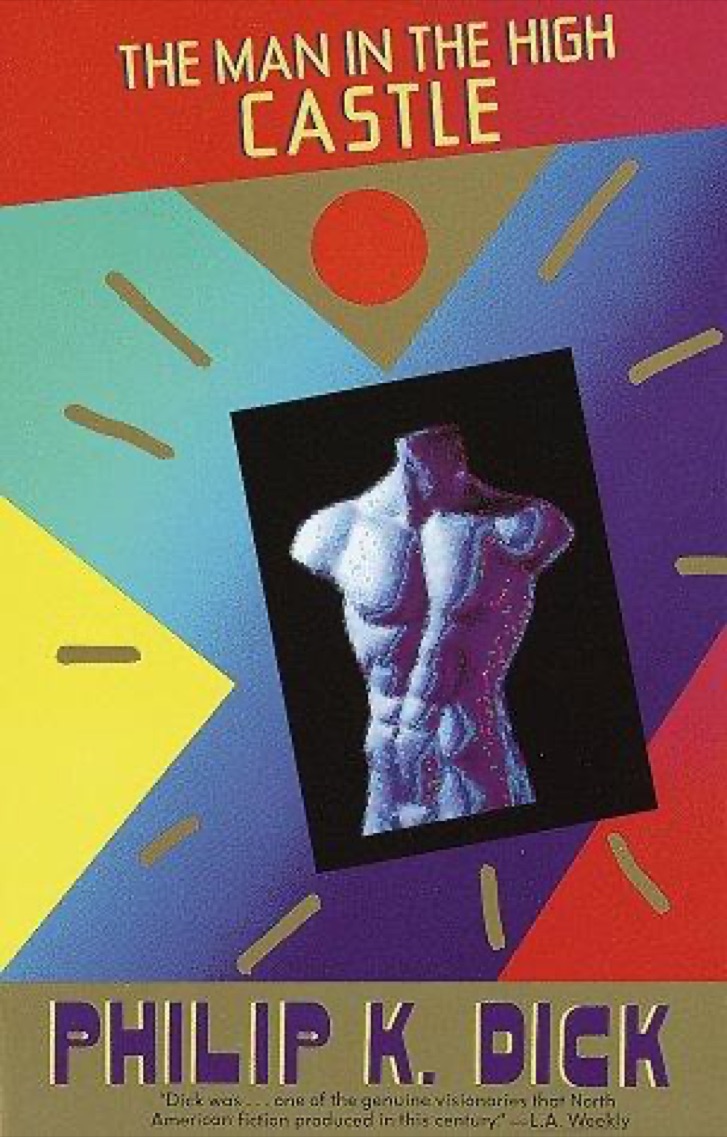
The Man in the High Castle
Applying the lessons from "The Man in the High Castle" by Philip K. Dick to your life can be a transformative exercise in questioning the perceived permanence of current systems and the authenticity of your own leadership. Here are some ways you might integrate these lessons:
-
Questioning the Dominant Narrative: - In both medicine and business, prevailing wisdom is often treated as absolute truth. You should cultivate the habit of looking for the "Grasshopper Lies Heavy" in your industry—the dissenting data or alternate viewpoints that challenge the status quo and reveal a more nuanced reality beneath the surface level of operations.
-
The Ethics of Authenticity: - As an entrepreneur and attorney, you face constant pressure to mold yourself to the expectations of various stakeholders. Like Robert Childan, you must distinguish between performative compliance and genuine integrity, ensuring that your core values are not traded for social or professional standing in high-stakes environments.
-
Strategic Resilience in Unstable Systems: - The novel’s depiction of the rivalry between the Reich and Japan serves as a reminder that even the most powerful organizations are prone to internal decay. In your venture capital and leadership roles, you should look for signs of systemic fragility and build anti-fragile structures that can survive the eventual collapse of rigid or toxic corporate cultures.
-
Decisiveness Amidst Uncertainty: - The characters' use of the I Ching highlights the human need for guidance when facing complex, multi-variable problems. While you rely on data and an MBA’s analytical toolkit, you should also recognize the value of "Wu"—a state of mindful awareness and intuition that allows a leader to make bold decisions when logic reaches its limit.
-
The Importance of Individual Agency: - Juliana Frink’s journey proves that one person’s pursuit of truth can have ripple effects across a global landscape. In healthcare and law, you should never underestimate the power of a single principled actor to disrupt a corrupt or inefficient system, provided they have the courage to follow their inquiry to its logical end.
-
Recognizing the Subjectivity of Success: - The shifting realities in the book suggest that what we perceive as "winning" or "losing" is often a matter of perspective. As a serial entrepreneur, maintain humility by recognizing that your current successes are contingent on a specific set of circumstances, and stay hungry by constantly preparing for the next shift in the geopolitical or economic reality.
By integrating these lessons, you can develop a more sophisticated approach to leadership that values metaphysical truth as much as operational efficiency. This mindset fosters a unique brand of resilience, allowing you to navigate the complexities of healthcare, law, and aviation with a grounded sense of purpose that transcends the temporary structures of the marketplace.
What the book covers
"The Man in the High Castle" by Philip K. Dick is a seminal work of alternate history that explores a world where the Axis powers emerged victorious in World War II. Set in 1962, the story depicts a partitioned United States, with the Pacific Coast governed by the Japanese Empire and the East Coast controlled by the Greater Nazi Reich. Through a complex web of interconnected characters, the novel examines the psychological and social consequences of living under totalitarian occupation while questioning the very nature of reality and historical truth.
Summary:
-
The Geopolitical Divide: - The narrative establishes a world where Franklin D. Roosevelt was assassinated, leading to a weak US recovery and an eventual Allied defeat. The continent is split into the Japanese Pacific States (JPS), the Nazi-controlled East, and a Neutral Zone in the Rocky Mountains, creating a tense Cold War atmosphere between the two conquering superpowers.
-
The Quest for Authenticity: - Robert Childan, an antique dealer in San Francisco, struggles with his identity and status by selling "authentic" American artifacts to Japanese collectors. His arc explores the commodification of culture and the psychological submission of the conquered, as he navigates the fine line between servility and the preservation of his personal dignity.
-
The Subversive Novel within the Novel: - Central to the plot is a banned book titled "The Grasshopper Lies Heavy," written by the mysterious Hawthorne Abendsen. This book-within-a-book describes an alternate reality where the Allies won the war, acting as a beacon of hope and a catalyst for characters to question the legitimacy of their own grim reality.
-
Spiritual Navigation via the I Ching: - Many characters, including the high-ranking Japanese trade official Nobusuke Tagomi, rely on the ancient Chinese "I Ching" (Book of Changes) to make critical life decisions. This reliance on chance and ancient wisdom serves as a counterpoint to the rigid, scientific brutality of the Nazi regime and highlights the search for order in a chaotic world.
-
Espionage and Political Instability: - The plot intensifies with the arrival of Mr. Baynes, a secret German defector attempting to meet with a Japanese official to warn them of "Operation Dandelion." This Nazi plan involves a pre-emptive nuclear strike against Japan, illustrating the inherent instability and internecine violence of fascist systems.
-
Juliana Frink’s Pilgrimage: - Juliana, a judo instructor living in the Neutral Zone, becomes obsessed with finding the author of "The Grasshopper Lies Heavy." Her journey leads her to discover the truth about the book's origin and forces a confrontation with the reality of her world, ultimately acting as the narrative's moral and metaphysical compass.
-
The Nature of Truth and Reality: - The climax occurs when Tagomi experiences a brief, terrifying vision of a San Francisco where the Allies won—our actual history—suggesting that multiple realities coexist. This moment shatters the characters' perceptions of what is "real" and emphasizes the subjective nature of historical narratives.
-
The Revelation of the High Castle: - Upon meeting Abendsen, Juliana learns that the "I Ching" actually wrote his book, and the oracle reveals that the Axis did indeed lose the war in a deeper, metaphysical sense. This conclusion suggests that while the physical world may be occupied, the truth of human freedom remains an immutable force.
Dick’s masterpiece remains a profound exploration of the fragility of political structures and the resilience of the human spirit. By blending political thriller elements with metaphysical inquiry, it challenges readers to consider how much of their own reality is shaped by the narratives imposed upon them by those in power.