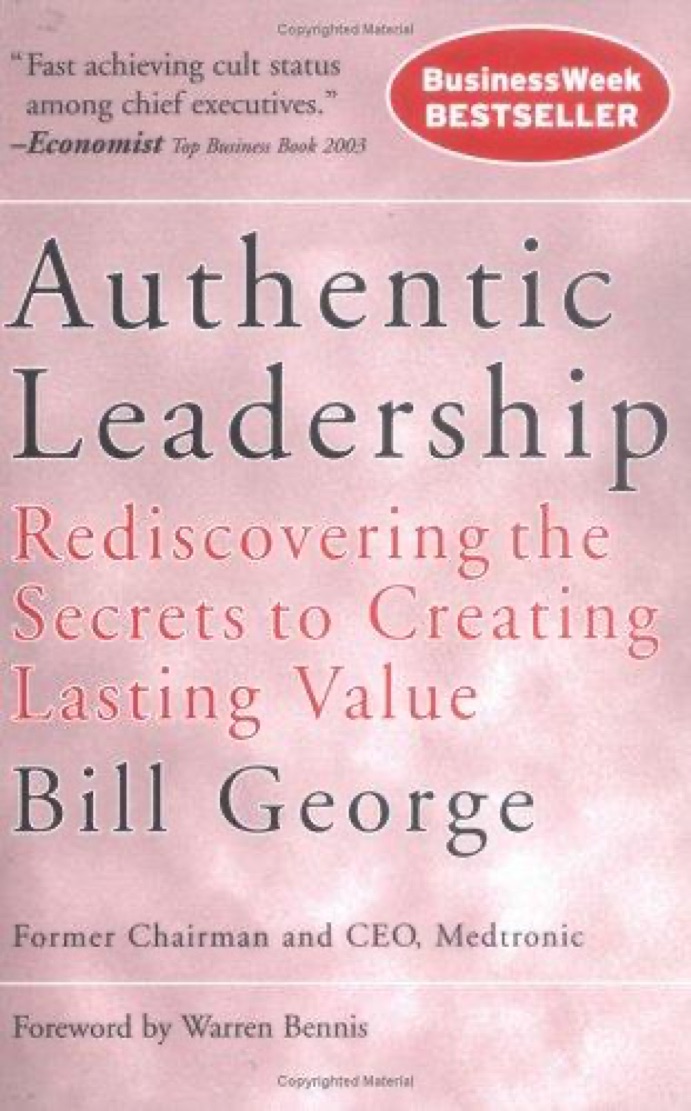
Authentic Leadership: Rediscovering the Secrets to Creating Lasting Value
Applying the lessons from "Authentic Leadership: Rediscovering the Secrets to Creating Lasting Value" by Bill George to your life can be a transformative exercise in aligning your professional ambitions with your personal ethics. Here are some ways you might integrate these lessons:
- Define Your Personal Mission Statement: - In the same way you approach a medical diagnosis or a complex legal case, you should perform a rigorous audit of your own motivations. Determine what your "True North" is by identifying the values you are unwilling to compromise, and use this as a filter for every business venture, clinical decision, or investment you make.
- Lead with Compassion in High-Stakes Environments: - Whether you are in the ER or the boardroom, remember that people respond more to empathy than to raw authority. You can cultivate a culture of loyalty by showing genuine compassion for your team's challenges, acknowledging that your success as an entrepreneur and physician is inextricably linked to the well-being and professional growth of those you lead.
- Operationalize Your Values Through Consistency: - Use the discipline you have gained from aviation and medicine to ensure your values are not just slogans on a wall. Create personal "checklists" for your leadership behavior to ensure that your actions consistently reflect your stated principles, especially during times of crisis when the temptation to deviate for a quick win is highest.
- Prioritize Long-Term Stakeholder Value Over Short-Term Gains: - As an entrepreneur and venture capitalist, resist the "celebrity CEO" trap of seeking short-term validation or hype. Focus on building companies that solve real healthcare problems and provide genuine value to patients; this mission-driven approach ultimately creates more sustainable financial success than chasing quarterly metrics.
- Foster Deep, Mentorship-Based Relationships: - Move beyond transactional networking and invest in true "connectedness." Seek out mentors who will hold you accountable to your authentic self, and serve as a mentor to others by being transparent about your own failures and the lessons you have learned throughout your varied career in medicine, law, and business.
- Embrace Vulnerability as a Strategic Strength: - Recognize that admitting when you do not have all the answers actually increases your credibility as an authentic leader. This transparency encourages your team to speak up, share innovative ideas, and take ownership of the organization’s mission alongside you, fostering an environment of psychological safety.
By integrating these lessons, you can bridge the gap between your diverse roles as a physician, pilot, and venture capitalist, creating a unified leadership identity. This commitment to authenticity ensures that your legacy is defined not just by the companies you have founded or the patients you have treated, but by the lasting value and integrity you have instilled in every organization and individual you lead.
What the book covers
"Authentic Leadership: Rediscovering the Secrets to Creating Lasting Value" by Bill George is a seminal management text that challenges the corporate world to move beyond the era of the "charismatic CEO" toward a model based on character and integrity. Drawing on his successful tenure as the CEO of Medtronic, George argues that the most effective leaders are those who lead with their hearts as well as their heads, focusing on long-term sustainability rather than short-term financial gains. The book serves as a clarion call for leaders to rediscover their moral compass and align their personal values with their professional actions to build organizations that truly serve society.
Summary:
- The Fall of the Celebrity CEO: - George begins by analyzing the corporate scandals of the early 2000s, such as Enron and WorldCom, attributing these failures to a culture that prioritized image, ego, and short-term stock prices over substance. He argues that the focus on "charismatic" leaders created a vacuum of integrity where executives were incentivized to manipulate numbers rather than build real value. - He posits that the solution is a return to authentic leadership, which requires individuals to be true to themselves and their values. This transition is presented not just as a moral imperative but as a fundamental business necessity for companies that wish to survive in an increasingly transparent and global economy.
- The Five Dimensions of Authentic Leadership: - The core of the book is the "Authentic Leadership Model," which consists of five key dimensions: Purpose, Values, Heart, Relationships, and Self-Discipline. George explains that authentic leaders lead with a sense of purpose (passion), practice solid values (behavior), lead with heart (compassion), establish enduring relationships (connectedness), and demonstrate self-discipline (consistency). - These dimensions are not innate traits but are qualities developed over time through experience, struggle, and self-reflection. By focusing on these areas, leaders can create a sense of trust and stability that allows their teams to flourish even during periods of intense market volatility or organizational change.
- Developing Your Purpose and Values: - George emphasizes that leadership starts with self-awareness and understanding one's "True North." He encourages leaders to identify their core values and then have the courage to stick to them, especially when under pressure to take shortcuts for financial gain or professional advancement. - He argues that when a leader's personal purpose aligns with the organization's mission, they become more resilient and effective. This alignment ensures that the leader's motivations are transparent to stakeholders, fostering a culture of honesty and shared goals that can withstand external pressures.
- Leading with Heart and Compassion: - Contrasting the traditional "tough-as-nails" executive persona, George advocates for leading with heart. He describes this as having compassion for the people you serve—employees, customers, and the community—and being willing to show vulnerability while maintaining a focus on results. - Compassion in leadership involves understanding the needs of others and taking a personal interest in their development. This approach does not imply weakness; rather, it strengthens the leader's ability to inspire and motivate a diverse workforce by acknowledging the human element of business and medicine alike.
- Building Authentic Relationships and Organizations: - The book explores the necessity of building deep, long-term relationships based on mutual respect and shared interests. George suggests that authentic leaders avoid transactional networking in favor of genuine connections, which provide the support system necessary to navigate leadership's lonely moments. - At the organizational level, this means creating a culture where employees at all levels are encouraged to lead authentically. Authentic organizations are mission-driven, transparent, and focused on providing exceptional value to customers, which George argues is the only sustainable way to generate long-term shareholder returns.
The significance of George's work lies in its role as a pivot point for corporate governance and leadership theory. By providing a practical framework for ethical leadership based on his real-world success at Medtronic, George proved that "doing good" and "doing well" are not mutually exclusive. The book continues to influence how modern leaders are trained, emphasizing that the most powerful tool a leader possesses is their own authenticity.