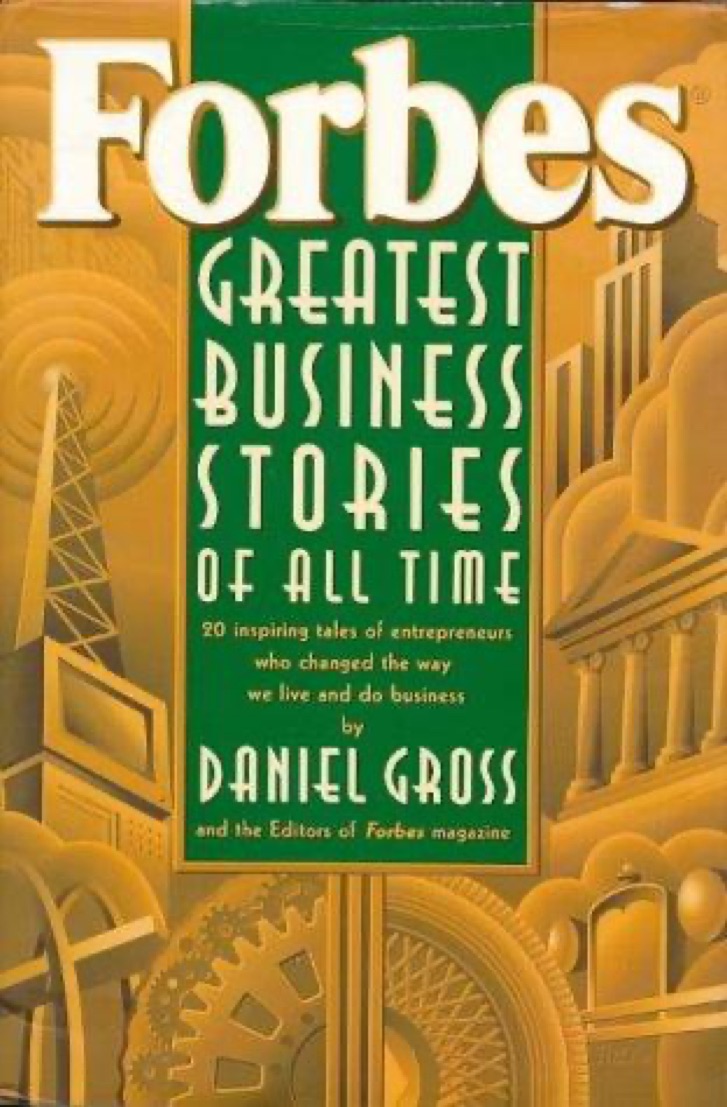
Forbes Greatest Business Stories of All Time: 20 Inspiring Tales of Entrepreneurs Who Changed the Way We Live and Do Business
Applying the lessons from "Forbes Greatest Business Stories of All Time: 20 Inspiring Tales of Entrepreneurs Who Changed the Way We Live and Do Business" by Daniel Gross, Editors of Forbes Magazine to your life can be a catalyst for professional evolution and a deeper understanding of the entrepreneurial spirit. Here are some ways you might integrate these lessons:
- Mastering Systematization and Scale: - You can apply the lessons of Ford and Walton by looking for ways to systematize your medical practices or entrepreneurial ventures. Just as the assembly line revolutionized manufacturing, you should seek to identify the bottlenecks in your current operations—whether in a clinic, a law firm, or a startup—and implement repeatable processes that allow for high-quality output at scale.
- Anticipating Disruption Through Vision: - Like David Sarnoff, you should practice looking several steps ahead of the current market. In your role as a venture capitalist, this means not just investing in what is working today, but anticipating the technological shifts—such as AI-driven diagnostics or decentralized healthcare—that will become the "radio" of the next decade, ensuring you remain at the forefront of the next wave.
- Rigorous Operational Standards: - The success of Ray Kroc reminds you that even the most creative vision requires rigid operational standards. In the high-stakes environments of the emergency room or the aircraft cockpit, discipline and adherence to checklists are non-negotiable; you must apply this same level of rigor to your business leadership to ensure your core values are maintained as you grow.
- Strategic Consolidation of Influence: - Following the example of J.P. Morgan, you can use your multifaceted expertise in law, medicine, and business to act as a stabilizing and unifying force. This involves recognizing when your unique cross-disciplinary position allows you to bridge gaps between disparate sectors, creating synergies and economic value that wouldn't exist without your specific intervention.
- Maintaining Intellectual Hunger: - The stories of these twenty titans serve as a reminder that complacency is the enemy of lasting impact. Whether you are writing a new book or launching a healthcare startup, you must maintain the relentless curiosity and drive seen in figures like Bill Gates, always looking for the next problem to solve and never settling for current achievements.
- Resilience through Economic Volatility: - Many of the entrepreneurs profiled faced near-ruin before achieving their greatest successes. You can integrate this by viewing setbacks in your ventures not as failures, but as necessary data points that refine your approach and strengthen your resolve for the next major endeavor.
By integrating these lessons, you align yourself with a historical tradition of excellence that transcends any single industry. These narratives reinforce the idea that true leadership is a combination of technical mastery, strategic risk-taking, and a humble acknowledgment that one is always a student of the market and the human condition.
What the book covers
"Forbes Greatest Business Stories of All Time: 20 Inspiring Tales of Entrepreneurs Who Changed the Way We Live and Do Business" by Daniel Gross, Editors of Forbes Magazine is an insightful anthology that explores the evolution of modern capitalism through the lens of its most significant pioneers. The book provides a historical roadmap, detailing how specific individuals combined grit, innovation, and strategic foresight to build empires that altered the global economic and social landscape. By examining the successes and failures of these titans, Gross offers a foundational blueprint for understanding the core principles of entrepreneurship and corporate longevity.
Summary:
- Foundations of Industrial Dominance: - The book begins by detailing the exploits of 19th-century pioneers like John D. Rockefeller and Cyrus McCormick, who laid the groundwork for industrial-scale production. Rockefeller’s Standard Oil exemplifies the power of vertical integration and logistical dominance, while McCormick’s mechanical reaper showcases the impact of labor-saving technology on the agricultural economy.
- The Standardization of Mass Production: - Henry Ford’s chapter focuses on his radical departure from artisanal manufacturing toward the assembly line, which made the automobile accessible to the general public. This section highlights how Ford didn’t just create a product; he invented a new way of working that emphasized high wages and manufacturing efficiency to foster a self-sustaining consumer market.
- The Architecture of Modern Finance: - J.P. Morgan’s narrative illustrates the essential role of capital in stabilizing a volatile American economy. Gross explores how Morgan used his immense influence to organize chaotic industries into efficient "trusts" and how his intervention during the Panic of 1907 demonstrated the intersection of private finance and national public interest.
- The Expansion of Mass Media: - The book follows the transition from physical goods to information services, focusing on David Sarnoff’s leadership at RCA. Sarnoff’s vision of radio and television as household necessities transformed how the world consumed information, proving that a leader's greatest asset is the ability to predict the next great shift in social behavior.
- The Evolution of the Service Franchise: - Through the stories of Ray Kroc and Sam Walton, the book explores the shift toward service and retail excellence. Kroc’s insistence on total consistency at McDonald's and Walton’s obsession with cost-control and distribution at Walmart highlight how operational discipline can turn a local operation into a global powerhouse.
- The Infrastructure of Global Travel: - Juan Trippe’s Pan American World Airways and Walt Disney’s entertainment empire represent the expansion of business into the lifestyle and global travel sectors. These figures expanded the horizons of the American consumer, with Trippe shrinking the world through aviation and Disney creating a multi-generational cultural phenomenon through animation and theme parks.
- The Shift to Information Capital: - The collection concludes with the digital revolution, focusing on Bill Gates and the rise of Microsoft. This segment emphasizes the shift from hardware to software as the primary driver of economic value, illustrating how intellectual property and strategic market positioning became the new global currency of the late 20th century.
The significance of this work lies in its ability to humanize the massive forces of global capitalism. It serves as a reminder that behind every massive conglomerate is a person—often flawed, but relentlessly driven—who identified a gap in the world and had the audacity to fill it.