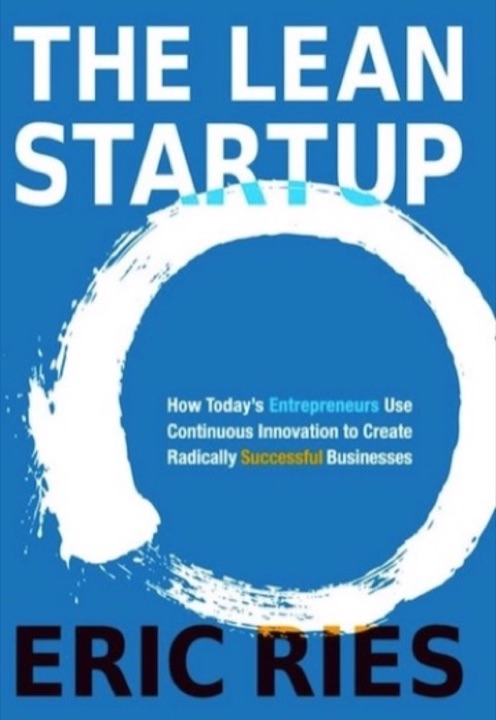
The Lean Startup: How Today's Entrepreneurs Use Continuous Innovation to Create Radically Successful Businesses
Applying the principles of "The Lean Startup" to your life involves adopting a mindset of continuous learning, adaptability, and efficiency, much like the approach Eric Ries advocates for startups. Here’s how you might integrate these lessons into your personal and professional life:
-
Validated Learning: - Approach your personal and professional goals with a mindset of experimentation. Test your assumptions about what will bring you happiness or success by trying new things and gathering feedback. For instance, if you’re considering a new hobby like skydiving, start with a tandem jump to see if it aligns with your interests before fully committing.
-
Build-Measure-Learn Feedback Loop: - Implement a cycle of setting small, achievable goals (your MVPs), measuring your progress, and learning from the outcomes. For example, if you want to improve your fitness routine, try a new workout plan for a month, track your progress, and adjust based on what works best for you.
-
Minimum Viable Product (MVP): - When pursuing new ventures or interests, start with the simplest version that allows you to test the waters. This could mean starting a new project or hobby on a small scale to see if it’s worth investing more time and resources.
-
Pivot or Persevere: - Regularly evaluate your goals and strategies. If something isn’t working, be willing to pivot and try a different approach. This could apply to your career, personal relationships, or even your daily routines.
-
Innovation Accounting: - Develop personal metrics to measure your progress in areas that matter to you, such as personal growth, health, or relationships. Use these metrics to make informed decisions about where to focus your efforts.
-
Build a Sustainable Life: - Aim to create a lifestyle that is sustainable and fulfilling. Continuously adapt to changes in your environment and personal circumstances, ensuring that your actions align with your long-term vision and values.
-
Embrace Uncertainty: - Accept that life is full of uncertainties and use them as opportunities for growth. Your experiences with near-death situations have already shown you the importance of resilience and adaptability.
-
Customer Focus: - In your interactions with others, prioritize understanding their needs and perspectives. This aligns with your values of kindness and empathy and can enhance your relationships and professional collaborations.
-
Efficiency and Speed: - Streamline your daily routines and decision-making processes to maximize efficiency. Your structured morning routine is a great example of this principle in action.
-
Data-Driven Decisions:
- Base your decisions on evidence and past experiences rather than assumptions. Reflect on your daily wins and losses to guide your future actions.
By applying these principles, you can enhance your personal growth, improve your relationships, and achieve your goals more effectively, all while staying true to your core values and beliefs.
What the book covers
"The Lean Startup: How Today's Entrepreneurs Use Continuous Innovation to Create Radically Successful Businesses" by Eric Ries is a seminal work that introduces a new approach to business development and product innovation. The book is particularly influential in the startup community, but its principles can be applied to any organization looking to innovate and grow efficiently.
Summary:
Introduction:
Eric Ries introduces the concept of the Lean Startup, which is inspired by lean manufacturing principles. The core idea is to create a business model that is both efficient and responsive to customer needs, minimizing waste and maximizing value.
Key Concepts:
-
Validated Learning: - The Lean Startup emphasizes learning what customers really want through a process of validated learning. This involves testing hypotheses about the business model and product features with real customers.
-
Build-Measure-Learn Feedback Loop: - The central process of the Lean Startup methodology is the Build-Measure-Learn feedback loop. Entrepreneurs start with building a minimum viable product (MVP), measure its performance in the market, and learn from the results to iterate and improve the product.
-
Minimum Viable Product (MVP): - An MVP is the simplest version of a product that can be released to start the learning process. It allows startups to test their assumptions with minimal resources and gather valuable customer feedback.
-
Pivot or Persevere: - Based on the feedback from the MVP, startups must decide whether to pivot (make a fundamental change to the product or business model) or persevere (continue with the current strategy). This decision is crucial for the startup's success.
-
Innovation Accounting: - Traditional accounting metrics are not suitable for startups. Innovation accounting involves setting up metrics that can accurately measure progress and guide decision-making in the context of uncertainty.
-
Build a Sustainable Business: - The ultimate goal of the Lean Startup approach is to build a sustainable business by continuously adapting to market needs and efficiently using resources.
Key Takeaways and Lessons:
-
Embrace Uncertainty: - Startups operate in environments of extreme uncertainty. The Lean Startup methodology provides tools to navigate this uncertainty through iterative testing and learning.
-
Customer Focus: - Understanding and responding to customer needs is paramount. The Lean Startup approach emphasizes direct customer interaction and feedback to guide product development.
-
Efficiency and Speed: - By focusing on MVPs and rapid iterations, startups can move quickly and efficiently, reducing time and resources spent on unproven ideas.
-
Data-Driven Decisions: - Decisions should be based on data and validated learning rather than assumptions or intuition. This reduces risk and increases the likelihood of success.
-
Adaptability: - The ability to pivot is crucial. Startups must be willing to change direction based on customer feedback and market conditions.
-
Long-Term Vision with Short-Term Flexibility: - While the Lean Startup approach focuses on short-term iterations, it is important to maintain a long-term vision for the company. This balance ensures that the startup remains aligned with its ultimate goals while adapting to immediate challenges.
In conclusion, "The Lean Startup" provides a framework for building successful businesses in a rapidly changing world. By focusing on validated learning, efficient use of resources, and customer feedback, entrepreneurs can create products that truly meet market needs and build sustainable companies.