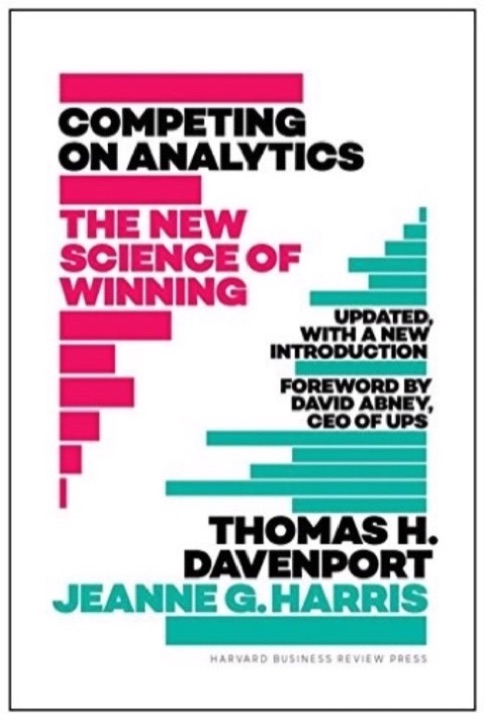
Competing on Analytics
Applying the lessons from "Competing on Analytics" by Thomas H. Davenport and Jeanne G. Harris to your life involves leveraging data-driven decision-making and analytical thinking to enhance various aspects of your personal and professional endeavors. Here are some ways you might incorporate these lessons:
-
Data-Driven Decision Making: - Just as analytical competitors use data to inform business strategies, you can apply data-driven decision-making in your personal life. For instance, track and analyze your fitness progress, financial investments, or even daily routines to identify patterns and areas for improvement.
-
Assess and Improve Analytical Capability: - Evaluate your current level of analytical skills and seek opportunities to enhance them. This could involve learning new data analysis tools, taking courses in data science, or simply practicing critical thinking and problem-solving in everyday situations.
-
Building an Analytical Culture: - Foster a mindset of curiosity and continuous learning in your personal and professional circles. Encourage discussions that are informed by data and evidence, and promote a culture where decisions are made based on facts rather than assumptions.
-
Integration with Personal Strategy: - Align your personal goals and strategies with data insights. For example, if you have fitness or health goals, use data from wearable devices to tailor your exercise and diet plans. Similarly, use financial data to guide your investment decisions and retirement planning.
-
Investment in Technology and Skills: - Invest in technology and skills that support your analytical endeavors. This could mean using apps and tools that help you track personal goals or investing time in learning new skills that enhance your analytical capabilities, such as coding or statistical analysis.
-
Risk Management: - Be aware of the risks associated with relying solely on data. Ensure that you consider qualitative factors and personal intuition alongside quantitative data when making decisions. This balanced approach can help mitigate potential pitfalls.
-
Continuous Improvement: - Adopt a mindset of continuous improvement by regularly assessing your progress and adjusting your strategies based on data insights. This aligns with your philosophy of being in a constant state of beta and aspiring to be a lifelong learner.
-
Leveraging Technology for Betterment: - As you hope to see society leverage technology for the betterment of mankind, apply this principle to your life by using technology to enhance your personal growth, relationships, and contributions to social causes.
By integrating these lessons into your life, you can enhance your decision-making processes, achieve personal goals more effectively, and contribute to the betterment of society in line with your values and aspirations.
What the book covers
"Competing on Analytics: The New Science of Winning" by Thomas H. Davenport and Jeanne G. Harris is a seminal work that explores how organizations can leverage data analytics to gain a competitive edge. The book delves into the transformative power of analytics in business decision-making and strategy formulation.
Summary:
-
Introduction to Analytics: The authors introduce the concept of analytics as a critical tool for modern businesses. They argue that organizations can outperform their competitors by using data-driven strategies to make informed decisions.
-
The Analytical Competitor: Davenport and Harris describe an "analytical competitor" as a company that uses analytics extensively and systematically to outthink and outmaneuver its competitors. These companies embed analytics into their core business processes and decision-making frameworks.
-
Levels of Analytical Capability: The book outlines different levels of analytical capability, ranging from basic data management to advanced predictive modeling and optimization. Companies are encouraged to assess their current level and strive to advance their analytical maturity.
-
Building an Analytical Culture: A significant portion of the book is dedicated to the cultural and organizational changes necessary to support analytics. This includes fostering a data-driven mindset, investing in technology and talent, and aligning analytics with business strategy.
-
Case Studies: The authors provide numerous case studies from various industries, illustrating how companies like Amazon, Capital One, and Harrah's Entertainment have successfully implemented analytics to drive growth and innovation.
-
Technology and Tools: Davenport and Harris discuss the importance of technology in analytics, including data warehousing, business intelligence tools, and statistical software. They emphasize the need for organizations to invest in the right tools to support their analytical initiatives.
-
Challenges and Risks: The book acknowledges the challenges and risks associated with analytics, such as data quality issues, privacy concerns, and the potential for misinterpretation of data. The authors stress the importance of addressing these challenges proactively.
-
Future of Analytics: The authors speculate on the future of analytics, predicting that it will become even more integral to business strategy. They foresee advancements in technology and data science driving further innovation in the field.
Key Takeaways and Lessons:
-
Data as a Strategic Asset: Organizations should treat data as a strategic asset, investing in its collection, management, and analysis to drive competitive advantage.
-
Cultural Shift: A successful analytics strategy requires a cultural shift towards data-driven decision-making, supported by leadership and embraced by all levels of the organization.
-
Continuous Improvement: Companies should continuously assess and improve their analytical capabilities, striving to move up the maturity curve and adopt more sophisticated techniques.
-
Integration with Business Strategy: Analytics should be closely aligned with business strategy, ensuring that data insights directly inform and support strategic objectives.
-
Investment in Talent and Technology: Building a strong analytics capability requires investment in both technology and skilled personnel who can interpret data and derive actionable insights.
-
Risk Management: Organizations must be aware of the risks associated with analytics, including data privacy and security, and take steps to mitigate these risks.
Overall, "Competing on Analytics" provides a comprehensive guide for organizations looking to harness the power of data analytics to achieve superior performance and sustainable competitive advantage.