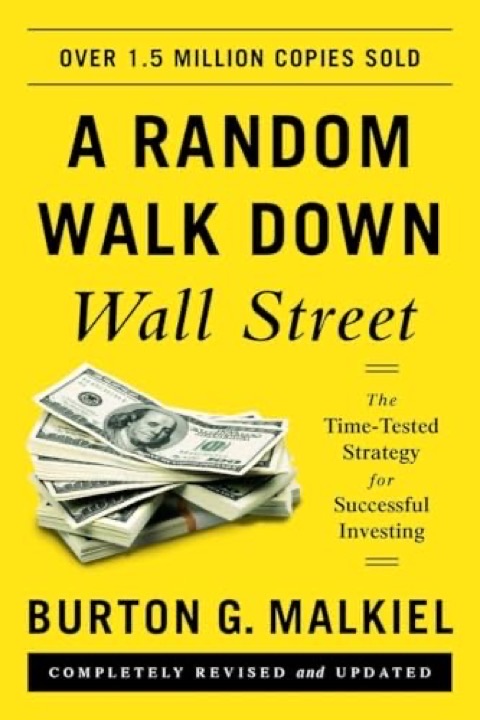
A Random Walk Down Wall Street
Applying the lessons from "A Random Walk Down Wall Street" by Burton Malkiel to your life can help you make more informed and rational decisions about investing and personal finance. Here’s how you might integrate these lessons:
-
Embrace Market Efficiency: - Accept that markets are generally efficient and that trying to consistently outperform them through active management is challenging. This aligns with your pragmatic approach to life and decision-making.
-
Diversification: - Just as you value a diverse range of experiences and interests, apply the same principle to your investments. Diversify your portfolio across different asset classes to spread risk and enhance potential returns.
-
Index Investing: - Consider investing in low-cost index funds to achieve broad market exposure. This strategy aligns with your appreciation for efficiency and effectiveness, allowing you to minimize fees and focus on long-term growth.
-
Behavioral Awareness: - Be mindful of psychological biases that can impact investment decisions. Your self-awareness and reflective nature can help you avoid emotional reactions to market volatility, ensuring more disciplined investment choices.
-
Long-Term Focus: - Maintain a long-term perspective in your investments, similar to how you approach personal growth and development. Focus on your financial goals rather than short-term market fluctuations.
-
Cost Management: - Pay attention to investment costs, as high fees can erode returns over time. This aligns with your practical approach to life, where you focus on what you can control.
-
Skepticism of Predictions: - Be skeptical of market predictions and forecasts, as they are often unreliable. This resonates with your belief in the unpredictability of life and your preference for surprises.
-
Continuous Learning: - Stay informed about financial markets and investment principles. Your commitment to lifelong learning and being in a constant state of beta can enhance your investment knowledge and decision-making.
By integrating these lessons into your financial strategy, you can align your investment approach with your broader life philosophy, focusing on rationality, efficiency, and long-term growth. This will help you manage your investments effectively while staying true to your values and beliefs.
What the book covers
"A Random Walk Down Wall Street" by Burton Malkiel is a seminal book on investing that has been influential since its first publication in 1973. The book provides a comprehensive overview of financial markets and offers practical advice for individual investors. Here’s a detailed summary of the book, along with key takeaways and lessons:
Summary:
1. Efficient Market Hypothesis (EMH):
- Malkiel introduces the Efficient Market Hypothesis, which suggests that stock prices fully reflect all available information. According to EMH, it is impossible to consistently achieve higher returns than the overall market through expert stock selection or market timing.
2. Random Walk Theory:
- The book argues that stock prices follow a "random walk," meaning that their future movements are unpredictable and follow no discernible pattern. This implies that past price movements or trends cannot be used to predict future prices.
3. Investment Strategies:
- Malkiel critiques various investment strategies, including technical analysis and fundamental analysis, suggesting that neither consistently outperforms the market. He emphasizes that many professional fund managers fail to beat market indices over the long term.
4. Behavioral Finance:
- The book explores behavioral finance, examining how psychological factors and cognitive biases can lead to irrational investment decisions. Malkiel discusses phenomena such as herd behavior, overconfidence, and loss aversion.
5. Asset Allocation:
- Malkiel stresses the importance of asset allocation in building a diversified portfolio. He suggests that a mix of stocks, bonds, and other assets can help manage risk and improve returns.
6. Index Investing:
- A strong advocate for index investing, Malkiel recommends low-cost index funds as an effective way for individual investors to achieve market returns. He argues that index funds typically outperform actively managed funds due to lower fees and expenses.
7. Investment Vehicles:
- The book provides an overview of various investment vehicles, including stocks, bonds, real estate, and mutual funds. Malkiel explains the risks and potential returns associated with each.
8. Long-Term Perspective:
- Malkiel emphasizes the importance of a long-term investment perspective. He advises investors to remain patient and avoid reacting to short-term market fluctuations.
Key Takeaways and Lessons:
-
Market Efficiency: - Accept that markets are generally efficient, and it is difficult to consistently outperform them through active management.
-
Diversification: - Diversify your portfolio to spread risk across different asset classes and sectors.
-
Index Funds: - Consider investing in low-cost index funds to achieve broad market exposure and minimize fees.
-
Behavioral Awareness: - Be aware of psychological biases that can lead to poor investment decisions. Maintain discipline and avoid emotional reactions to market volatility.
-
Long-Term Focus: - Adopt a long-term investment strategy, focusing on your financial goals rather than short-term market movements.
-
Cost Management: - Pay attention to investment costs, as high fees can significantly erode returns over time.
-
Skepticism of Predictions: - Be skeptical of market predictions and forecasts, as they are often unreliable.
-
Continuous Learning: - Stay informed about financial markets and investment principles to make educated decisions.
In summary, "A Random Walk Down Wall Street" advocates for a rational, disciplined approach to investing, emphasizing the benefits of diversification, index investing, and a long-term perspective. Malkiel’s insights encourage investors to focus on what they can control, such as costs and asset allocation, while accepting the inherent unpredictability of markets.