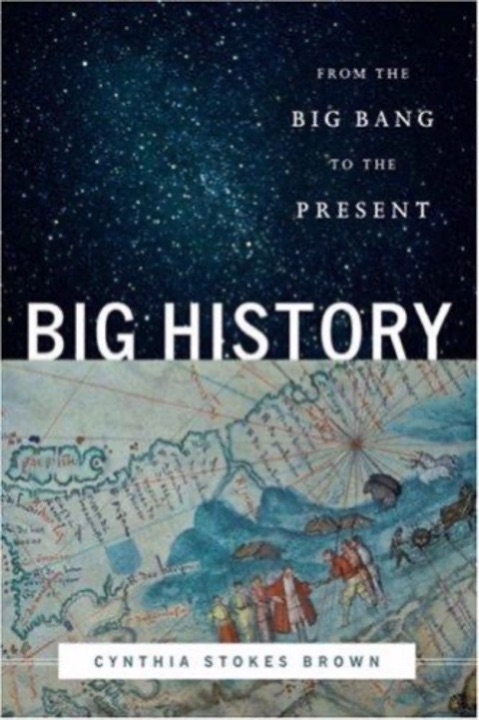
Big History: From the Big Bang to the Present
Applying the lessons from "Big History: From the Big Bang to the Present" by Cynthia Stokes Brown to your life can offer a profound perspective on your personal journey and the broader context of human existence. Here are some ways you might integrate these lessons:
-
Interconnectedness of History: - Reflect on how your personal experiences, such as surviving plane crashes and your career in medicine, are part of a larger tapestry of events. Consider how your actions and decisions might impact others and contribute to the broader narrative of human history.
-
The Role of Complexity: - Embrace the complexity in your life, whether it's balancing your various interests or navigating social issues. Recognize that complexity can drive change and innovation, much like your advocacy work and your approach to personal growth.
-
Human Impact on the Planet: - Given your concern for social issues and the environment, continue to advocate for sustainable practices and equality. Your involvement in activism can be a way to mitigate human impact and contribute positively to the planet's future.
-
The Importance of a Multidisciplinary Approach: - Leverage your diverse interests and skills, from flying to medicine, to approach problems from multiple angles. This can enhance your ability to innovate and adapt, much like the multidisciplinary approach of Big History.
-
Perspective on Human Existence: - Use the vast timeline of the universe as a reminder to live in the moment and appreciate the present, an aspiration you mentioned. This perspective can also reinforce your belief in reincarnation and the continuous journey of gaining knowledge and insight.
-
Resilience and Growth: - Your life experiences, including near-death situations and personal achievements, highlight your resilience. Continue to view challenges as opportunities for growth, aligning with the book's theme of overcoming adversity throughout history.
-
Kindness and Empathy: - Maintain your core values of kindness and empathy, understanding that these qualities have been crucial in the evolution of human societies. Your approach to treating others with compassion can have a lasting impact on those around you.
-
Legacy and Future Generations: - Consider how your actions today will affect future generations, much like the book's emphasis on the long-term impact of human activities. Your desire to leave the world a better place aligns with this lesson.
By integrating these lessons into your life, you can gain a deeper understanding of your place in the world and continue to make meaningful contributions to society.
What the book covers
"Big History: From the Big Bang to the Present" by Cynthia Stokes Brown is an ambitious work that seeks to provide a comprehensive overview of history from the inception of the universe to contemporary times. The book is part of the Big History movement, which integrates insights from various disciplines to create a unified narrative of history.
Summary:
-
The Big Bang and the Formation of the Universe: - The book begins with the Big Bang, approximately 13.8 billion years ago, which marks the origin of the universe. Brown explains the formation of fundamental particles, atoms, and eventually stars and galaxies. - The creation of elements through nuclear fusion in stars and their distribution across the universe through supernovae is highlighted as a critical process for the development of complex matter.
-
The Formation of Earth and the Emergence of Life: - Brown discusses the formation of the solar system and Earth around 4.5 billion years ago. The conditions that allowed for the emergence of life are explored, including the presence of water and a stable climate. - The book covers the development of simple life forms and the eventual rise of more complex organisms, leading to the Cambrian Explosion around 540 million years ago.
-
The Evolution of Humans: - The narrative shifts to the evolution of hominins in Africa, detailing the development of bipedalism, tool use, and eventually Homo sapiens. - Brown emphasizes the significance of cognitive developments, such as language and abstract thinking, which allowed humans to adapt to diverse environments and form complex societies.
-
The Agricultural Revolution: - The transition from nomadic hunter-gatherer societies to settled agricultural communities around 10,000 years ago is a pivotal moment in human history. - This shift led to the development of cities, social hierarchies, and eventually civilizations, with significant impacts on human societies and the environment.
-
The Rise of Civilizations and Empires: - Brown explores the rise and fall of various civilizations and empires, highlighting the role of trade, warfare, and cultural exchange in shaping human history. - The development of writing, legal systems, and organized religions are discussed as key factors in the consolidation of power and social cohesion.
-
The Modern Era and Globalization: - The book examines the transformative effects of the Industrial Revolution, which began in the 18th century, on technology, economy, and society. - The narrative extends to the 20th and 21st centuries, focusing on globalization, technological advancements, and the interconnectedness of the modern world.
Key Takeaways and Lessons:
-
Interconnectedness of History: Brown emphasizes the interconnected nature of historical events and processes, illustrating how developments in one area can have far-reaching impacts across time and space.
-
The Role of Complexity: The book highlights the increasing complexity of systems over time, from the formation of atoms to the development of human societies. This complexity is both a driver of change and a source of challenges.
-
Human Impact on the Planet: A significant lesson is the profound impact humans have had on the Earth, particularly since the Industrial Revolution. Brown underscores the importance of understanding this impact to address contemporary environmental and social issues.
-
The Importance of a Multidisciplinary Approach: By integrating insights from astronomy, biology, anthropology, and history, Brown demonstrates the value of a multidisciplinary approach in understanding the full scope of history.
-
Perspective on Human Existence: The book provides a broader perspective on human existence, placing it within the vast timeline of the universe. This perspective can foster a sense of humility and responsibility towards future generations.
Overall, "Big History: From the Big Bang to the Present" offers a sweeping narrative that encourages readers to see the connections between past, present, and future, and to consider their place within the grand story of the universe.