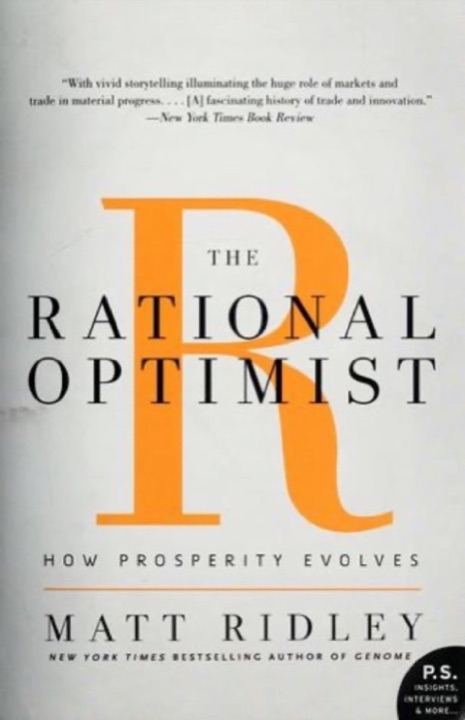
The Rational Optimist: How Prosperity Evolves
Applying the lessons from "The Rational Optimist: How Prosperity Evolves" by Matt Ridley to your life can enhance your perspective on progress, innovation, and interconnectedness. Here are some ways you might integrate these ideas:
-
Embrace Exchange and Collaboration: - Given your diverse interests and experiences, you can further embrace the power of exchange by actively seeking opportunities to collaborate with others. Whether it's in your professional life as a physician or in your personal hobbies, engaging with diverse perspectives can lead to new insights and innovations.
-
Foster Innovation and Continuous Learning: - Your commitment to being a lifelong learner aligns well with Ridley's emphasis on cumulative innovation. Continue to build on your knowledge and experiences, and stay open to new ideas and technologies that can enhance your personal and professional growth.
-
Maintain Optimism and Resilience: - Your natural optimism and resilience are strengths that align with Ridley's message. Continue to focus on the positive trends in your life and society, and use your experiences to inspire others to adopt a more optimistic outlook.
-
Leverage Globalization and Interconnectedness: - As someone who values travel and cultural experiences, you can further leverage globalization by connecting with people from different backgrounds. This can enrich your understanding of the world and contribute to your advocacy work in social issues.
-
Promote Freedom and Equality: - Ridley's emphasis on economic and intellectual freedom resonates with your values of kindness and empathy. Continue to advocate for social issues like equality and use your platform to promote acceptance and understanding.
-
Adaptability and Flexibility: - Your ability to adapt to changing circumstances is a key strength. Embrace this adaptability in all areas of your life, whether it's trying new activities like skydiving or navigating complex social and political landscapes.
-
Focus on the Power of Ideas: - Given your interest in philosophy and thinkers like Marcus Aurelius and Socrates, continue to explore and share powerful ideas that can drive positive change. Engage in discussions that challenge conventional thinking and inspire others to think critically.
-
Cultivate a Positive Legacy: - As you aim to leave the world a better place, focus on how your actions and decisions can contribute to long-term progress. Whether it's through your work, family, or community involvement, strive to create a legacy of kindness, innovation, and optimism.
By integrating these lessons into your life, you can continue to thrive personally and professionally while contributing to the broader progress and prosperity of society.
What the book covers
"The Rational Optimist: How Prosperity Evolves" by Matt Ridley is a compelling exploration of human progress and the factors that have driven prosperity throughout history. Ridley presents a counter-narrative to the often pessimistic view of the future, arguing that human innovation and exchange are the primary drivers of progress and prosperity.
Summary:
-
Historical Perspective on Progress: - Ridley begins by examining the history of human progress, emphasizing how trade and the exchange of ideas have been pivotal in advancing societies. He argues that prosperity is not a zero-sum game but rather a positive-sum game where everyone can benefit.
-
The Role of Trade and Specialization: - A central theme in the book is the importance of trade and specialization. Ridley posits that when individuals or groups specialize in what they do best and trade with others, it leads to increased efficiency, innovation, and wealth creation.
-
Innovation and Cultural Evolution: - Ridley discusses how innovation is a cumulative process, building on previous ideas and technologies. He likens cultural evolution to biological evolution, where ideas and technologies evolve through a process of variation, selection, and replication.
-
The Power of Ideas: - The book highlights the power of ideas and how their exchange has been crucial in driving human progress. Ridley argues that the more people are connected, the more ideas can spread and combine, leading to greater innovation.
-
Optimism about the Future: - Ridley challenges the pessimistic outlook on the future, arguing that despite challenges, human ingenuity and the ability to adapt and innovate will continue to drive progress. He provides examples of how past predictions of doom have often been proven wrong.
-
Critique of Pessimism: - The book critiques the pessimistic views often propagated by media and intellectuals, suggesting that these views overlook the historical trends of improvement in living standards, health, and technology.
-
Globalization and Interconnectedness: - Ridley defends globalization, arguing that interconnectedness through trade and communication has been a major force for good, lifting millions out of poverty and fostering peace through mutual dependence.
Key Takeaways and Lessons:
-
Human Progress is Driven by Exchange: The exchange of goods, services, and ideas is fundamental to human progress. Specialization and trade allow societies to become more efficient and innovative.
-
Innovation is Cumulative: Progress builds on itself. Each new idea or technology stands on the shoulders of previous innovations, leading to exponential growth in human capabilities.
-
Optimism is Justified: Despite challenges and setbacks, the long-term trend of human history is one of improvement and prosperity. Pessimism often underestimates human resilience and creativity.
-
Globalization is Beneficial: While not without its challenges, globalization has been a powerful force for good, spreading prosperity and fostering peace through interconnectedness.
-
The Importance of Freedom: Economic and intellectual freedom are crucial for innovation and progress. Societies that encourage free exchange of ideas and goods tend to be more prosperous.
-
Adaptability is Key: Humans have an incredible capacity to adapt to changing circumstances, which is a major reason for optimism about the future.
In conclusion, "The Rational Optimist" provides a well-argued case for optimism about the future, grounded in historical evidence and economic theory. Ridley encourages readers to focus on the positive trends in human history and to recognize the power of human ingenuity and cooperation in overcoming challenges.