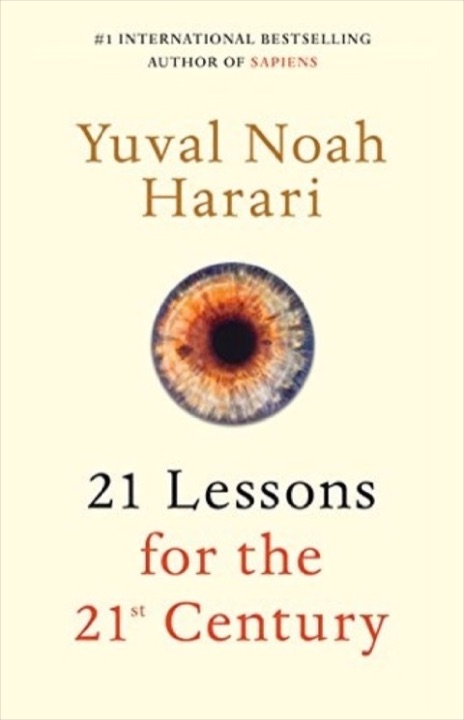
21 Lessons for the 21st Century
Applying the lessons from "21 Lessons for the 21st Century" by Yuval Noah Harari to your life can be a meaningful exercise, especially given your rich experiences and personal philosophy. Here are some ways you might integrate these lessons:
-
Embrace Adaptability: Given your history of resilience and adaptability, continue to embrace change and uncertainty. This aligns with Harari's emphasis on adaptability in a rapidly changing world. Your openness to learning and growth can help you navigate future challenges.
-
Rethink Education and Work: As someone who values lifelong learning, consider how you can continue to evolve your skills and knowledge. Harari suggests rethinking education to focus on critical thinking and emotional intelligence, which you already value. Perhaps explore new areas of interest or skills that align with emerging technologies.
-
Balance Technology and Humanity: You have a forward-thinking approach to technology. Continue to explore how technological advancements can be leveraged for the betterment of society while maintaining ethical standards. Your involvement in activism and advocacy can be enhanced by using technology to amplify your efforts.
-
Global Cooperation and Social Issues: Your passion for equality and social issues aligns with Harari's call for global cooperation. Continue to engage in advocacy work and seek opportunities to collaborate with others who share your values. Your belief in the interconnectedness of humanity can drive meaningful change.
-
Critical Thinking and Truth: Harari emphasizes the importance of critical thinking in the age of misinformation. Your direct and analytical communication style can help you navigate complex information landscapes. Encourage others to engage in thoughtful discourse and seek truth.
-
Finding Meaning and Purpose: Harari discusses the need for individuals to find their own sources of meaning. Your spiritual beliefs and values, such as kindness and empathy, provide a strong foundation for this. Continue to explore activities and relationships that bring you joy and fulfillment.
-
Resilience and Personal Growth: Your resilience and commitment to personal growth are strengths that align with Harari's lessons on resilience. Continue to evaluate your experiences and learn from them, as you have done throughout your life.
-
Secularism and Ethical Living: Your ethical beliefs and skepticism of organized religion resonate with Harari's advocacy for secularism. Continue to live by your values, promoting reason, compassion, and responsibility in your interactions.
-
Community and Globalism: Harari discusses the changing concept of community in a globalized world. Your experiences and identity as a global citizen can help you bridge divides and foster understanding across different cultures and communities.
-
Meditation and Self-Understanding: Consider exploring meditation or mindfulness practices to gain clarity and understanding of yourself, as Harari suggests. This can enhance your ability to live in the moment and find peace amidst life's challenges.
By integrating these lessons into your life, you can continue to navigate the complexities of the modern world with wisdom, resilience, and a commitment to truth and cooperation.
What the book covers
"21 Lessons for the 21st Century" by Yuval Noah Harari is a thought-provoking exploration of the contemporary challenges and issues facing humanity. The book is structured into five parts, each addressing different aspects of the modern world, and it offers insights into how we might navigate the complexities of the 21st century. Below is a thorough summary of the book, along with key takeaways and lessons.
Part 1: The Technological Challenge
- Disillusionment: Harari discusses the collapse of traditional narratives and ideologies, emphasizing the need for new stories to make sense of the world.
- Work: The future of work is uncertain due to automation and AI. Harari suggests that societies need to rethink education and employment structures.
- Liberty: The rise of big data and surveillance poses threats to individual freedom. Harari warns of the potential for digital dictatorships.
- Equality: Technological advancements could exacerbate inequality, creating a new "useless class" of people who are economically irrelevant.
Part 2: The Political Challenge
- Community: In an interconnected world, the concept of community is changing. Harari explores the tension between globalism and nationalism.
- Civilization: The survival of human civilization depends on global cooperation, especially in addressing issues like climate change.
- Nationalism: While nationalism can be a source of identity, it can also lead to conflict. Harari advocates for a balance between national and global interests.
- Religion: Religion still plays a significant role in politics, but Harari argues that it should not dictate policy in a secular world.
- Immigration: Immigration is a contentious issue that requires balancing humanitarian concerns with social cohesion.
Part 3: Despair and Hope
- Terrorism: Harari argues that terrorism is more about theater than existential threat, and that overreaction can be more damaging than the acts themselves.
- War: While large-scale wars are less common, the threat of nuclear conflict remains. Harari stresses the importance of diplomacy and international cooperation.
- Humility: Recognizing the limits of our knowledge is crucial. Harari encourages humility in the face of complex global challenges.
- God: The role of religion in providing meaning is diminishing, and Harari suggests that secular ideologies need to fill this void.
- Secularism: Harari champions secularism as a framework for ethical living, emphasizing reason, compassion, and responsibility.
Part 4: Truth
- Ignorance: In the information age, distinguishing between knowledge and misinformation is critical. Harari highlights the importance of critical thinking.
- Justice: The concept of justice is evolving, and Harari discusses the challenges of achieving justice in a globalized world.
- Post-Truth: The rise of fake news and misinformation threatens democracy. Harari calls for a commitment to truth and transparency.
- Science Fiction: Science fiction can inspire innovation but also shape our fears and expectations about the future.
Part 5: Resilience
- Education: Harari argues for a shift in education from rote learning to teaching critical thinking, adaptability, and emotional intelligence.
- Meaning: Finding meaning in life is a personal journey. Harari suggests that meaning can be derived from relationships, experiences, and understanding.
- Meditation: Harari shares his personal experience with meditation as a tool for gaining clarity and understanding oneself.
Key Takeaways and Lessons
- Adaptability: In a rapidly changing world, adaptability is crucial. Individuals and societies must be willing to learn and change.
- Global Cooperation: Many of the challenges we face, such as climate change and technological disruption, require global solutions.
- Critical Thinking: The ability to critically assess information is more important than ever in the age of information overload.
- Balancing Technology and Humanity: As technology advances, maintaining our humanity and ethical standards is essential.
- Finding Meaning: In a world where traditional narratives are collapsing, individuals must find their own sources of meaning and purpose.
Harari's "21 Lessons for the 21st Century" is a call to action for individuals and societies to confront the challenges of the modern world with wisdom, resilience, and a commitment to truth and cooperation.