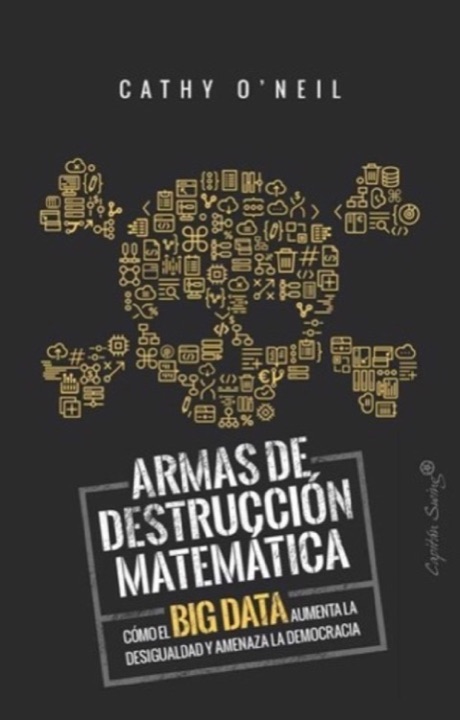
Weapons of Math Destruction: How Big Data Increases Inequality and Threatens Democracy
Applying the lessons from "Weapons of Math Destruction" by Cathy O’Neil to your life involves integrating the book's insights into your personal and professional practices, particularly given your background and values. Here are some ways you might do this:
-
Advocate for Transparency and Accountability: Given your direct communication style and leadership experience, you can advocate for transparency and accountability in any algorithms or data-driven systems you encounter, whether in your professional field or in broader societal contexts. Encourage open discussions about how these systems work and their potential impacts.
-
Address Bias and Fairness: With your strong sense of empathy and fairness, you can be vigilant about recognizing and addressing biases in data and algorithms. This might involve questioning the data sources and methodologies used in any systems you interact with, ensuring they do not perpetuate existing inequalities.
-
Promote Ethical Data Science: As someone who values ethical considerations, you can promote ethical practices in data science within your networks. This could involve supporting initiatives or policies that prioritize fairness and equity in algorithm development and deployment.
-
Support Regulation and Oversight: Your experience in advocacy and activism can be leveraged to support regulatory frameworks that govern the use of algorithms. You can use your voice to push for policies that protect vulnerable populations from the potential harms of WMDs.
-
Increase Public Awareness and Education: Given your passion for lifelong learning and education, you can help raise awareness about the impact of algorithms. This might involve engaging in discussions, writing, or speaking about the importance of understanding these systems and their societal implications.
-
Incorporate Diverse Perspectives: In your personal and professional interactions, strive to include diverse perspectives, especially when dealing with data-driven decisions. This aligns with your belief in equality and can help mitigate biases in decision-making processes.
-
Reflect on Personal Use of Technology: As someone who interacts with technology frequently, consider how you use data and algorithms in your daily life. Reflect on whether these tools align with your values of kindness and empathy, and make adjustments as needed.
-
Engage in Continuous Learning: Stay informed about developments in data science and technology. Your commitment to being a lifelong learner can help you remain aware of new challenges and opportunities related to big data and algorithms.
By integrating these lessons into your life, you can contribute to a more equitable and transparent use of data and technology, aligning with your core values and aspirations for a better society.
What the book covers
"Weapons of Math Destruction: How Big Data Increases Inequality and Threatens Democracy" by Cathy O’Neil is a critical examination of the role that big data and algorithms play in modern society. O’Neil, a mathematician and data scientist, explores how these mathematical models, which are often perceived as objective and neutral, can perpetuate and even exacerbate social inequalities. Here is a thorough summary of the book along with key takeaways and lessons:
Summary
Introduction
Cathy O’Neil introduces the concept of "Weapons of Math Destruction" (WMDs), which are algorithms that are widespread, mysterious, and destructive. These models are used in various sectors, including education, employment, criminal justice, and finance, and they often operate without transparency or accountability.
Chapter 1: Bomb Parts
O’Neil explains the components that make an algorithm a WMD: opacity, scale, and damage. She argues that these models are often opaque, meaning that they are not transparent to those affected by them. They operate on a large scale, impacting millions of people, and they can cause significant harm by reinforcing existing inequalities.
Chapter 2: Shell Shocked
The book delves into the use of algorithms in education, particularly in teacher evaluations. O’Neil discusses how these models can be flawed and unfair, often penalizing teachers based on factors beyond their control, such as socioeconomic status of students.
Chapter 3: Arms Race
O’Neil examines the role of algorithms in the hiring process. She highlights how these models can perpetuate biases, such as gender and racial discrimination, by relying on historical data that reflects past prejudices.
Chapter 4: Propaganda Machine
The focus shifts to the advertising industry, where algorithms are used to target consumers. O’Neil discusses how these models can manipulate public opinion and contribute to political polarization by creating echo chambers.
Chapter 5: Civilian Casualties
In this chapter, O’Neil explores the use of algorithms in the criminal justice system, particularly in predictive policing and sentencing. She argues that these models can lead to discriminatory practices and exacerbate racial disparities.
Chapter 6: Ineligible to Serve
O’Neil discusses the financial sector, focusing on credit scoring and insurance. She explains how algorithms can unfairly penalize individuals based on factors like zip codes, which can be proxies for race and income.
Chapter 7: Sweating Bullets
The book examines the use of algorithms in the workplace, particularly in performance evaluations and productivity tracking. O’Neil argues that these models can create stressful work environments and undermine employee morale.
Chapter 8: Collateral Damage
O’Neil discusses the broader societal impacts of WMDs, including their role in perpetuating inequality and undermining democracy. She emphasizes the need for accountability and transparency in the development and deployment of these models.
Conclusion: The Way Forward
O’Neil concludes by calling for a more ethical approach to data science. She advocates for the development of algorithms that are transparent, fair, and accountable. She also emphasizes the importance of involving diverse perspectives in the creation of these models to ensure they serve the public good.
Key Takeaways and Lessons
-
Transparency and Accountability: Algorithms should be transparent and accountable to ensure they do not perpetuate harm or inequality. Stakeholders should have access to understand and challenge the decisions made by these models.
-
Bias and Fairness: It is crucial to recognize and address biases in data and algorithms. Historical data often reflects societal prejudices, and without careful consideration, these biases can be encoded into models.
-
Ethical Data Science: Data scientists and developers should prioritize ethical considerations in their work. This includes questioning the purpose and impact of algorithms and striving to create models that promote fairness and equity.
-
Regulation and Oversight: There is a need for regulatory frameworks to govern the use of algorithms, ensuring they are used responsibly and do not harm vulnerable populations.
-
Public Awareness and Education: Increasing public awareness about the impact of algorithms is essential. Educating people about how these models work and their potential consequences can empower individuals to advocate for change.
-
Diverse Perspectives: Involving diverse perspectives in the development of algorithms can help mitigate biases and ensure that models are more equitable and representative of different communities.
Overall, "Weapons of Math Destruction" serves as a cautionary tale about the unchecked power of algorithms and the urgent need for reform in how they are designed and implemented.