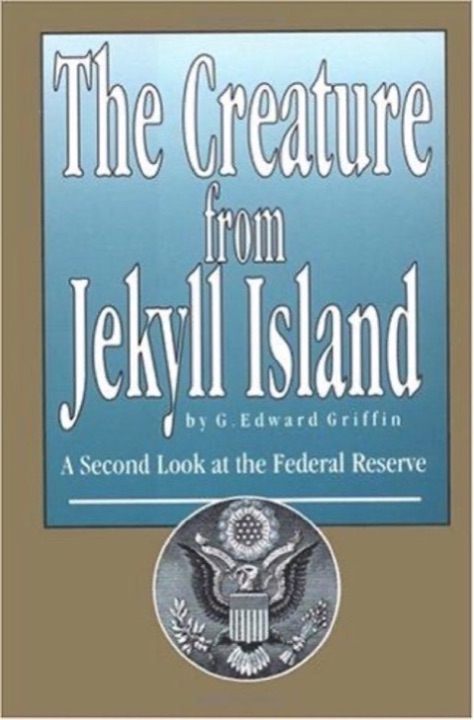
The Creature from Jekyll Island
Applying the lessons from "The Creature from Jekyll Island" by G. Edward Griffin to your life involves a critical examination of financial systems and a proactive approach to personal and societal financial well-being. Here are some ways you might integrate these lessons:
-
Financial Awareness and Education: - Given your interest in lifelong learning, you can deepen your understanding of monetary policy and the Federal Reserve's role in the economy. This knowledge can help you make informed financial decisions and advocate for transparency and accountability in financial institutions.
-
Skepticism and Critical Thinking: - Your natural curiosity and analytical mindset can be applied to question the status quo of financial systems. Engage in discussions and research about the impact of central banking on economic stability and inequality, and consider how these issues align with your values of kindness and empathy.
-
Advocacy and Activism: - With your passion for social issues like equality, you can advocate for financial reforms that promote economic justice and reduce the concentration of power among financial elites. This could involve supporting policies or organizations that aim to democratize financial systems and increase transparency.
-
Personal Financial Management: - Use the insights from the book to manage your finances in a way that minimizes vulnerability to inflation and economic cycles. This might include diversifying investments, being cautious with debt, and maintaining a robust savings strategy.
-
Community Engagement: - Share your knowledge and insights with others in your community to raise awareness about the implications of central banking. This could involve organizing discussions, writing articles, or participating in forums that explore these topics.
-
Ethical Considerations: - Align your financial decisions with your ethical beliefs, ensuring that your investments and financial activities reflect your values of kindness and empathy. Consider the social and environmental impact of your financial choices.
-
Resilience and Adaptability: - Your resilience and ability to adapt can be applied to navigating economic uncertainties. Stay informed about economic trends and be prepared to adjust your financial strategies as needed to protect your interests and those of your family.
By integrating these lessons into your life, you can contribute to a more equitable financial system while ensuring your personal financial stability aligns with your values and beliefs.
What the book covers
"The Creature from Jekyll Island: A Second Look at the Federal Reserve" by G. Edward Griffin is a comprehensive critique of the Federal Reserve System and its impact on the U.S. economy and society. The book delves into the history, structure, and function of the Federal Reserve, arguing that it serves the interests of a financial elite rather than the public.
Summary:
-
Historical Context and Creation: - The book begins with the secretive meeting in 1910 on Jekyll Island, Georgia, where a group of bankers and politicians allegedly crafted the blueprint for the Federal Reserve System. Griffin suggests that this meeting was a conspiracy to create a central bank that would serve the interests of the financial elite.
-
The Federal Reserve System: - Griffin explains the structure of the Federal Reserve, describing it as a private entity with significant control over the U.S. monetary system. He argues that the Fed operates independently of the government, with little accountability to the public.
-
Monetary Policy and Inflation: - The book discusses how the Federal Reserve's control over the money supply leads to inflation, which Griffin views as a hidden tax on the public. He argues that inflation erodes the purchasing power of money, benefiting debtors (including the government) at the expense of savers.
-
Banking and Economic Cycles: - Griffin explores the role of the Federal Reserve in creating economic booms and busts. He suggests that the Fed's manipulation of interest rates and credit availability leads to unsustainable economic bubbles that eventually burst, causing recessions.
-
The Banking Cartel: - The author posits that the Federal Reserve acts as a cartel for major banks, protecting their interests and profits. He claims that this cartelization leads to a concentration of financial power and undermines free-market principles.
-
Global Implications: - Griffin extends his critique to the international level, arguing that central banks worldwide, often modeled after the Federal Reserve, contribute to global financial instability. He also discusses the role of international organizations like the International Monetary Fund (IMF) and the World Bank in perpetuating this system.
Key Takeaways and Lessons:
-
Skepticism of Central Banking: Griffin encourages readers to question the role and necessity of central banks, particularly the Federal Reserve, in managing the economy. He suggests that their actions often serve the interests of a select few rather than the general public.
-
Understanding Monetary Policy: The book emphasizes the importance of understanding how monetary policy affects inflation, purchasing power, and economic stability. Griffin argues that citizens should be informed about these issues to hold policymakers accountable.
-
Critique of Financial Elites: Griffin's work is a critique of the concentration of financial power and the influence of elites in shaping economic policy. He warns against the dangers of allowing a small group to control the monetary system.
-
Advocacy for Transparency and Reform: The book calls for greater transparency and accountability in the Federal Reserve System. Griffin advocates for reforms that would align the Fed's actions with the public interest.
-
Awareness of Economic Cycles: Understanding the causes and effects of economic cycles is crucial for individuals and policymakers. Griffin suggests that the Fed's policies often exacerbate these cycles, leading to greater economic instability.
Overall, "The Creature from Jekyll Island" is a provocative examination of the Federal Reserve and its impact on the economy, urging readers to critically assess the role of central banking in modern society.