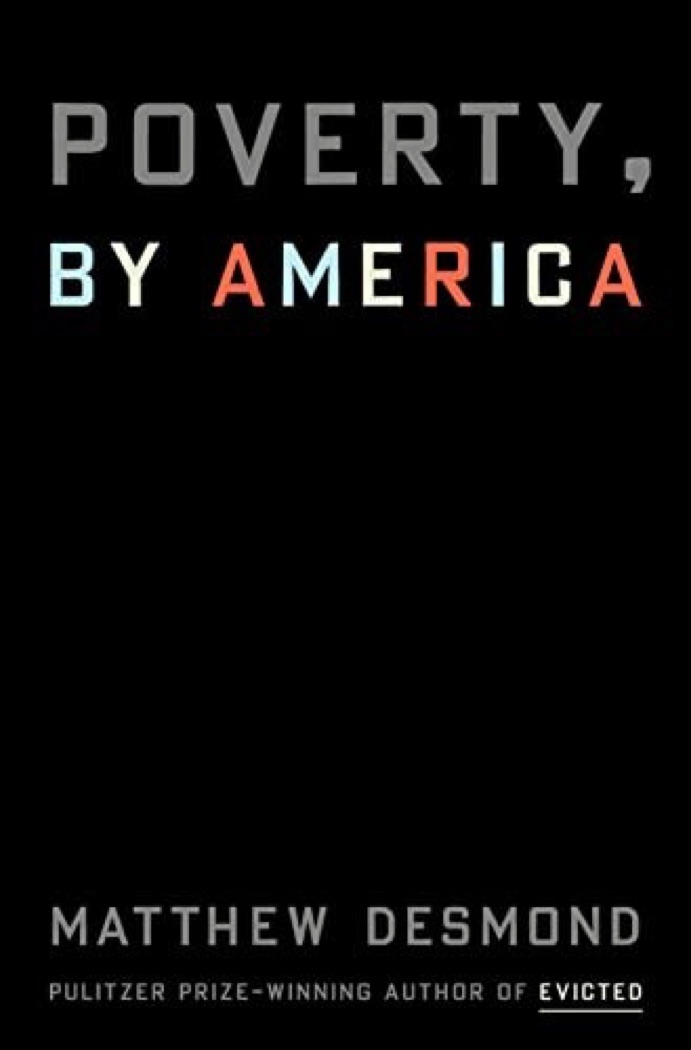
Poverty, by America
Applying the lessons from "Poverty, by America" by Matthew Desmond to your life can be a profound exercise in reassessing your impact as a leader, physician, and citizen. Here are some ways you might integrate these lessons:
- Ethical Entrepreneurship and Fair Labor: - As a serial entrepreneur, you can lead by example by ensuring that every venture you found or invest in provides a true living wage and robust benefits rather than just market-rate compensation. Recognizing that "cheap labor" is a form of exploitation allows you to build companies that prioritize human dignity alongside profit, perfectly aligning with your mantra of staying humble while remaining hungry for social progress.
- Addressing Social Determinants in Medicine: - In your role as an emergency physician, you see the direct physical impact of poverty and housing instability every day in the ER. Integrating Desmond’s insights means looking beyond the immediate medical crisis to advocate for systemic changes in how healthcare and social services are integrated, ensuring that your work at Tribal Health or in clinical settings addresses the root causes of patient vulnerability.
- Leveraging Legal Knowledge for Systemic Equity: - Using your legal background, you can support or advise on initiatives that challenge exclusionary zoning and predatory financial practices in your community. By understanding how the law is often used to protect the affluent at the expense of the poor, you can use your expertise to help rewrite local or corporate rules in favor of equity and transparency.
- Impact-Driven Venture Capital: - Through Xcellerant Ventures, you have the power to fund technologies and businesses that specifically target the "poverty penalties" described by Desmond, such as high-cost financial services or healthcare deserts. Investing in innovations that lower costs for the unbanked or provide high-quality care to underserved populations allows you to use the VC model to dismantle the very systems that perpetuate scarcity.
- Conscious Citizenship and Personal Accountability: - The book invites you to look at your own lifestyle and the "hidden" subsidies you might benefit from, such as specific tax breaks or community investments. Staying humble involves recognizing where your success may have been bolstered by systemic advantages and using that awareness to advocate for a more balanced distribution of public resources, even when it does not directly benefit your personal bottom line.
By integrating these lessons, you move beyond the role of a successful professional to that of a systemic change agent. Desmond’s work provides the intellectual framework to ensure that your pursuit of excellence in medicine, law, and business also serves the greater goal of building a more just and inclusive American society.
What the book covers
"Poverty, by America" by Matthew Desmond is a rigorous and deeply unsettling analysis of why poverty persists in the United States despite its status as the world's wealthiest nation. Desmond shifts the focus away from the behavior of the poor and instead examines how the affluent majority—knowingly or unknowingly—benefits from and subsidizes the deprivation of others. The book serves as both a sociological study and a moral manifesto, challenging readers to recognize their role in a system designed to protect wealth at the expense of the vulnerable.
Summary:
- The Paradox of American Abundance: - Desmond argues that poverty in America is not an accidental byproduct of a market economy but a deliberate choice maintained by policy and social preference. He highlights that despite the immense wealth of the United States, it has higher rates of poverty than any other advanced democracy, suggesting that the problem is one of distribution and exploitation rather than a lack of resources.
- The Architecture of Exploitation: - The book details how the poor are systematically exploited in the labor and housing markets through practices that benefit the secure middle and upper classes. Desmond explains that the decline of unions and the rise of low-wage, benefit-free work ensure a steady supply of cheap labor for the affluent, while the housing market traps low-income families in high-rent, substandard housing through predatory practices and a lack of choice.
- The Welfare State for the Wealthy: - A central argument is that the American welfare state actually provides more assistance to the wealthy than to the poor through hidden subsidies. Desmond points to tax breaks like the mortgage interest deduction and tax-advantaged savings accounts as forms of government spending that disproportionately benefit those who are already financially stable, often at the direct expense of funding aid for those in need.
- Exclusionary Zoning and Geographic Segregation: - The author explores how affluent communities use exclusionary zoning laws to keep low-income housing out of their neighborhoods to preserve property values and school funding. This geographic segregation concentrates poverty in under-resourced areas, limiting access to quality education, safe environments, and economic opportunities for the poor while inflating the insulation of the wealthy.
- The Psychological Toll of Scarcity: - Desmond examines the "poverty trap," where the constant stress of scarcity impairs decision-making and long-term planning through cognitive load. He argues that the psychological toll of living on the edge creates a cycle that is nearly impossible to escape without systemic intervention, refuting the common myth that poverty is merely a result of personal character flaws or lack of effort.
- The Call for Poverty Abolitionism: - The final portion of the book calls for a new movement of "poverty abolitionists" who commit to dismantling the systems that benefit them at the expense of others. Desmond urges readers to support policy changes such as universal basic income, expanded housing vouchers, and the elimination of exclusionary zoning to create a more equitable society where prosperity is shared.
The significance of Desmond's work lies in its refusal to let the reader remain a passive observer of inequality. By reframing poverty as a relationship of exploitation rather than an isolated condition of the "other," he forces a national conversation about the moral and social costs of American prosperity.