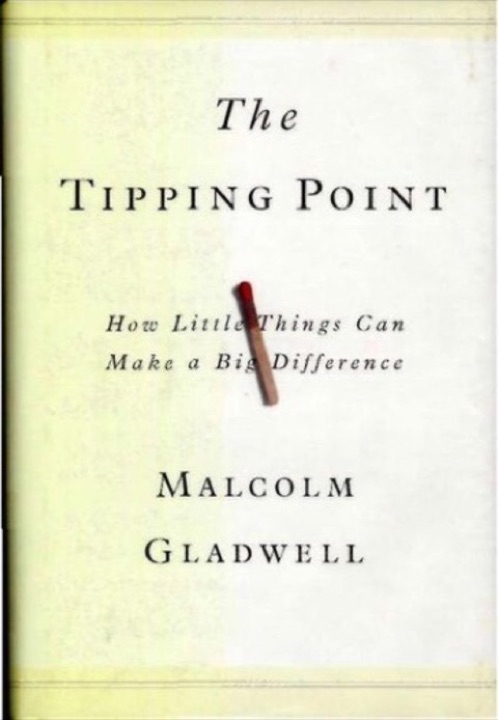
The Tipping Point
Applying the lessons from "The Tipping Point" by Malcolm Gladwell to your life can be both insightful and transformative. Here’s how you might integrate some of the key concepts into your personal and professional endeavors:
-
Leverage Your Network (The Law of the Few): - Connectors: Given your diverse interests and experiences, you likely know a wide range of people. Use this network to introduce and connect others who might benefit from knowing each other. This can amplify your influence and help spread ideas or initiatives you care about. - Mavens: As someone who values learning and knowledge, you can become a maven by sharing your insights and experiences with others. Whether it’s through writing, speaking, or mentoring, your accumulated wisdom can guide and inform those around you. - Salesmen: Your direct and humorous communication style can be persuasive. Use this to advocate for causes you’re passionate about, such as social equality or technological advancements.
-
Craft Sticky Messages (The Stickiness Factor): - When communicating ideas, whether in your advocacy work or personal interactions, focus on making your messages memorable and engaging. Use storytelling, humor, and relatable examples to ensure your ideas resonate and stick with your audience.
-
Optimize Your Environment (The Power of Context): - Recognize how your surroundings influence your behavior and those around you. Create environments—whether at work, home, or in social settings—that encourage positive interactions and support your values of kindness and empathy. - In your advocacy work, consider how changing the context or environment can lead to significant social change. Small adjustments in how issues are presented or addressed can lead to broader acceptance and action.
-
Identify and Act on Tipping Points: - Reflect on moments in your life where small changes led to significant outcomes, such as your realization in college that you could achieve anything. Use this understanding to identify potential tipping points in current projects or goals. - Be open to experimentation and adaptability. Since tipping points can be unpredictable, remain flexible in your strategies and be ready to pivot when necessary.
-
Embrace Small Changes for Big Effects: - In your personal growth journey, focus on making small, consistent changes that align with your values and aspirations. Whether it’s improving your weaknesses or trying new activities like skydiving, these small steps can lead to meaningful transformation over time.
-
Engage with Key Influencers: - In your professional and personal life, identify individuals who can help amplify your efforts. Collaborate with those who share your values and can help spread your message or support your initiatives.
By applying these principles, you can enhance your ability to influence and create positive change in your life and the lives of others. Whether it’s through your work, advocacy, or personal relationships, understanding the dynamics of how ideas and behaviors spread can empower you to make a lasting impact.
What the book covers
"The Tipping Point: How Little Things Can Make a Big Difference" by Malcolm Gladwell is a seminal work that explores how small actions at the right time, in the right place, and with the right people can create a tipping point for a product, idea, or behavior to spread like wildfire. Gladwell introduces several key concepts and uses a variety of case studies to illustrate how these principles work in real-world scenarios.
Key Concepts:
-
The Law of the Few: Gladwell argues that a small number of people are responsible for the majority of the spread of ideas. He categorizes these people into three types: - Connectors: Individuals who know a large number of people and have a knack for making introductions. - Mavens: Information specialists who accumulate knowledge and share it with others. - Salesmen: Persuasive individuals who have the skills to convince others to adopt new ideas or behaviors.
-
The Stickiness Factor: This principle refers to the specific content of a message that makes it memorable and impactful. Gladwell emphasizes that for an idea to spread, it must be inherently appealing and engaging.
-
The Power of Context: The environment or context in which people operate can significantly influence their behavior. Gladwell discusses how small changes in context can lead to significant shifts in behavior.
Case Studies:
-
The Rise of Hush Puppies: Gladwell describes how the resurgence of Hush Puppies shoes in the mid-1990s was sparked by a few influential people in the fashion industry, leading to a tipping point where the shoes became a nationwide trend.
-
The Spread of Syphilis in Baltimore: He examines how the spread of syphilis in Baltimore was influenced by social and environmental factors, illustrating the power of context.
-
The Success of "Sesame Street" and "Blue's Clues": These children's television programs are used to demonstrate the stickiness factor, showing how specific elements of the shows were designed to capture and hold the attention of young viewers.
Key Takeaways and Lessons:
-
Small Changes Can Have Big Effects: The book emphasizes that minor adjustments in the right areas can lead to significant outcomes, highlighting the importance of focusing on key influencers and contexts.
-
Identify and Leverage Key Influencers: Understanding the roles of connectors, mavens, and salesmen can help in crafting strategies to spread ideas or products effectively.
-
Craft Sticky Messages: Ensuring that messages are memorable and engaging is crucial for them to have a lasting impact and to facilitate their spread.
-
Consider the Environment: Recognizing the influence of context on behavior can help in designing environments that encourage positive changes and discourage negative ones.
-
Epidemics Are Unpredictable: While certain principles can guide the spread of ideas, the exact tipping point is often unpredictable, requiring flexibility and adaptability in strategy.
Overall, "The Tipping Point" provides a framework for understanding how social epidemics start and spread, offering valuable insights for marketers, educators, policymakers, and anyone interested in the dynamics of change.