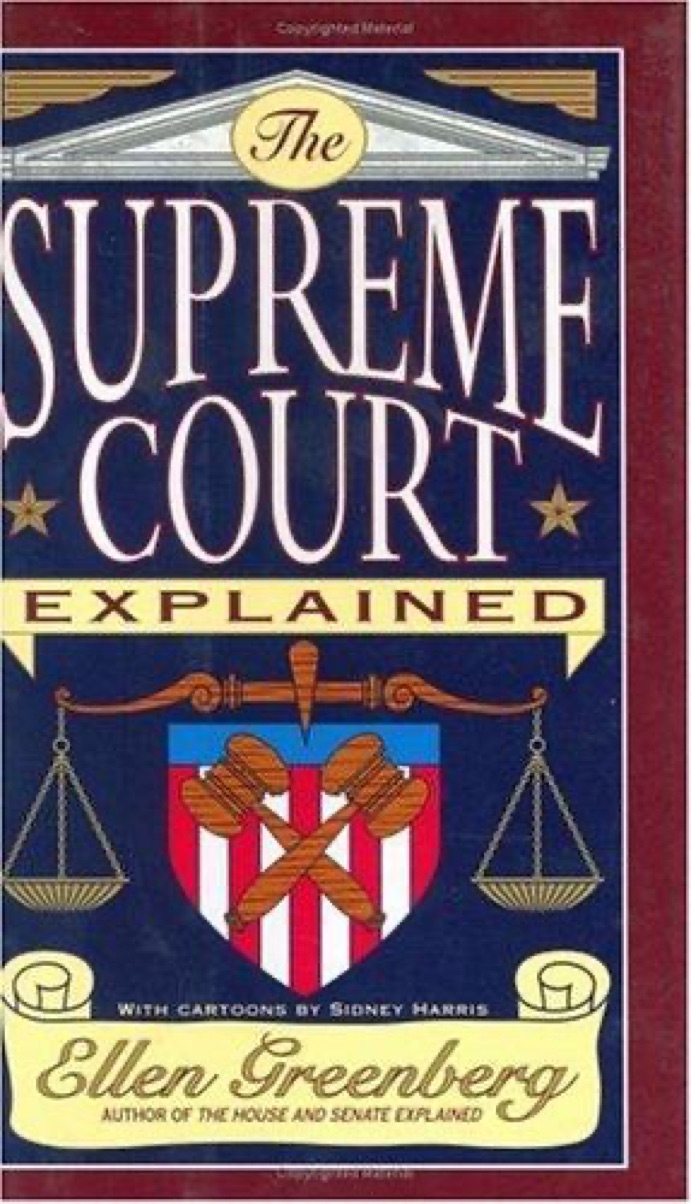
The Supreme Court Explained
Applying the lessons from “The Supreme Court Explained” by Ellen Greenberg to your life can be an exercise in understanding how to lead with integrity, manage complex systems, and appreciate the long-term impact of today’s decisions. Here are some ways you might integrate these lessons:
-
Master the Rules of Your Domain: - Just as the Court operates within a strict constitutional and procedural framework, you should seek to deeply understand the "unwritten laws" and formal regulations of your industry, whether it is medicine, law, or business. Mastery of the system allows you to navigate it more effectively and identify where meaningful change is possible without causing systemic failure.
-
Value the Dissenting Voice: - In your leadership roles or business ventures, do not silence the minority opinion. The Supreme Court's history shows that the dissent of today is often the majority opinion of tomorrow; by encouraging healthy debate and listening to those who disagree with the status quo, you gain a more holistic view of the risks and opportunities ahead.
-
Think in Decades, Not Days: - The concept of stare decisis (standing by things decided) highlights the importance of consistency and precedent. When making strategic decisions in your practice or firm, consider how these choices will age and what kind of "precedent" you are setting for your team’s culture and your brand’s future reliability.
-
Adopt a Rigorous Selection Process: - The vetting process for a Supreme Court justice is a masterclass in due diligence. Apply a similar level of scrutiny when hiring key executives or partners for your ventures, looking beyond technical skills to evaluate their underlying philosophy, temperament, and long-term alignment with your organization's mission.
-
Clarify Your Communication: - The Court must translate dense legal theory into opinions that guide a nation. In your own communications—whether explaining a complex medical procedure to a patient or a venture strategy to investors—aim for the same level of precision and clarity to ensure your intent is not lost in translation and can be executed reliably by others.
-
Maintain Independence and Objectivity: - Life tenure for justices is intended to prevent outside influence from clouding judgment. You can emulate this by creating boundaries in your professional life that protect your clinical or ethical judgment from being compromised by short-term financial pressures or social trends that may not serve the ultimate goal of the enterprise.
By integrating these lessons, you will cultivate a more deliberative and principled approach to your multifaceted career. Understanding the structure of high-level decision-making allows you to act with the authority of a leader who respects tradition while remaining open to the necessary evolutions of a changing world.
What the book covers
“The Supreme Court Explained” by Ellen Greenberg is a comprehensive primer that demystifies the inner workings, history, and profound impact of the United States’ highest judicial body. It provides a clear-eyed look at how the Court interprets the Constitution and resolves the country’s most contentious legal disputes through its unique procedural mechanisms. By detailing the evolution of the institution from its humble 18th-century beginnings to its modern role as the ultimate arbiter of American law, the book offers a vital resource for understanding the checks and balances inherent in the federal government.
Summary:
-
The Constitutional Framework and Early History: - The book begins by examining Article III of the U.S. Constitution, which established the Supreme Court, and details the early struggles to define its authority. Greenberg explains how the landmark case Marbury v. Madison established the principle of judicial review, granting the Court the power to declare laws unconstitutional and effectively elevating the judiciary to a co-equal branch of government. - This section tracks the Court's physical and conceptual journey, from meeting in borrowed rooms in the Capitol to moving into its own iconic marble building in 1935, reflecting its growing stature in the American consciousness and the stabilization of its authority.
-
The Path to the Bench: - Greenberg outlines the intricate process of how a justice is appointed, focusing on the dual role of the President and the Senate. She describes the criteria used for selection, including judicial philosophy, professional record, and political viability, which are scrutinized during often-intense confirmation hearings. - The narrative highlights how the lifetime tenure of justices is designed to insulate them from political pressure, allowing them to make decisions based on law rather than public opinion or electoral cycles, though the author acknowledges the inherent political nature of the appointment process itself.
-
How the Court Selects and Hears Cases: - The text provides a technical breakdown of the writ of certiorari and the "Rule of Four," explaining how the thousands of petitions filed annually are whittled down to a small percentage of cases. This selectivity ensures that the Court focuses only on matters of significant national importance or circuit court conflicts that require a final resolution. - Readers are taken through the ritualized environment of oral arguments, where lawyers have limited time to present their positions while being peppered with questions from the justices who have already studied the case briefs and identified the core constitutional tensions.
-
The Decision-Making Process: - Greenberg takes the reader behind closed doors into the private conferences where the justices debate the cases. She explains the protocol for voting, starting with the Chief Justice and moving in order of seniority, highlighting the collaborative yet often adversarial nature of these deliberations as the justices seek to persuade one another. - The process of opinion writing is detailed, including how the Chief Justice or the senior justice in the majority assigns the task of drafting the official ruling, which then undergoes rounds of edits and responses from other members who may write separate opinions.
-
The Weight of Judicial Opinions: - The book categorizes the various types of opinions: majority, concurring, and dissenting. Greenberg argues that while the majority opinion is the law of the land, dissents are crucial as they often provide the intellectual foundation for future reversals of outdated precedents, serving as a "voice for the future." - By exploring how these written documents are disseminated and interpreted, the author shows how the Court’s words translate into tangible changes in law enforcement, education, and civil liberties, influencing the behavior of every other court in the nation.
-
Major Landmark Decisions: - A significant portion of the work is dedicated to summarizing the cases that changed America, from Brown v. Board of Education to Roe v. Wade and Gideon v. Wainwright. Greenberg explains the social context of these cases and the legal reasoning that led to their transformative outcomes. - These examples illustrate the Court's role as a protector of minority rights against the "tyranny of the majority," as well as its capacity to reflect or resist changing social mores over decades, showing that the law is both a anchor and a mirror for society.
-
The Evolving Role of the Chief Justice: - The book examines the unique responsibilities of the Chief Justice, who acts as the chief administrative officer of the federal judiciary. Greenberg discusses how different "eras"—such as the Warren Court or the Rehnquist Court—are defined by the leadership style and judicial leanings of the person at the helm. - This section explores the "soft power" the Chief Justice wields in setting the tone for the Court’s term and managing the interpersonal dynamics between eight other fiercely independent legal minds who must work together for decades.
“The Supreme Court Explained” is significant because it strips away the mystery surrounding one of the world's most powerful institutions without oversimplifying its complexity. It empowers citizens to engage with judicial news more critically by providing the vocabulary and historical context necessary to understand how legal precedents affect daily life. Ultimately, Greenberg's work reinforces the idea that the Court is a stabilizing force in American democracy, ensuring that the rule of law remains paramount even in times of intense national division.