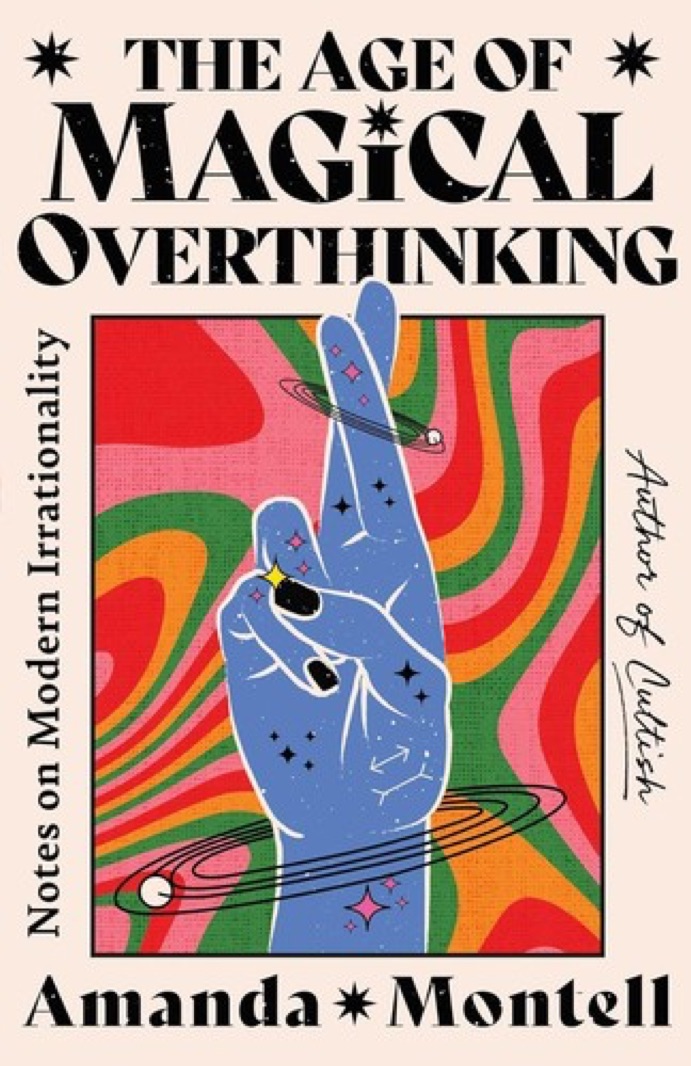
The Age of Magical Overthinking: Notes on Modern Irrationality
Applying the lessons from "The Age of Magical Overthinking: Notes on Modern Irrationality" by Amanda Montell to your life can be an essential practice in maintaining clarity amidst the noise of high-stakes leadership, medical practice, and entrepreneurship. Here are some ways you might integrate these lessons:
- Mastering Intellectual Humility: - You should actively combat the Dunning-Kruger effect by surrounding yourself with specialists whose expertise challenges your own conclusions. In the cockpit, the courtroom, or the boardroom, recognizing the limits of your "scanned" knowledge ensures that decisions are based on deep-rooted data rather than a false sense of mastery provided by the internet.
- Neutralizing the Halo Effect in Vetting: - Whether you are evaluating a potential investment for Xcellerant Ventures or hiring a new executive for a healthcare startup, you must consciously decouple charisma from competence. Do not allow a founder’s impressive pedigree or public persona to blind you to the actual health of the business model or the clinical outcomes of their technology.
- Operationalizing the Sunk Cost Fallacy: - In healthcare entrepreneurship, the ability to "fail fast" is a competitive advantage. You should apply a rigorous "zero-based" thinking approach to ongoing projects; if you would not start a specific initiative today with the current information, you must have the courage to abandon it, regardless of the resources already expended.
- Filtering Proportionality Bias in Crisis Management: - During medical emergencies or legal disputes, there is a natural urge to seek a single, profound cause for a crisis. You can lead more effectively by accepting that some failures are systemic or even random, allowing you to focus on immediate stabilization rather than getting lost in the pursuit of a "grand narrative" for why things went wrong.
- Resisting the Recency Bias in Strategy: - As a serial entrepreneur, it is easy to let the latest market fluctuation or news cycle dictate your strategy. You should practice "temporal distancing" by zooming out to look at ten-year trends rather than ten-day headlines, ensuring your long-term vision isn't derailed by the "magical overthinking" of the current moment.
- Embracing Uncertainty over Manifestation: - Instead of falling into the trap of "toxic positivity" or the belief that sheer willpower guarantees success, you should foster a culture of radical realism. By acknowledging risks and uncontrollable variables, you build more resilient organizations and a more grounded personal philosophy that isn't shattered when reality diverges from your expectations.
By integrating these lessons, you move beyond the "magical" shortcuts of the brain and toward a more disciplined, evidence-based way of living and leading. This approach not only preserves your mental energy but also reinforces your commitment to staying hungry for truth and humble enough to admit when your own brain is trying to deceive you.
What the book covers
"The Age of Magical Overthinking: Notes on Modern Irrationality" by Amanda Montell is a sharp, timely examination of why our brains struggle to make sense of the modern world. Montell, a linguist and cultural critic, argues that our internal cognitive biases—once essential for survival—have become distorted by the pressures of the digital age, social media, and a relentless information cycle. The book serves as both a psychological primer and a cultural critique, providing readers with the tools to recognize their own irrational patterns of thought in an era defined by information overload.
Summary:
- The Halo Effect and Modern Idol Worship: - Montell explores how the human brain is wired to attribute a wide range of positive traits to an individual based on a single perceived strength, such as beauty, wealth, or fame. In the digital era, this bias fuels intense parasocial relationships and "stanning," where followers defend public figures' egregious behaviors because of an initial positive impression. - This section argues that the internet amplifies this effect, making it harder for individuals to objectively evaluate leaders or influencers. This cognitive shortcut often leads to a "cult of personality" that can obscure significant character flaws or a lack of actual expertise.
- The Sunk Cost Fallacy and Identity: - The author examines the psychological difficulty of walking away from a failing endeavor or a toxic belief system once time, money, or emotion has been invested. She connects this to the way modern individuals tie their personal identities to their careers or public-facing digital personas, making a pivot feel like a death of the self. - This bias creates a "magical" belief that if we just hold on a little longer, the investment will eventually pay off. Montell illustrates how this prevents necessary pivots in both professional and personal lives, leading to prolonged burnout and stagnation.
- Proportionality Bias and the Need for Meaning: - One of the core arguments is that our brains struggle to accept that massive, world-altering events can result from small or random causes. This "proportionality bias" drives the creation and consumption of conspiracy theories, as people seek complex explanations for chaotic realities that are otherwise too frightening to accept. - Montell explains that in an age of global pandemics and systemic instability, this bias acts as a defense mechanism. It provides a false sense of control by suggesting that there is a grand design—even a malevolent one—rather than a terrifying void of randomness.
- The Dunning-Kruger Effect in the Information Age: - The book delves into the phenomenon where individuals with a superficial understanding of a topic overestimate their competence. The accessibility of the internet provides a "veneer of expertise," leading people to believe they are as qualified as professionals after a few hours of search engine research. - This overconfidence contributes to the erosion of trust in institutional knowledge and medical expertise. Montell argues that this cognitive distortion makes it difficult to have nuanced public discourse, as "magical overthinkers" prioritize their subjective "research" over objective data and long-term experience.
- The Recency Bias and Narrative Pressure: - Montell discusses how we tend to over-index on the most recent information we receive, often at the expense of historical context or long-term trends. In a world of constant scrolling, this leads to heightened anxiety and a feeling that the world is more volatile than it actually is. - This bias is compounded by the "narrative pressure" to turn our lives into a cohesive, performative story. When our actual experiences don't fit a neat arc, we experience cognitive dissonance and attempt to overthink our way back into a manageable, shareable storyline.
- Manifestation and Toxic Positivity: - The author critiques the modern wellness movement and the rise of manifestation, which she frames as a form of secular magical thinking. By believing thoughts can directly influence reality, individuals attempt to mitigate the fear of an unpredictable future. - While these practices offer temporary comfort, Montell warns that they can lead to victim-blaming and a refusal to acknowledge systemic issues. It places the entire burden of success or failure on the individual's mental state, ignoring the complexities of the real world.
"The Age of Magical Overthinking" is significant because it bridges the gap between academic psychology and contemporary cultural phenomena. It challenges readers to audit their own mental processes and acknowledge the inherent irrationality of being human in a high-tech society. Ultimately, Montell advocates for a "cognitive hygiene" that prioritizes nuance and humility over the comforting, but often destructive, shortcuts of the overthinking mind.