Black Box Thinking
Applying the lessons from "Black Box Thinking" by Matthew Syed to your life involves embracing failure as a learning tool and fostering a mindset that encourages growth and resilience. Here are some ways you might integrate these principles:
-
Embrace Failure as a Learning Opportunity: Reflect on your past experiences, especially those that didn't go as planned. Consider how each failure has contributed to your personal growth and shaped who you are today. Use these reflections to reinforce your belief that every setback is a chance to learn and improve.
-
Cultivate a Growth Mindset: Continue to view your abilities and skills as improvable through effort and learning. This aligns with your approach to personal growth and development, where you see yourself as a lifelong learner in a constant state of beta.
-
Challenge Cognitive Biases: Be aware of any biases that might prevent you from acknowledging mistakes. Given your analytical approach to decision-making, ensure that you're open to feedback and willing to adjust your perspectives when necessary.
-
Create a Safe Environment for Learning: In your professional and personal interactions, foster an environment where others feel safe to admit mistakes without fear of judgment. This aligns with your values of kindness and empathy, encouraging open communication and mutual support.
-
Iterative Learning and Innovation: Apply the concept of trial and error to your hobbies and interests, such as cooking or flying. Experiment with new techniques or approaches, and view any missteps as part of the learning process.
-
Systematic Analysis of Failures: When faced with challenges, take a systematic approach to analyze what went wrong and how you can improve. This methodical analysis can help prevent future errors and enhance your problem-solving skills.
-
Cross-Industry Learning: Draw inspiration from different fields and apply best practices to your own life. For example, your interest in technology and its impact on society can benefit from learning how other industries successfully integrate technological advancements.
-
Resilience and Persistence: Leverage your superpower of persistence to overcome obstacles and continue striving toward your goals. Your resilience, humor, and kindness will support you in navigating challenges and maintaining a positive outlook.
-
Reflect on Personal Achievements: Recognize the value of your personal achievements, such as raising your children, and how they reflect your ability to learn and grow from experiences.
-
Live in the Moment: As you aspire to live in the moment, use the lessons from "Black Box Thinking" to focus on the present and appreciate the journey of learning and growth, rather than dwelling on past mistakes or future uncertainties.
By integrating these principles into your life, you can continue to grow, adapt, and thrive, using each experience as a stepping stone toward greater understanding and fulfillment.
What the book covers
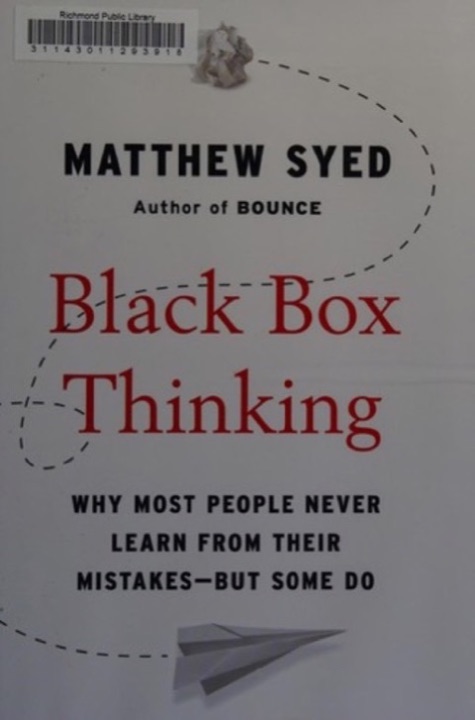
"Black Box Thinking: Why Most People Never Learn from Their Mistakes—But Some Do" by Matthew Syed is a compelling exploration of how success is often built on learning from failure. Syed, a former Olympic table tennis player and journalist, uses a variety of case studies and research to illustrate how different industries and individuals approach failure and learning.
Summary:
-
The Concept of Black Box Thinking: - The title "Black Box Thinking" refers to the flight data recorders used in aviation. When a plane crashes, investigators use the black box to understand what went wrong and how to prevent future accidents. Syed argues that this approach of learning from failure is crucial for progress and innovation.
-
Failure as a Learning Tool: - Syed emphasizes that failure should not be stigmatized but rather seen as an opportunity to learn and improve. He contrasts industries that embrace failure, like aviation, with those that often ignore or hide it, such as healthcare.
-
Case Studies: - The book includes numerous case studies, such as the aviation industry's rigorous investigation of accidents, which has led to significant improvements in safety. In contrast, the healthcare industry often fails to learn from mistakes due to a culture of blame and fear of litigation.
-
Psychological Barriers: - Syed discusses psychological barriers to learning from failure, such as cognitive dissonance and confirmation bias. These biases can prevent individuals and organizations from acknowledging mistakes and learning from them.
-
The Role of Mindset: - The book highlights the importance of a growth mindset, where individuals see abilities as improvable through effort and learning. This mindset encourages resilience and a willingness to confront and learn from failures.
-
Innovation and Creativity: - Syed argues that innovation often comes from iterative processes where failure is an integral part. He cites examples from various fields, including business and sports, where trial and error lead to breakthroughs.
-
Cultural and Systemic Factors: - The book examines how cultural and systemic factors influence how organizations deal with failure. Syed advocates for creating environments where people feel safe to admit mistakes and learn from them.
Key Takeaways and Lessons:
-
Embrace Failure: Viewing failure as a learning opportunity rather than a setback is crucial for personal and organizational growth.
-
Create a Safe Environment: Organizations should foster a culture where employees feel safe to report mistakes without fear of retribution.
-
Iterative Learning: Success often comes from a process of trial and error. Iterative learning allows for continuous improvement and innovation.
-
Challenge Cognitive Biases: Being aware of and challenging cognitive biases can help individuals and organizations learn more effectively from their mistakes.
-
Adopt a Growth Mindset: Cultivating a mindset that sees abilities as improvable can lead to greater resilience and a willingness to learn from failure.
-
Systematic Analysis: Like the aviation industry, systematically analyzing failures can lead to significant improvements and prevent future errors.
-
Cross-Industry Learning: Different industries can learn from each other’s approaches to failure and success, adopting best practices to improve their own processes.
In summary, "Black Box Thinking" advocates for a paradigm shift in how we perceive and handle failure, urging individuals and organizations to adopt a more open and analytical approach to mistakes. This, Syed argues, is the key to unlocking potential and achieving sustained success.