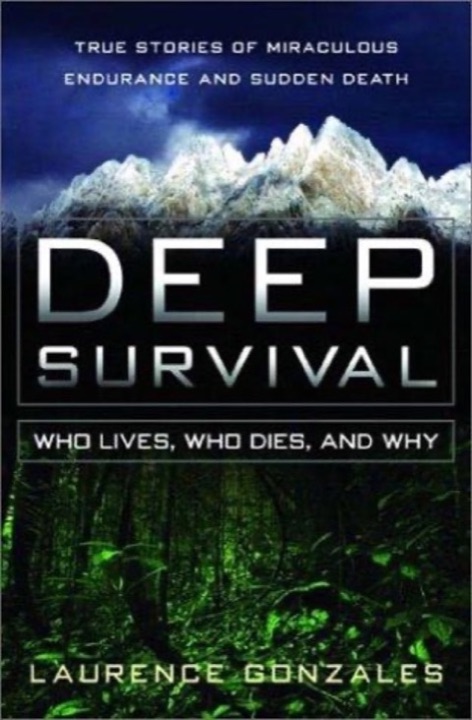
Deep Survival
Applying the lessons from "Deep Survival" by Laurence Gonzales to your life can enhance your resilience and preparedness in both everyday situations and potential emergencies. Here’s how you might integrate these lessons:
-
Mental Resilience: - Reflect on your past experiences, such as surviving plane crashes, to reinforce your mental resilience. Use these memories as a reminder of your strength and ability to overcome adversity. - Practice mindfulness and meditation to enhance your ability to stay calm and focused under stress, which is crucial in survival situations.
-
Staying Calm and Focused: - Continue to cultivate your ability to remain the calmest person in the room during emergencies. This skill is vital in making rational decisions and can be further developed through regular practice and self-awareness exercises.
-
Preparation and Training: - Given your interest in flying and potential future activities like skydiving, ensure you are well-prepared and trained for these experiences. Regularly update your skills and knowledge to handle unexpected situations effectively. - Consider taking survival courses or workshops to enhance your preparedness for various scenarios.
-
Adaptability: - Embrace change and uncertainty in your life by being open to new experiences and perspectives. Your diverse interests and hobbies already demonstrate adaptability, so continue to explore new activities and challenges.
-
Positive Attitude: - Maintain your optimistic outlook and strong will to live, as these traits are essential for overcoming challenges. Your belief in living in the moment aligns with the survivor’s attitude described in the book.
-
Understanding Luck: - Acknowledge the role of luck in your survival experiences, but focus on how your preparation and mindset have helped you capitalize on fortunate circumstances. Continue to prepare for the unexpected while maintaining a positive attitude.
-
Learning from Others: - Share your survival stories and insights with others, as this can provide valuable lessons and inspiration. Engage with communities or groups interested in survival psychology to exchange experiences and learn from others.
By integrating these lessons into your life, you can enhance your resilience, adaptability, and preparedness, allowing you to navigate life's challenges with greater confidence and ease.
What the book covers
"Deep Survival: Who Lives, Who Dies, and Why" by Laurence Gonzales is a compelling exploration of the psychological and physiological aspects of survival in life-threatening situations. Gonzales combines scientific research with real-life survival stories to uncover the principles that determine who survives and who doesn't in extreme conditions. Here’s a thorough summary of the book, along with key takeaways and lessons:
Summary:
-
Introduction to Survival: Gonzales begins by discussing the unpredictable nature of survival situations and the common traits among survivors. He emphasizes that survival is not just about physical strength or skills but also about mental resilience and adaptability.
-
The Science of Survival: The book delves into the neuroscience of survival, explaining how the brain reacts under stress. Gonzales discusses the roles of the rational mind (prefrontal cortex) and the emotional mind (amygdala) in decision-making during crises. He highlights how stress can impair judgment and lead to fatal mistakes.
-
Case Studies: Throughout the book, Gonzales presents various case studies of individuals who faced life-threatening situations. These stories range from mountaineers caught in avalanches to sailors lost at sea. Each story illustrates different aspects of survival psychology and the factors that contributed to the outcomes.
-
The Role of Instinct and Emotion: Gonzales explores how instincts and emotions can both aid and hinder survival. He discusses the importance of managing fear and panic, which can cloud judgment and lead to poor decisions. Survivors often exhibit a balance between rational thought and instinctive action.
-
The Importance of Preparation and Training: Preparation and training are crucial for survival. Gonzales emphasizes that those who regularly practice survival skills and mentally rehearse potential scenarios are better equipped to handle real-life emergencies. Training helps condition the mind to remain calm and focused under pressure.
-
The Survivor’s Attitude: A key theme in the book is the "survivor's attitude," which includes traits like optimism, tenacity, and the ability to stay focused on the present moment. Survivors often exhibit a strong will to live and a refusal to give up, regardless of the odds.
-
The Role of Luck: While skills and mindset are critical, Gonzales acknowledges the role of luck in survival. Random factors, such as weather conditions or the availability of resources, can significantly influence outcomes. However, being prepared and maintaining a positive attitude can increase the chances of capitalizing on lucky breaks.
Key Takeaways and Lessons:
-
Mental Resilience is Crucial: Survival is as much a mental challenge as it is a physical one. Developing mental resilience and the ability to manage emotions under stress can significantly improve survival chances.
-
Stay Calm and Focused: Panic can be deadly. Staying calm and focused helps in making rational decisions and conserving energy.
-
Preparation and Training Matter: Regular training and mental rehearsal of survival scenarios can prepare individuals to respond effectively in emergencies.
-
Adaptability is Key: The ability to adapt to changing circumstances and improvise solutions is a common trait among survivors.
-
Maintain a Positive Attitude: Optimism and a strong will to live can provide the motivation needed to overcome seemingly insurmountable challenges.
-
Understand the Role of Luck: While luck plays a role, being prepared and maintaining a positive mindset can help individuals make the most of fortunate circumstances.
-
Learn from Others: Studying survival stories and understanding the factors that contributed to success or failure can provide valuable insights and lessons.
In "Deep Survival," Laurence Gonzales provides a profound understanding of what it takes to survive against the odds. The book is both an informative guide and an inspiring collection of human resilience stories, offering valuable lessons for anyone interested in the psychology of survival.