Thinking Fast and Slow
Applying the lessons from "Thinking, Fast and Slow" by Daniel Kahneman to your life can enhance your decision-making and self-awareness. Here are some ways you might integrate these insights:
-
Awareness of Cognitive Biases: Recognize that your fast, intuitive System 1 thinking can lead to cognitive biases. For instance, be mindful of the availability heuristic when assessing risks, such as your concerns about flying or skydiving. Reflect on whether your fears are based on actual probabilities or vivid memories.
-
Engage System 2: In situations requiring important decisions, like those involving family or career, consciously engage your slower, more analytical System 2. This can help you evaluate options more thoroughly and avoid impulsive choices, which you identified as a weakness.
-
Prospect Theory and Loss Aversion: Consider how loss aversion might influence your decisions, especially in personal and financial contexts. For example, when contemplating new experiences like skydiving, weigh the potential gains of fulfilling a long-held dream against the perceived risks.
-
Overconfidence and Humility: Acknowledge your strengths, such as resilience and persistence, but remain open to feedback and other perspectives. This humility can enhance your relationships and decision-making, aligning with your value of kindness.
-
Experiencing vs. Remembering Self: Focus on living in the moment, a dream you aspire to achieve. Balance creating meaningful experiences with the memories you cherish, like delivering your children, to enhance overall satisfaction.
-
Decision-Making Process: Apply Kahneman's insights to your decision-making style. While you make decisions quickly, ensure you gather sufficient information and consider diverse viewpoints, especially in high-stakes situations like those in the emergency department.
-
Handling Stress and Emergencies: Your ability to remain calm under pressure aligns with Kahneman's emphasis on deliberate thinking. Continue to cultivate this skill, as it can be crucial in both personal and professional settings.
-
Reflect on Personal Growth: Embrace the idea of being in a constant state of beta, as Kahneman's work suggests that understanding our cognitive processes can lead to personal development. Regularly evaluate your actions and their impact on others, as you already do.
By integrating these lessons, you can enhance your decision-making, deepen your self-awareness, and continue to grow in alignment with your values and aspirations.
What the book covers
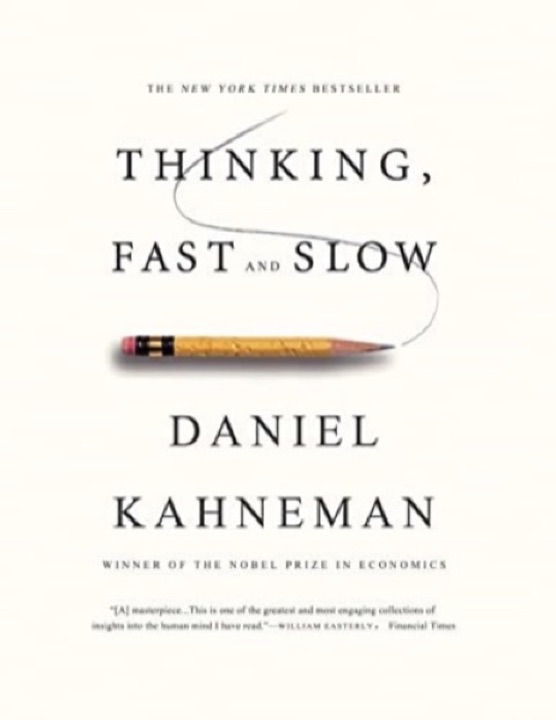
"Thinking, Fast and Slow" by Daniel Kahneman is a comprehensive exploration of the dual systems that drive the way we think and make decisions. Kahneman, a psychologist and Nobel laureate in Economic Sciences, delves into the intricacies of human thought processes, providing insights into how we perceive the world and make choices.
Summary:
Part 1: Two Systems
Kahneman introduces the concept of two systems of thought: - System 1: Fast, automatic, and intuitive. It operates with little effort and no sense of voluntary control. This system is responsible for quick judgments and decisions. - System 2: Slow, deliberate, and analytical. It allocates attention to effortful mental activities and is associated with the subjective experience of agency, choice, and concentration.
Part 2: Heuristics and Biases
Kahneman explores various cognitive biases and heuristics that arise from the interplay of these two systems: - Anchoring: The tendency to rely heavily on the first piece of information encountered (the "anchor") when making decisions. - Availability Heuristic: Judging the probability of events based on how easily examples come to mind. - Representativeness Heuristic: Assessing similarity and making judgments based on stereotypes rather than statistical probability. - Overconfidence: The tendency to be more confident in our abilities and judgments than is objectively justified.
Part 3: Overconfidence
This section delves deeper into the overconfidence bias, exploring how it affects decision-making in various domains, including finance and politics. Kahneman discusses the illusion of understanding and the illusion of validity, which lead people to overestimate their knowledge and predictive abilities.
Part 4: Choices
Kahneman examines how people make choices, focusing on the concept of prospect theory, which he developed with Amos Tversky. This theory describes how people evaluate potential losses and gains, highlighting the asymmetry in how we perceive risk: - Loss Aversion: The tendency to prefer avoiding losses over acquiring equivalent gains. - Endowment Effect: The phenomenon where people ascribe more value to things merely because they own them.
Part 5: Two Selves
The final section discusses the "experiencing self" and the "remembering self," exploring how these two selves perceive happiness and satisfaction differently. The experiencing self lives in the present, while the remembering self reflects on past experiences, often distorting them.
Key Takeaways and Lessons:
-
Awareness of Cognitive Biases: Understanding the biases and heuristics that influence our thinking can help us make more rational decisions.
-
Importance of System 2: While System 1 is efficient, relying solely on it can lead to errors. Engaging System 2 can help mitigate these errors, especially in complex decision-making scenarios.
-
Prospect Theory and Loss Aversion: Recognizing our tendency to fear losses more than valuing gains can improve decision-making, particularly in financial and personal contexts.
-
Overconfidence and Humility: Being aware of our overconfidence can lead to more humility and openness to other perspectives, improving decision-making and problem-solving.
-
Experiencing vs. Remembering Self: Understanding the distinction between these two selves can lead to better life choices, focusing on experiences that provide genuine satisfaction rather than those that merely create positive memories.
Kahneman's work emphasizes the complexity of human thought and the importance of being mindful of the cognitive processes that shape our perceptions and decisions. By recognizing the limitations of our thinking, we can strive to make more informed and rational choices.