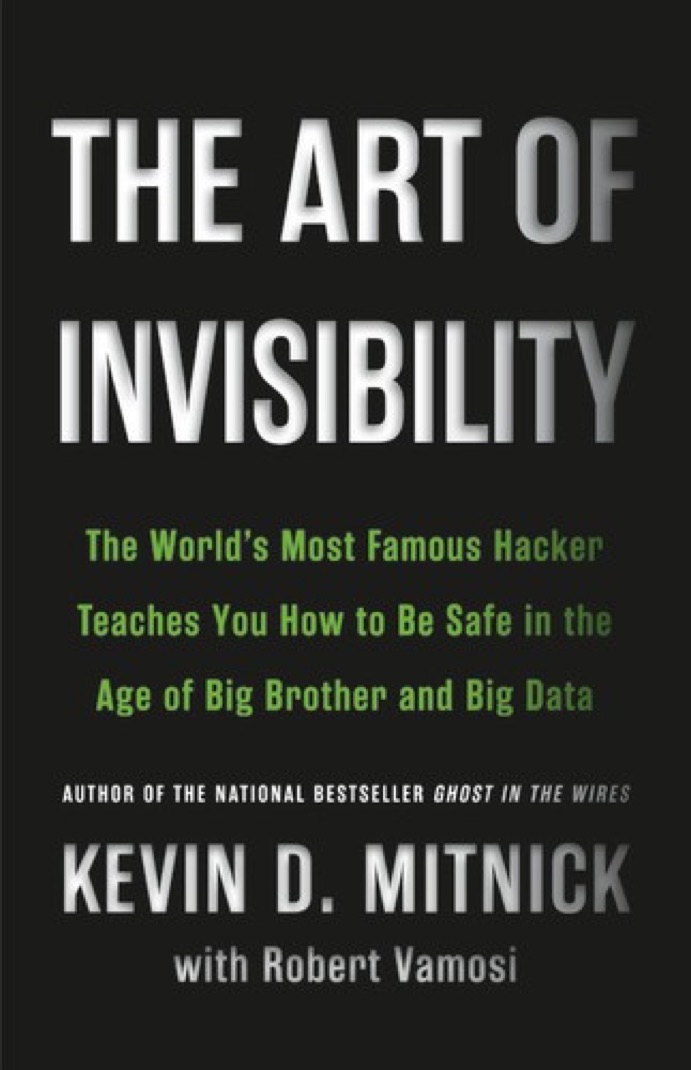
The Art of Invisibility: The World's Most Famous Hacker Teaches You How to Be Safe in the Age of Big Brother and Big Data
Applying the lessons from "The Art of Invisibility" by Kevin Mitnick and Robert Vamosi to your life can be a transformative step toward safeguarding your professional reputation and personal freedom. Here are some ways you might integrate these lessons:
- Protecting Patient and Client Confidentiality: - As a physician and attorney, you handle some of the most sensitive data imaginable. Mitnick’s lessons suggest that standard security is often insufficient; using end-to-end encryption for sensitive communications ensures you are meeting the highest ethical and legal standards for privacy.
- Institutional Security as a Leadership Priority: - In your roles as a CEO and entrepreneur, security must be a top-down culture rather than a siloed IT task. You should lead by example, demonstrating that protecting intellectual property and customer data is a fundamental business process that requires constant vigilance.
- Aviation-Level Discipline in Digital Habits: - Just as a pilot follows a pre-flight checklist to ensure safety, you can apply a similar rigor to your digital life. This means never skipping the checklist of enabling a VPN, checking for HTTPS, or verifying the identity of someone requesting sensitive information.
- Privacy by Design in Healthcare Startups: - For your VC firm and future ventures, Mitnick’s insights suggest that data privacy should be a core feature, not an afterthought. Building systems that do not store unnecessary metadata can protect your startups from future liabilities and data breaches.
- Situational Awareness and Social Engineering: - Your experience in the ER requires rapid assessment of situations; the same should apply to your digital interactions. Recognizing the signs of a phishing attempt or a social engineering ruse is critical for protecting your professional reputation and the various boards you represent.
- The Legal Risks of Digital Breadcrumbs: - From a legal perspective, Mitnick’s explanation of how metadata is used in investigations is invaluable. Being mindful of your digital trail is about maintaining the privacy of your own life and avoiding the misinterpretation of data in a legal context.
By integrating these lessons, you transition from a passive participant in the digital economy to an informed actor who consciously manages their exposure. In your roles as a clinician, aviator, and venture capitalist, this heightened awareness ensures that your hard-earned reputation and the privacy of those you lead remain uncompromised in an increasingly transparent world.
What the book covers
"The Art of Invisibility: The World's Most Famous Hacker Teaches You How to Be Safe in the Age of Big Brother and Big Data" by Kevin Mitnick and Robert Vamosi is a comprehensive guide to personal privacy and digital security in an era of pervasive surveillance. The book provides a sobering look at how easily our personal data is harvested by corporations and governments while offering practical strategies to reclaim anonymity. It serves as both a wake-up call regarding the loss of privacy and a technical manual for those seeking to minimize their digital footprint.
Summary:
- The Myth of Digital Privacy: - Mitnick argues that the digital age has effectively ended privacy as we once knew it, with every device and service acting as a potential informant. He details how everyday actions, from using a credit card to walking past a security camera, contribute to a permanent digital record that is often sold or scrutinized without consent.
- The Surveillance Landscape and Big Data: - The book categorizes threats into two main camps: government surveillance (Big Brother) and corporate data mining (Big Data). Mitnick illustrates how these entities collaborate or exploit the same vulnerabilities to track movements, preferences, and social connections with frightening precision.
- Encryption and Secure Communication: - A central pillar of the book is the necessity of encryption to protect the content of communications. Mitnick advocates for the use of tools like Pretty Good Privacy (PGP) for emails and Virtual Private Networks (VPNs) to mask IP addresses and encrypt internet traffic, especially when using public infrastructure.
- Operational Security and "Burner" Technology: - For those seeking higher levels of anonymity, Mitnick introduces concepts of operational security (OPSEC). This includes the use of "burner" devices—phones and laptops purchased with cash and never linked to one’s real identity—and the importance of never mixing "clean" and "dirty" personas.
- Social Engineering and the Human Element: - As a legendary social engineer, Mitnick emphasizes that the strongest technical defenses are useless if a human can be tricked. He explains how hackers use psychological manipulation to gain passwords or access, urging readers to maintain a healthy skepticism toward unsolicited requests for information.
- The Danger of Metadata: - Mitnick explains that even if the content of a message is encrypted, the metadata—the data about the data—remains a vulnerability. He describes how patterns of who you call, when you call them, and where you are located can reveal more about your life than the actual content of your conversations.
- Tools for Navigating the Web Anonymously: - The book provides tutorials on using the Tor browser and various "live" operating systems like Tails that leave no trace on a computer’s hard drive. These tools are presented as essential for anyone who requires untraceable access to information or seeks to avoid profiling by advertisers.
Ultimately, the book highlights that while total invisibility is an exhausting and nearly impossible standard for the average citizen to maintain, understanding the mechanics of surveillance allows individuals to make informed choices. By implementing Mitnick’s tiered security recommendations, readers can significantly raise the "cost" for anyone attempting to track them, effectively moving from a soft target to a hard one.