Commanding Heights
Applying the lessons from "Commanding Heights" by Daniel Yergin and Joseph Stanislaw to your life involves embracing adaptability, balancing different forces, and leveraging leadership and resilience. Here’s how you might incorporate these themes:
-
Balance Between State and Market: - Just as the book emphasizes finding a balance between government intervention and market forces, you can apply this to your personal and professional life by balancing structure and spontaneity. While you value planning and routine, allow room for flexibility and unexpected opportunities.
-
Adaptability and Reform: - The book highlights the importance of adaptability in economic transformations. In your life, continue to embrace change and be open to new experiences, such as your interest in skydiving or your aspiration to live in the moment. This adaptability can help you navigate life's uncertainties and seize opportunities for growth.
-
Globalization's Double-Edged Sword: - Recognize the benefits and challenges of globalization in your own experiences. As someone who values travel and cultural experiences, continue to appreciate the diversity and interconnectedness of the world while being mindful of the social issues you are passionate about, such as equality and civil rights.
-
Role of Leadership: - Your leadership qualities, such as resilience, humor, and empathy, are pivotal in driving change and influencing others positively. Continue to lead by example, whether in your professional role as a physician or in your personal advocacy work, by communicating effectively and building consensus.
-
Economic Resilience: - The book underscores the importance of building resilient economies. Similarly, focus on building personal resilience by learning from failures and maintaining a positive outlook. Your persistence and ability to find humor in challenging situations are key strengths that contribute to your resilience.
-
Visionary Leadership: - Like the leaders mentioned in the book, use your visionary mindset to inspire and motivate others. Whether it's through your work in the emergency department or your advocacy efforts, continue to communicate your vision for a better future and encourage others to join you in making a positive impact.
By integrating these lessons into your life, you can continue to navigate challenges with resilience, embrace change with adaptability, and lead with empathy and vision.
What the book covers
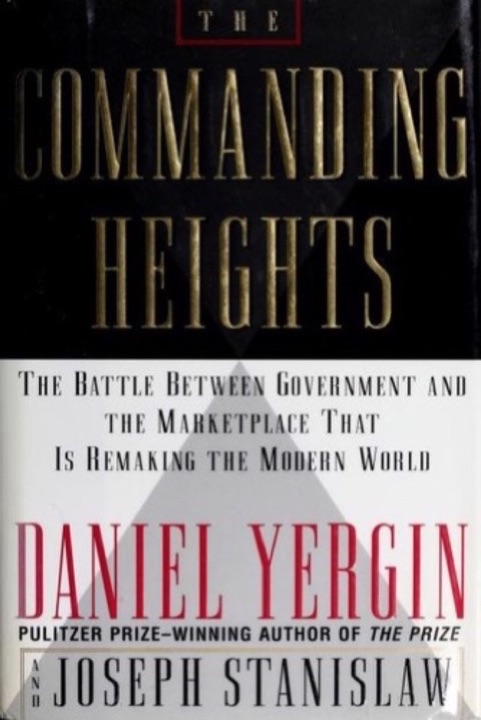
"Commanding Heights: The Battle for the World Economy" by Daniel Yergin and Joseph Stanislaw is a comprehensive exploration of the global shift from state-controlled economies to free-market capitalism over the latter half of the 20th century. The book provides a detailed narrative of the ideological and economic transformations that reshaped the world economy, focusing on the interplay between government and market forces.
Summary:
-
Historical Context and Ideological Shifts: - The book begins by setting the stage in the early 20th century, when many countries embraced state control over key industries, a concept known as the "commanding heights" of the economy. - It explores the post-World War II era, highlighting the dominance of Keynesian economics, which advocated for government intervention to manage economic cycles.
-
The Rise of Market Economies: - The narrative shifts to the late 20th century, detailing the decline of state-controlled economies and the rise of neoliberal policies. - Key figures such as Margaret Thatcher in the UK and Ronald Reagan in the US are highlighted for their roles in promoting deregulation, privatization, and tax cuts.
-
Globalization and Economic Integration: - The book examines the acceleration of globalization, driven by technological advancements and the liberalization of trade and investment. - It discusses the impact of global institutions like the International Monetary Fund (IMF) and the World Trade Organization (WTO) in facilitating economic integration.
-
Case Studies: - Yergin and Stanislaw provide detailed case studies of various countries, including the economic reforms in China under Deng Xiaoping, the collapse of the Soviet Union, and the transformation of Eastern European economies. - The book also covers the economic crises in Latin America and Asia, analyzing the responses and lessons learned.
-
Challenges and Criticisms: - The authors address the criticisms of globalization and free-market policies, such as income inequality, environmental degradation, and the loss of national sovereignty. - They explore the backlash against globalization, including the rise of protectionist sentiments and the debate over the social responsibilities of corporations.
Key Takeaways and Lessons:
-
Balance Between State and Market: The book underscores the importance of finding a balance between government intervention and market forces. While markets are powerful drivers of growth and innovation, effective governance is crucial to address market failures and ensure equitable outcomes.
-
Adaptability and Reform: Successful economic transformations often require adaptability and willingness to reform. Countries that embraced change and implemented pragmatic policies tended to fare better in the global economy.
-
Globalization's Double-Edged Sword: Globalization has lifted millions out of poverty and spurred economic growth, but it also poses challenges such as inequality and cultural homogenization. Policymakers must navigate these complexities to harness globalization's benefits while mitigating its downsides.
-
Role of Leadership: Visionary leadership is pivotal in driving economic change. Leaders who effectively communicate the need for reform and build consensus can steer their countries through challenging transitions.
-
Economic Resilience: The book highlights the importance of building resilient economies that can withstand shocks, whether from financial crises, technological disruptions, or geopolitical tensions.
"Commanding Heights" provides a nuanced understanding of the global economic landscape, emphasizing the dynamic interplay between political ideologies, economic policies, and global forces. It serves as a valuable resource for anyone interested in the history and future of the world economy.