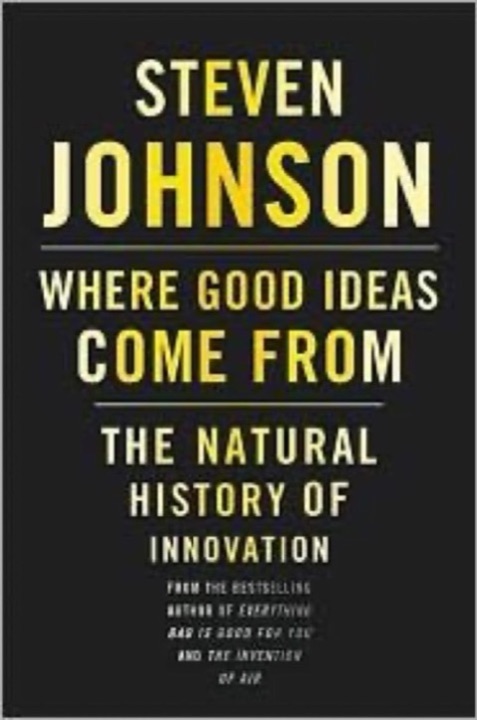
Where Good Ideas Come from
Applying the lessons from "Where Good Ideas Come From" by Steven Johnson to your life can enhance your creativity and innovation, both personally and professionally. Here’s how you might integrate these concepts:
-
Explore the Adjacent Possible: - Given your diverse interests and experiences, continuously seek new combinations of your existing knowledge and skills. For instance, your passion for flying and technology could lead to innovative ideas in aviation safety or travel experiences.
-
Cultivate Liquid Networks: - Engage in environments where diverse ideas can flow and intermingle. This could be through attending conferences, joining clubs related to your interests, or participating in online forums. Your varied interests, from flying to cooking, can benefit from cross-pollination of ideas.
-
Nurture Slow Hunches: - Allow your ideas to mature over time. Keep a journal or digital note-taking app to jot down thoughts and revisit them periodically. Your belief in reincarnation and lifelong learning aligns well with the patience required for slow hunches to develop.
-
Embrace Serendipity: - Create opportunities for unexpected connections. This could involve traveling to new places, trying new activities like skydiving, or simply being open to spontaneous conversations. Your humorous and casual communication style can facilitate serendipitous encounters.
-
Learn from Error: - View mistakes as learning opportunities. Reflect on past experiences, such as your near-death incidents, to extract valuable lessons. Your resilience and humor can help you navigate and learn from failures.
-
Utilize Exaptation: - Look for ways to repurpose your skills and experiences. For example, your medical background and interest in CRISPR could lead to innovative contributions in genetic research or healthcare technology.
-
Leverage Platforms: - Build on existing platforms to create new innovations. This could involve using technology to enhance your advocacy work or exploring digital platforms to share your insights and experiences.
Personal Application:
-
Diverse Environments: Continue to engage with people from different backgrounds and disciplines. Your involvement in activism and advocacy can benefit from diverse perspectives.
-
Long-Term Perspective: Maintain your focus on long-term goals, such as living in the moment and leveraging technology for societal betterment. Your daily routine and commitment to personal growth align with this approach.
-
Experimentation and Failure: Encourage a culture of experimentation in your personal and professional life. Your ability to find humor in almost everything can help you maintain a positive outlook when facing setbacks.
-
Serendipitous Opportunities: Be open to new experiences and connections. Your aspiration to live to 130 suggests a willingness to embrace life's surprises and opportunities.
-
Existing Platforms: Use your knowledge and experiences as a foundation for new ideas. Your interest in technology and forward-thinking approach can lead to innovative solutions.
By integrating these principles into your life, you can foster an environment that encourages creativity and innovation, helping you achieve your aspirations and make meaningful contributions to society.
What the book covers
"Where Good Ideas Come From: The Natural History of Innovation" by Steven Johnson explores the origins and development of innovative ideas throughout history. Johnson delves into the environments and conditions that foster creativity and innovation, drawing parallels between biological evolution and the evolution of ideas. Here’s a thorough summary of the book along with key takeaways and lessons:
Summary:
-
The Adjacent Possible: - Johnson introduces the concept of the "adjacent possible," which refers to the potential for innovation that exists at the edges of current knowledge and capabilities. Innovations often emerge by exploring these adjacent possibilities, where existing ideas are combined in new ways.
-
Liquid Networks: - The book emphasizes the importance of "liquid networks," environments where ideas can flow freely and recombine. These networks, often found in urban settings or collaborative workspaces, allow for the exchange and collision of ideas, which can lead to breakthroughs.
-
The Slow Hunch: - Johnson argues that many great ideas take time to develop. These "slow hunches" may linger in the back of one's mind for years before they fully form. The book suggests that maintaining a space for these hunches to mature is crucial for innovation.
-
Serendipity: - Serendipitous encounters and unexpected connections can lead to new ideas. Johnson highlights the role of chance in innovation and suggests that creating environments where serendipity can occur increases the likelihood of generating new ideas.
-
Error: - Mistakes and failures are integral to the innovation process. Johnson discusses how errors can lead to new insights and directions, emphasizing the importance of a culture that tolerates and learns from failure.
-
Exaptation: - Borrowing a term from evolutionary biology, exaptation refers to the process by which features developed for one purpose are co-opted for another. Johnson illustrates how ideas and technologies can be repurposed in innovative ways.
-
Platforms: - Platforms are foundational structures that support the development of new ideas. Johnson discusses how platforms, such as the internet or open-source software, provide a base upon which further innovations can be built.
Key Takeaways and Lessons:
-
Cultivate Diverse Environments: Innovation thrives in diverse, interconnected environments where ideas can intermingle. Encouraging collaboration across disciplines and backgrounds can lead to more creative solutions.
-
Embrace the Long View: Allow ideas to develop over time. Patience and persistence are key, as many innovations are the result of slow hunches that mature gradually.
-
Encourage Experimentation and Tolerate Failure: A culture that supports experimentation and views failure as a learning opportunity is more likely to produce innovative ideas.
-
Foster Serendipity: Create spaces and opportunities for chance encounters and unexpected connections, as these can lead to new insights and innovations.
-
Leverage Existing Platforms: Build on existing platforms and technologies to create new innovations. Understanding and utilizing the foundational structures available can accelerate the development of new ideas.
-
Explore the Adjacent Possible: Continuously push the boundaries of what is currently possible by exploring new combinations and applications of existing ideas.
By examining these principles, Johnson provides a framework for understanding how innovation occurs and how individuals and organizations can create environments that are conducive to generating good ideas.