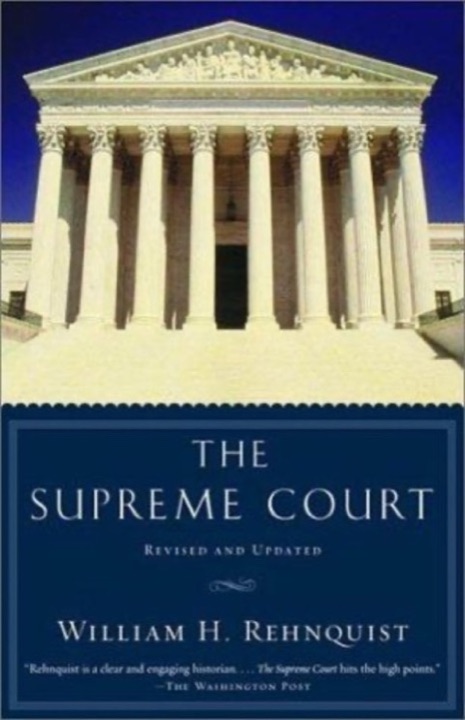
The Supreme Court
Applying the lessons from "The Supreme Court" by William Rehnquist to your life can be insightful, especially considering your values and experiences. Here are a few ways you might integrate these lessons:
-
Judicial Independence and Personal Integrity: - Just as the Supreme Court maintains its independence to uphold justice, you can strive to maintain your personal integrity and independence in your decisions and actions. This aligns with your core values of kindness and empathy, ensuring that your actions are not swayed by external pressures but are guided by your principles.
-
Evolving Interpretation and Personal Growth: - The book highlights how the interpretation of the Constitution evolves over time. Similarly, you can embrace personal growth and adaptability, recognizing that your beliefs and perspectives can evolve as you gain new experiences and insights. This aligns with your aspiration to be a lifelong learner and your openness to personal development.
-
Balance of Power and Life Balance: - The Supreme Court's role in balancing power between government branches can inspire you to seek balance in your own life. While you acknowledge impulsivity and lack of balance as weaknesses, you can work towards harmonizing different aspects of your life, such as work, family, and personal interests, to achieve a more fulfilling existence.
-
Impact of Leadership and Personal Influence: - The leadership style of the Chief Justice influences the Court's direction. Similarly, you can recognize the impact of your leadership and influence on those around you, whether in your professional role or personal relationships. Your resilience, humor, and empathy can guide others positively.
-
Public Perception and Personal Legacy: - Just as the Court's legitimacy depends on public confidence, consider how your actions and decisions shape your personal legacy. You aspire to be remembered as someone who lived fully and was kind to everyone. By maintaining transparency and adhering to your ethical beliefs, you can build a legacy that aligns with your values.
-
Judicial Activism vs. Restraint and Decision-Making: - The tension between judicial activism and restraint can parallel your decision-making process. You aim to make decisions quickly and effectively, balancing strong convictions with openness to change. This approach can help you navigate complex situations with confidence and adaptability.
By reflecting on these lessons and integrating them into your life, you can continue to grow and make meaningful contributions to those around you, while staying true to your values and aspirations.
What the book covers
"The Supreme Court" by William Rehnquist provides an insightful overview of the history and functioning of the United States Supreme Court. Written by the late Chief Justice himself, the book offers a unique perspective on the Court's role in American government and its evolution over time.
Summary:
-
Historical Overview: - Rehnquist traces the origins of the Supreme Court from its establishment in 1789. He discusses the early challenges the Court faced in asserting its authority and legitimacy. - Key historical cases are examined, such as Marbury v. Madison, which established the principle of judicial review, allowing the Court to strike down laws it finds unconstitutional.
-
Structure and Function: - The book explains the Court's structure, including the roles of the Chief Justice and Associate Justices. - Rehnquist describes the process of how cases are selected and decided, emphasizing the importance of the Court's docket and the certiorari process.
-
Influential Justices: - Rehnquist profiles several influential justices, highlighting their contributions to the Court's jurisprudence and their impact on American law. - He discusses the dynamics between justices and how their interactions can influence decisions.
-
Landmark Decisions: - The book covers several landmark decisions, explaining their significance and the legal principles they established. - Rehnquist provides insights into the reasoning behind these decisions and their long-term implications.
-
The Court's Role in Society: - Rehnquist explores the Court's role in shaping American society, particularly in areas like civil rights, free speech, and the balance of power between the federal government and the states. - He discusses the tension between judicial activism and judicial restraint, offering his perspective on the appropriate role of the Court.
Key Takeaways and Lessons:
-
Judicial Independence: Rehnquist emphasizes the importance of maintaining an independent judiciary that can make decisions free from political pressure.
-
Evolving Interpretation: The book highlights how the interpretation of the Constitution can evolve over time, reflecting changes in societal values and norms.
-
Balance of Power: Rehnquist underscores the delicate balance the Court must maintain between upholding the Constitution and respecting the roles of the legislative and executive branches.
-
Impact of Leadership: The leadership style and philosophy of the Chief Justice can significantly influence the Court's direction and its relationship with other branches of government.
-
Public Perception: The legitimacy of the Court depends on public confidence in its decisions, which requires transparency and adherence to legal principles.
Overall, "The Supreme Court" by William Rehnquist provides a comprehensive look at the highest court in the United States, offering valuable insights into its history, operations, and impact on American life.