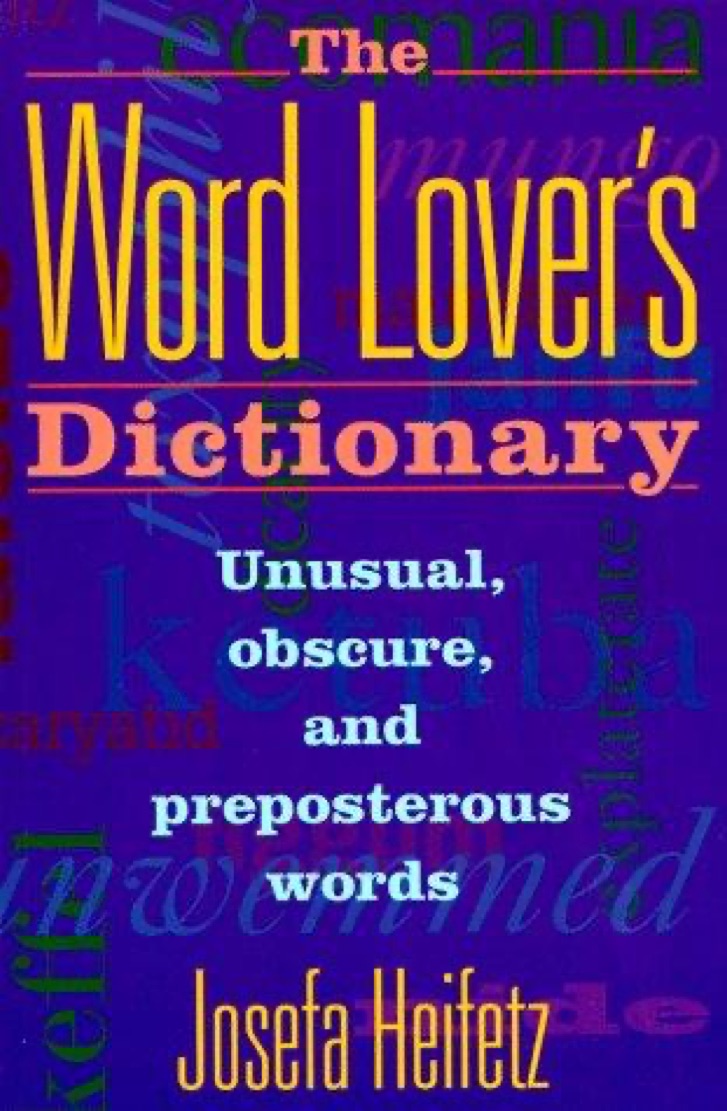
The Word Lover's Dictionary: Unusual, Obscure, and Preposterous Words
Applying the lessons from "The Word Lover's Dictionary: Unusual, Obscure, and Preposterous Words" by Josefa Heifetz to your life can be a transformative exercise in intellectual curiosity and linguistic mastery. Here are some ways you might integrate these lessons:
-
Cultivate Precision in High-Stakes Environments: - In fields like medicine or law, where ambiguity can be dangerous, you should strive for the exact right word rather than the most common one. Just as Heifetz highlights the utility of obscure terms, you can improve outcomes by ensuring your instructions and diagnoses are articulated with absolute specificity, leaving no room for misinterpretation.
-
Adopt the Mindset of a Lifelong Learner: - To "stay hungry," you must constantly seek out new knowledge in areas you haven't yet explored. Use the pursuit of rare vocabulary as a metaphor for continuous personal growth; by learning words you don't "need," you exercise the cognitive muscles required to master new technologies or business strategies that others might overlook.
-
Enhance Leadership through Unique Communication: - As an entrepreneur or leader, your ability to inspire depends on your voice. By integrating more varied and precise language into your speeches and writing, you can avoid the clichés that often make corporate communication feel hollow, instead projecting a persona of deep intelligence and creative thinking that commands attention.
-
Practice Extreme Attention to Detail: - In aviation or complex surgery, the smallest detail can be the difference between success and failure. Engaging with a text that focuses on the minutiae of language trains your brain to notice and value the small stuff, reinforcing a habit of thoroughness that translates directly to checklist discipline and technical proficiency.
-
Maintain Humility through the Vastness of Knowledge: - To "stay humble," you should regularly confront how much you do not know. Flipping through a dictionary of words you’ve never heard of is a grounding experience that reminds you of the infinite depth of human culture, keeping your ego in check regardless of your professional achievements.
By integrating these lessons, you will develop a sharper mind and a more resonant voice, allowing you to navigate the complexities of healthcare, venture capital, and life with the same precision and curiosity that Josefa Heifetz applies to the English language.
What the book covers
"The Word Lover's Dictionary: Unusual, Obscure, and Preposterous Words" by Josefa Heifetz is a specialized lexicon designed to challenge and delight the most seasoned logophiles. It serves as a comprehensive inventory of the English language’s most eccentric and underutilized vocabulary, moving far beyond the boundaries of standard collegiate dictionaries. By cataloging words that are often archaic, technical, or simply bizarre, Heifetz provides a resource for writers, speakers, and thinkers who wish to color their communication with rare linguistic gems.
Summary:
-
The Curation of Linguistic Rarities: - Heifetz meticulously compiles thousands of entries that represent the fringes of the English language. Unlike traditional dictionaries that prioritize utility and common usage, this volume celebrates the "preposterous," focusing on terms that have fallen out of favor or were created for highly specific, often obscure, niches of human activity and thought.
-
Etymological Roots and Historical Context: - Each entry is more than a simple definition; it often provides a window into the historical context from which the word emerged. By exploring the origins of these terms, the author illustrates how language evolves to meet the needs of specific eras—from Victorian social mores to ancient scientific classifications—and how these words eventually become linguistic fossils.
-
The Power of Precision and Specificity: - A central argument of the book is that having a name for a specific phenomenon allows for clearer thought and more precise communication. Whether describing a particular shape of a cloud or a specific type of social blunder, Heifetz demonstrates that obscure words can fill gaps in our standard vocabulary, providing tools for more nuanced expression in both professional and creative writing.
-
Expanding the Reader's Intellectual Horizon: - The book functions as an exercise in mental expansion, encouraging readers to think outside the constraints of common parlance. By introducing terms like "zenzizenzizenzic" or "ultracrepidarian," the author pushes the boundaries of the reader's cognitive map, suggesting that the complexity of our language reflects the inherent complexity of the world around us.
-
A Playful Approach to Lexicography: - Heifetz maintains a tone that is both scholarly and whimsical, acknowledging the inherent humor in many of the words listed. The book is organized alphabetically but encourages serendipitous discovery, inviting the reader to browse and stumble upon words that are phonetically pleasing or conceptually hilarious, thereby making the study of language an entertaining pursuit.
-
The Preservation of Vanishing Language: - The dictionary serves as an archival tool, preserving words that are at risk of being lost to time. By documenting these terms, Heifetz ensures that the richness of historical English remains accessible, arguing that even if a word is no longer in common use, its existence adds a layer of depth and history to our cultural heritage.
This volume is significant because it reminds us that language is a living, breathing, and often chaotic entity. It serves as a vital reference for anyone looking to escape the monotony of modern jargon and rediscover the boundless creativity found within the English lexicon.