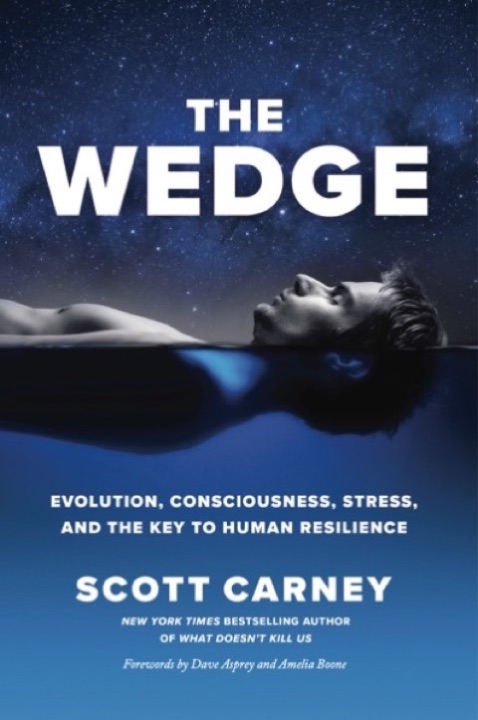
The Wedge: Evolution, Consciousness, Stress, and the Key to Human Resilience
Applying the lessons from Scott Carney's "The Wedge: Evolution, Consciousness, Stress, and the Key to Human Resilience" to your life can be a transformative journey, especially given your rich experiences and personal philosophy. Here are some tailored suggestions:
-
Embrace Discomfort Intentionally: - Given your adventurous spirit and interest in activities like skydiving, consider incorporating controlled stressors into your routine. This could be through cold exposure, as you already do, or trying new activities that push your comfort zone, like skydiving. These experiences can help build resilience and enhance your ability to handle stress.
-
Enhance Mind-Body Awareness: - You already have a strong daily routine that includes exercise and cold plunges. Consider adding mindfulness practices, such as meditation or focused breathing exercises, to deepen your awareness of the mind-body connection. This can help you manage stress more effectively and maintain your calm demeanor in high-pressure situations.
-
Use Stress as a Growth Tool: - Reflect on past stressful experiences, like the plane crashes, and how they have contributed to your personal growth. Use these reflections to reframe current and future stressors as opportunities for development. This mindset aligns with your belief in learning from failures and challenges.
-
Cultivate Conscious Control: - Practice techniques that allow you to consciously control your physiological responses to stress. This could involve experimenting with different breathing techniques or visualization exercises to maintain composure and focus, especially in your high-stakes work environment.
-
Apply the Wedge Concept: - In your interactions and decision-making, consciously insert a "wedge" between stimulus and response. This can help you maintain your values of kindness and empathy, even in challenging situations, and ensure your actions align with your core beliefs.
-
Integrate Resilience Training: - Given your commitment to personal growth and lifelong learning, consider formal resilience training or workshops. These can provide new tools and perspectives to further enhance your resilience and adaptability.
-
Reflect on Personal Values: - Use the insights from the book to reinforce your core values of kindness and empathy. Reflect on how these values have guided you through life's challenges and how they can continue to support your resilience.
-
Live in the Moment: - One of your aspirations is to live more in the moment. Use the principles from the book to practice mindfulness and presence, allowing you to fully engage with each experience and interaction.
By integrating these lessons into your life, you can continue to build on your strengths of resilience, humor, kindness, and empathy, while also addressing areas for growth, such as impulsivity and balance. This approach aligns with your philosophy of being in a constant state of beta and striving to leave the world a better place.
What the book covers
"The Wedge: Evolution, Consciousness, Stress, and the Key to Human Resilience" by Scott Carney explores the concept of resilience through the lens of human evolution, consciousness, and stress management. Carney, an investigative journalist known for his work on the Wim Hof Method, delves into the physiological and psychological mechanisms that allow humans to adapt and thrive in challenging environments.
Summary:
1. The Concept of the Wedge: - The "wedge" is a metaphor for the space between stimulus and response. Carney argues that by inserting a wedge between these two, individuals can gain control over their reactions to stress and discomfort. - This concept is rooted in the idea that humans have evolved to handle stress in adaptive ways, but modern life often disconnects us from these natural responses.
2. Evolutionary Perspective: - Carney discusses how human evolution has equipped us with the ability to endure and adapt to harsh environments. This resilience is embedded in our physiology and can be harnessed through conscious practice. - He explores the role of the autonomic nervous system and how it can be influenced to improve resilience.
3. Consciousness and Control: - The book delves into the power of consciousness in managing stress. Carney suggests that by becoming more aware of our bodily responses, we can learn to control them. - Techniques such as meditation, breathing exercises, and cold exposure are discussed as methods to enhance this awareness and control.
4. Stress as a Tool: - Carney reframes stress as a tool for growth rather than a purely negative force. By intentionally exposing ourselves to controlled stressors, we can build resilience. - He provides examples of how stress can be used to improve physical and mental performance.
5. Practical Applications: - Throughout the book, Carney shares stories of individuals who have successfully applied the wedge concept to overcome challenges. - He offers practical advice on how readers can incorporate these techniques into their own lives to enhance resilience.
Key Takeaways and Lessons:
-
Embrace Discomfort: By willingly facing discomfort, such as through cold exposure or intense physical activity, we can train our bodies and minds to handle stress more effectively.
-
Mind-Body Connection: Developing a deeper awareness of the connection between mind and body can lead to greater control over stress responses.
-
Conscious Breathing: Techniques like controlled breathing can serve as powerful tools to manage stress and improve focus.
-
Adaptation through Stress: Stress, when managed properly, can be a catalyst for personal growth and adaptation.
-
Resilience is Trainable: Resilience is not a fixed trait but a skill that can be developed through practice and intentional exposure to stressors.
-
Holistic Approach: Building resilience involves a holistic approach that includes physical, mental, and emotional training.
Carney's book encourages readers to rethink their relationship with stress and discomfort, offering a roadmap to harnessing these forces for personal development and resilience.