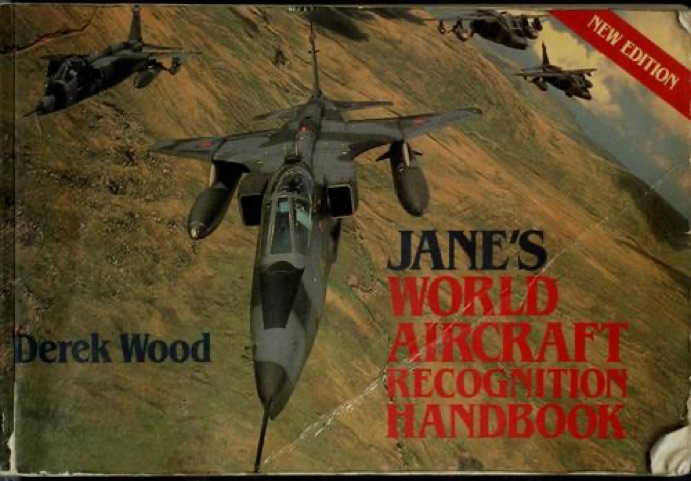
Jane's World Aircraft Recognition Handbook
Applying the lessons from "Jane's World Aircraft Recognition Handbook" by Derek Wood to your life can be a masterclass in developing the high-level pattern recognition skills essential for navigating complex professional landscapes. Here are some ways you might integrate these lessons:
-
Develop a Systematic Diagnostic Framework: - Just as the WEFT system (Wings, Engines, Fuselage, Tail) provides a consistent way to identify any aircraft, you can create "recognition frameworks" for your own field. Whether you are performing a medical diagnosis or auditing a startup for investment, having a standardized list of structural pillars ensures that you never miss a critical detail because you were distracted by surface-level noise.
-
Master the Art of Rapid Pattern Identification: - Wood's emphasis on silhouettes teaches you to look for the essential "shape" of a problem or opportunity rather than getting bogged down in cosmetic details. In leadership, this means identifying the core structural flaws in a business model or a team dynamic at a glance, allowing you to react with the same speed as a pilot identifying an incoming threat.
-
Practice Skill Maintenance Through Stress Testing: - The "Sillograph" proficiency tests in the book remind us that elite skills are perishable and must be practiced under time pressure. You should regularly challenge yourself and your teams with simulated high-stakes scenarios—be it an emergency room simulation or a rapid-fire legal debate—to ensure that your decision-making remains sharp and instinctive when the stakes become real.
-
Leverage Multi-Perspective Analysis: - By providing front, side, and bottom views, Wood ensures the observer has a holistic understanding of the subject. In your professional life, avoid making critical decisions based on a single data point; instead, actively seek out multiple "silhouettes" of a situation—financial, ethical, and operational—to ensure your assessment is truly comprehensive and accurate.
-
Categorize Complexity to Minimize Cognitive Load: - The handbook’s logical organization by propulsion and wing type shows how to manage overwhelming amounts of information. When leading a multi-faceted organization, you must categorize challenges into clear buckets to prevent your "mental radar" from becoming cluttered, allowing you to allocate your focus efficiently where it is most needed.
-
Commit to Lifelong Technical Literacy: - Wood demonstrates that true expertise requires a deep understanding of both the visual and the technical specifications of your craft. Whether you are learning new cockpit procedures, legal precedents, or medical technologies, stay hungry for the granular details that separate the professional from the enthusiast.
By integrating these lessons, you transform from a passive observer into a precise, high-speed decision-maker capable of identifying and navigating the most complex environments with humility and unwavering accuracy.
What the book covers
"Jane's World Aircraft Recognition Handbook" by Derek Wood is the definitive field guide for identifying nearly every significant fixed-wing and rotary-wing aircraft in operation globally. Originally developed to assist military personnel and civilian observers in rapid identification, the handbook serves as a comprehensive visual encyclopedia of aerospace engineering and design. It distills complex aeronautical data into a highly accessible format that combines three-view silhouettes, high-contrast photography, and critical performance specifications. By organizing aircraft into logical recognition categories based on their primary structural features, Wood provides a systematic method for distinguishing friendly, neutral, and hostile aircraft in high-pressure environments.
Summary:
-
The WEFT System and Core Recognition Principles: - Wood introduces the foundational "WEFT" mnemonic, which stands for Wings, Engines, Fuselage, and Tail. This systematic approach teaches the reader to break down an aircraft into its most basic structural components to facilitate identification even under poor visibility or at extreme distances. By focusing on the shape and position of these four elements, observers can quickly narrow down possibilities from thousands of airframes to a single specific type.
-
Visual Documentation and Silhouettes: - The heart of the book consists of detailed profiles for over 500 types of aircraft, each accompanied by a three-view silhouette (front, side, and bottom views). These silhouettes are critical because they emphasize the unique aerodynamic profile of the aircraft without the distraction of camouflage or markings, allowing the user to recognize the "shape of the machine" rather than just its color scheme. Complementing these are crisp photographs that provide real-world context for how the aircraft appears in flight or on the tarmac.
-
Categorization by Propulsion and Purpose: - The handbook is meticulously organized into sections based on propulsion types—piston, turboprop, jet—and functional roles, such as transport, fighter, or trainer. This logical structure allows a user to rapidly flip to the relevant section once they have identified basic characteristics like the presence of propellers or the count of engine nacelles. Within these sections, aircraft are further grouped by their wing configuration (high-wing, mid-wing, low-wing), creating a hierarchical search tree for identification.
-
Technical Data and Performance Metrics: - Each entry provides a concise block of technical data, including the aircraft's country of origin, manufacturer, and key dimensions like wingspan and length. Wood also includes essential performance statistics such as maximum speed, cruising range, and primary armament or payload capacity. This information transforms the book from a simple visual guide into a serious reference tool for understanding the tactical capabilities of the aircraft being observed.
-
Auxiliary Recognition Tools and Guided Missiles: - Beyond traditional aircraft, the handbook includes specialized sections on guided missiles and unmanned systems, recognizing that modern air defense requires identifying more than just piloted vehicles. These sections explain the designation systems used by various nations, helping observers decode the alphanumeric labels found on military hardware. This comprehensive scope ensures that the reader understands the entire ecosystem of airborne threats and assets.
-
Sillograph Training and Proficiency Testing: - One of the book's most distinctive features is the inclusion of the "Sillograph" training aids, which are essentially flashcard-style exercises designed to sharpen the reader's reaction time. Wood emphasizes that recognition is a perishable skill that requires constant practice to maintain proficiency. These tests challenge the user to identify an aircraft from a single silhouette view in just a few seconds, mimicking the split-second decision-making required in combat or emergency aviation scenarios.
"Jane's World Aircraft Recognition Handbook" remains a cornerstone of aviation literature because it bridges the gap between casual spotting and professional intelligence gathering. Its emphasis on a disciplined, structural approach to identification provides a universal language for aviators and defense personnel alike, ensuring its lasting relevance in the ever-evolving theater of global flight.