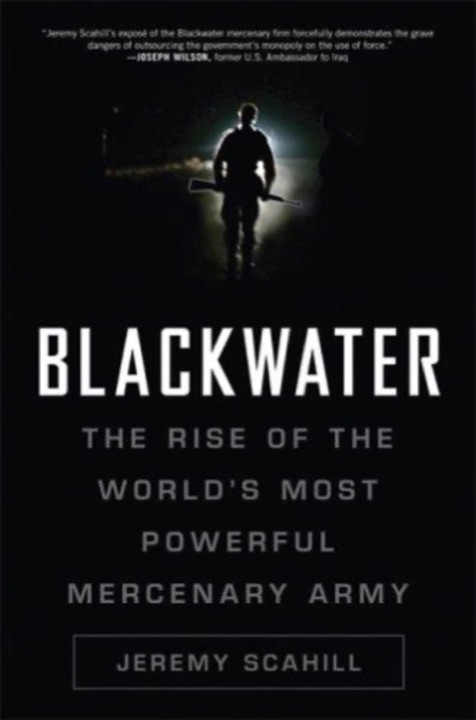
Blackwater
Applying the lessons from "Blackwater: The Rise of the World's Most Powerful Mercenary Army" by Jeremy Scahill to your life can involve several key areas of reflection and action:
-
Accountability and Oversight: - Given your background in medicine and your commitment to ethical behavior, you can emphasize the importance of accountability in your professional and personal life. Ensure that your actions and decisions are transparent and that you hold yourself and others to high ethical standards.
-
Ethical Decision-Making: - The book raises ethical concerns about privatization and the use of mercenaries. You can apply this lesson by continuing to prioritize kindness and empathy in your interactions, ensuring that your decisions align with your core values, especially in challenging situations.
-
Political and Social Awareness: - Scahill's work highlights the influence of political connections and financial interests. Stay informed about political and social issues, and use your voice and actions to advocate for equality and justice, aligning with your passion for social issues like civil rights and anti-human trafficking.
-
Resilience and Adaptability: - The rise of Blackwater demonstrates the ability to adapt to changing environments. You can apply this lesson by remaining resilient and adaptable in the face of life's challenges, leveraging your strengths in persistence and humor to navigate difficult situations.
-
Critical Evaluation of Systems: - The book critiques the privatization of military operations. In your life, critically evaluate the systems and structures you engage with, whether in healthcare, politics, or personal relationships, to ensure they align with your values and contribute positively to society.
-
Advocacy for Regulation: - Scahill advocates for stricter regulation of private military companies. You can apply this lesson by supporting and advocating for regulations and policies that promote fairness, transparency, and accountability in areas you are passionate about, such as healthcare and social justice.
By integrating these lessons into your life, you can continue to make a positive impact on those around you while staying true to your values and beliefs.
What the book covers
"Blackwater: The Rise of the World's Most Powerful Mercenary Army" by Jeremy Scahill is an investigative work that delves into the operations and influence of Blackwater USA, a private military company. The book provides a detailed account of how Blackwater rose to prominence, its involvement in various conflicts, and the broader implications of privatizing military operations.
Summary:
-
Origins and Rise: - Blackwater was founded in 1997 by Erik Prince, a former Navy SEAL. The company started as a training facility for military and law enforcement personnel. - The book details how Blackwater capitalized on the post-9/11 security environment, securing lucrative government contracts, particularly during the Iraq War.
-
Operations in Iraq: - Scahill provides an in-depth look at Blackwater's role in Iraq, where it was contracted to provide security services for U.S. diplomats and other officials. - The book highlights several controversial incidents involving Blackwater personnel, including the 2007 Nisour Square massacre in Baghdad, where Blackwater guards killed 17 Iraqi civilians.
-
Legal and Ethical Issues: - Scahill explores the legal ambiguities surrounding private military contractors, who often operate in a gray area without clear accountability. - The book raises ethical concerns about the use of private forces in military operations, questioning the implications for democracy and human rights.
-
Political Connections: - The narrative examines Blackwater's connections to influential political figures and its lobbying efforts to secure government contracts. - Scahill discusses Erik Prince's ties to the Republican Party and the role these connections played in Blackwater's success.
-
Impact on Warfare: - The book argues that the rise of private military companies like Blackwater represents a shift in how wars are fought, with increased reliance on privatized forces. - Scahill suggests that this trend undermines traditional military structures and accountability mechanisms.
Key Takeaways and Lessons:
-
Privatization of War: The book highlights the growing trend of privatizing military functions, raising questions about the implications for national security and sovereignty.
-
Accountability and Oversight: Scahill underscores the lack of oversight and accountability for private military contractors, which can lead to abuses and violations of international law.
-
Ethical Concerns: The use of mercenaries in conflict zones poses significant ethical dilemmas, particularly regarding the protection of human rights and adherence to the rules of war.
-
Influence of Money and Politics: The narrative illustrates how financial interests and political connections can drive military and foreign policy decisions, often at the expense of public interest.
-
Need for Regulation: Scahill advocates for stricter regulation and oversight of private military companies to ensure they operate within the bounds of law and ethics.
Overall, "Blackwater" serves as a cautionary tale about the dangers of outsourcing military operations to private entities and the need for greater transparency and accountability in the defense sector.