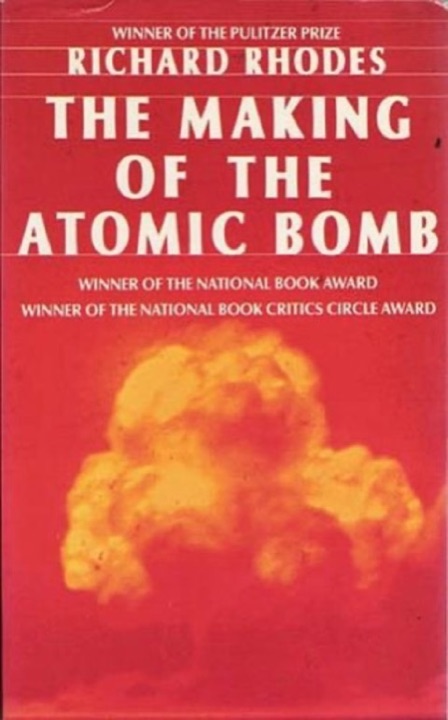
The Making of the Atomic Bomb
Applying the lessons from "The Making of the Atomic Bomb" by Richard Rhodes to your life can be a profound exercise in reflection and growth. Here are some ways you might integrate these lessons:
-
Interdisciplinary Collaboration: - Just as the development of the atomic bomb required collaboration across various fields, you can apply this lesson by embracing teamwork and seeking diverse perspectives in your personal and professional endeavors. Whether it's in your medical practice, advocacy work, or personal projects, leveraging the strengths and insights of others can lead to more innovative and effective outcomes.
-
Ethical Considerations: - The book raises important ethical questions about scientific responsibility and the use of technology. In your life, you can continue to prioritize kindness and empathy, ensuring that your actions align with your ethical beliefs. This might involve advocating for social issues you are passionate about or making decisions that reflect your values, even when faced with difficult choices.
-
Impact of War on Science: - The urgency of wartime needs accelerated scientific progress, but also posed ethical dilemmas. In your life, consider how external pressures might influence your decisions and strive to maintain a balance between achieving goals and upholding your values. This could involve being mindful of how societal or professional demands impact your actions and ensuring that you remain true to your principles.
-
Legacy of Nuclear Weapons: - The creation and use of atomic bombs have had lasting effects on global politics and ethics. Reflect on the legacy you wish to leave behind, focusing on how your actions today can contribute to a better future. This might involve continuing your advocacy work, supporting technological advancements for the betterment of humanity, and fostering a more equitable society.
-
Human Element: - Rhodes emphasizes the personal stories behind scientific achievements. In your life, continue to value the human element in all your interactions. Whether it's through your work as a physician, your relationships with family and friends, or your community involvement, prioritize understanding and empathy, recognizing that everyone has their own struggles and stories.
By integrating these lessons into your life, you can continue to grow as an individual who values collaboration, ethics, and the human experience, while striving to make a positive impact on the world around you.
What the book covers
"The Making of the Atomic Bomb" by Richard Rhodes is a comprehensive historical account of the development of the atomic bomb during World War II. The book meticulously details the scientific, political, and human elements involved in the creation of nuclear weapons, focusing on the period from the early 20th century through the end of World War II.
Summary:
-
Early Scientific Discoveries: - The book begins with the discovery of radioactivity and the subsequent developments in nuclear physics. Key figures such as Marie Curie, Ernest Rutherford, and Niels Bohr are introduced, whose work laid the groundwork for understanding atomic structure and nuclear fission.
-
Theoretical Foundations: - The narrative progresses to the theoretical breakthroughs in quantum mechanics and nuclear physics in the 1920s and 1930s. Scientists like Albert Einstein, who penned the famous letter to President Roosevelt, and Leo Szilard, who conceptualized the nuclear chain reaction, are highlighted.
-
Political and Military Context: - As tensions rise in Europe, the book describes how the political climate influenced scientific research. The rise of Nazi Germany and the fear that Hitler might develop nuclear weapons spurred the United States and its allies to accelerate their own efforts.
-
The Manhattan Project: - The core of the book is the Manhattan Project, the massive, secretive U.S. government project to build an atomic bomb. Rhodes details the collaboration between scientists, military personnel, and government officials, emphasizing figures like J. Robert Oppenheimer, General Leslie Groves, and Enrico Fermi.
-
Challenges and Breakthroughs: - The narrative covers the technical and logistical challenges faced by the Manhattan Project, including the construction of facilities at Los Alamos, Oak Ridge, and Hanford, and the scientific hurdles in achieving a controlled nuclear chain reaction.
-
The Trinity Test and Hiroshima/Nagasaki: - The successful Trinity Test in July 1945 marked the first detonation of a nuclear weapon. The book then describes the decision-making process leading to the bombings of Hiroshima and Nagasaki, exploring the ethical and strategic considerations.
-
Aftermath and Legacy: - Rhodes concludes with the immediate aftermath of the bombings, the end of World War II, and the beginning of the nuclear age. He reflects on the profound impact of nuclear weapons on global politics and the moral implications for humanity.
Key Takeaways and Lessons:
-
Interdisciplinary Collaboration: The development of the atomic bomb was a monumental achievement that required collaboration across multiple disciplines, including physics, engineering, and military strategy.
-
Ethical Considerations: The book raises important ethical questions about scientific responsibility and the use of technology for destructive purposes. It challenges readers to consider the moral implications of scientific advancements.
-
Impact of War on Science: The urgency of wartime needs can accelerate scientific and technological progress, but it also poses risks of prioritizing military objectives over ethical considerations.
-
Legacy of Nuclear Weapons: The creation and use of atomic bombs have had lasting effects on international relations, leading to the Cold War and ongoing debates about nuclear proliferation and disarmament.
-
Human Element: Rhodes emphasizes the human stories behind the scientific achievements, highlighting the personal struggles, motivations, and ethical dilemmas faced by the scientists involved.
Overall, "The Making of the Atomic Bomb" is not just a historical account but also a profound exploration of the intersection between science, politics, and ethics, offering valuable insights into the complexities of technological advancement in the modern world.