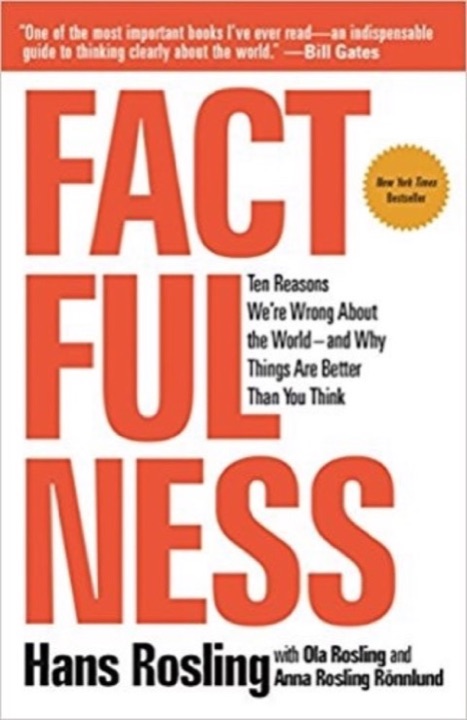
Factfulness: Ten Reasons We're Wrong About the World - and Why Things Are Better Than You Think
Applying the lessons from "Factfulness" to your life can enhance your perspective and decision-making processes. Here are some ways you might integrate these insights:
-
Challenge Your Instincts: Reflect on the ten instincts outlined in the book and consider how they might influence your perceptions. For example, when you find yourself thinking in binary terms (rich vs. poor), remember the Gap Instinct and seek out data that provides a more nuanced view.
-
Focus on Data: Given your analytical approach to decision-making, incorporate more data-driven insights into your understanding of global and personal issues. This aligns with your practice of gathering information before making decisions.
-
Embrace Optimism: You already have an optimistic worldview, but reinforcing this with evidence of global progress can further strengthen your outlook. Recognize improvements in areas like health and education as part of your broader hope for societal advancement.
-
Cultivate Critical Thinking: Continue to question assumptions and biases, both in your personal life and in your understanding of broader societal issues. This aligns with your approach to handling controversial topics by seeking multiple perspectives.
-
Appreciate Complexity: Acknowledge the complexity and nuance in global issues, much like you do in your personal philosophy. This can help you remain open-minded and adaptable in your views and actions.
-
Empowerment Through Knowledge: Use the insights from "Factfulness" to empower yourself and others. Share data-driven perspectives with those around you to foster informed discussions and decisions.
-
Balance Urgency with Thoughtfulness: While you make decisions quickly, consider the Urgency Instinct and ensure that you balance the need for action with thoughtful consideration, especially in high-pressure situations.
-
Promote Equality and Acceptance: Your passion for social issues like equality can be informed by the book's emphasis on understanding and accepting diversity. Use data to support your advocacy and activism efforts.
-
Stay Resilient and Persistent: Your resilience and persistence are strengths that align with the book's message of progress and hope. Continue to apply these qualities in your personal and professional life.
-
Live in the Moment: The book encourages a fact-based, present-focused mindset. This can support your aspiration to live in the moment, appreciating the progress and opportunities available now.
By integrating these lessons, you can enhance your understanding of the world, make more informed decisions, and continue to contribute positively to society.
What the book covers
"Factfulness: Ten Reasons We're Wrong About the World – and Why Things Are Better Than You Think" is a compelling book by Hans Rosling, with contributions from his son Ola Rosling and daughter-in-law Anna Rosling Rönnlund. The book challenges common misconceptions about global trends and encourages a more fact-based worldview. Here’s a thorough summary of the book, along with key takeaways and lessons:
Overview
The book is structured around ten instincts that distort our perspective of the world. These instincts lead to a pessimistic and often inaccurate view of global progress. Hans Rosling, a renowned statistician and public health expert, uses data and anecdotes to debunk myths and provide a more optimistic outlook on global development.
The Ten Instincts
-
The Gap Instinct: This is the tendency to divide things into two distinct and often conflicting groups, such as rich vs. poor. Rosling argues that most people live in the middle of the income spectrum, and the gap between the richest and poorest is not as wide as commonly perceived.
-
The Negativity Instinct: People tend to notice the bad more than the good. Rosling highlights that, despite negative news, many aspects of the world have improved, such as life expectancy, poverty reduction, and education.
-
The Straight Line Instinct: This is the assumption that trends will continue in a straight line. Rosling explains that many trends, like population growth, are not linear and are influenced by various factors.
-
The Fear Instinct: Fear can distort our perception of risks. Rosling points out that dramatic events, like plane crashes or terrorist attacks, are often less dangerous than mundane issues like traffic accidents or diseases.
-
The Size Instinct: This instinct leads to misjudging the size of things. Rosling advises putting numbers in perspective, comparing them to other relevant figures to understand their true scale.
-
The Generalization Instinct: People often generalize based on limited information. Rosling encourages looking for differences within groups and recognizing that categories are often more diverse than they appear.
-
The Destiny Instinct: This is the belief that innate characteristics determine the fate of people or countries. Rosling argues that cultures and societies can and do change over time.
-
The Single Perspective Instinct: Relying on a single perspective can lead to a skewed understanding. Rosling advocates for using multiple perspectives to gain a more comprehensive view.
-
The Blame Instinct: This instinct involves finding a clear, simple reason for why something bad has happened. Rosling suggests looking at systems and understanding the complexity of causes rather than blaming individuals.
-
The Urgency Instinct: The pressure to take immediate action can lead to poor decision-making. Rosling advises taking a step back, gathering information, and considering options before acting.
Key Takeaways and Lessons
-
Data-Driven Perspective: The book emphasizes the importance of using data to form a realistic view of the world. By relying on facts rather than assumptions, we can better understand global progress.
-
Optimism Based on Evidence: Despite prevalent negativity, many global indicators show improvement. Recognizing this can lead to a more balanced and hopeful outlook.
-
Critical Thinking: Rosling encourages readers to question their instincts and biases, promoting critical thinking and skepticism towards oversimplified narratives.
-
Complexity and Nuance: Understanding the world requires acknowledging its complexity. Simplistic explanations often overlook important nuances.
-
Empowerment Through Knowledge: By equipping readers with tools to analyze information critically, the book empowers them to make informed decisions and contribute positively to society.
"Factfulness" ultimately serves as a guide to understanding the world more accurately and encourages a mindset that is both realistic and hopeful. It challenges readers to move beyond misconceptions and embrace a fact-based worldview that recognizes the progress humanity has made.