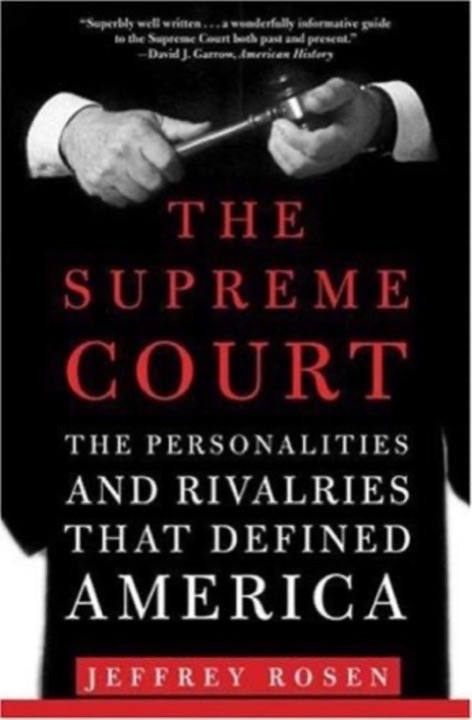
The Supreme Court
Applying the lessons from Jeffrey Rosen's "The Supreme Court" to your life involves recognizing the impact of personal dynamics and relationships on decision-making and leadership. Here are some ways you might integrate these insights:
-
Embrace Diverse Perspectives: - Just as the Supreme Court benefits from a diversity of thought, you can enhance your decision-making by seeking out and valuing different perspectives. This can be applied in your personal and professional life, ensuring that you consider various viewpoints before making important decisions.
-
Acknowledge Personal Influence: - Recognize how your personal beliefs, experiences, and relationships influence your decisions and interactions. Being aware of these influences can help you make more balanced and informed choices, similar to how justices' backgrounds shape their judicial philosophies.
-
Foster Constructive Relationships: - The book highlights the importance of relationships and rivalries in shaping outcomes. In your life, focus on building strong, positive relationships with those around you, whether in your family, workplace, or community. This can lead to more collaborative and effective problem-solving.
-
Balance Conviction with Flexibility: - Like the justices who navigate between judicial activism and restraint, strive to balance your strong convictions with the flexibility to adapt to new information and changing circumstances. This approach can help you remain open-minded and resilient in the face of challenges.
-
Learn from Conflict: - The rivalries in the Supreme Court demonstrate that conflict can lead to growth and progress. When you encounter disagreements or conflicts, view them as opportunities to learn and grow, both personally and in your relationships.
-
Reflect on Personal Growth: - Consider how your experiences and interactions have shaped your values and beliefs over time. Reflecting on your personal growth can help you understand your motivations and guide your future actions, much like the evolving interpretations of the Constitution.
-
Champion Core Values: - Just as certain justices have championed civil rights and liberties, continue to uphold your core values of kindness and empathy in all aspects of your life. Let these values guide your actions and decisions, ensuring that you remain true to yourself.
By applying these lessons, you can enhance your leadership, decision-making, and personal growth, drawing inspiration from the complex dynamics that have shaped the Supreme Court and, by extension, American society.
What the book covers
"The Supreme Court: The Personalities and Rivalries that Defined America" by Jeffrey Rosen is an insightful exploration of the history of the United States Supreme Court through the lens of the personal dynamics and rivalries among its justices. Rosen, a legal scholar and journalist, delves into the lives and interactions of some of the most influential figures in the Court's history, illustrating how their personalities and relationships have shaped American law and society.
Summary:
-
Historical Context and Structure: - Rosen organizes the book around pivotal moments in the Supreme Court's history, focusing on key justices whose interactions and decisions have had lasting impacts. - The book is structured chronologically, covering different eras of the Court and highlighting significant cases and decisions.
-
Key Figures and Rivalries: - John Marshall vs. Thomas Jefferson: Rosen begins with the foundational rivalry between Chief Justice John Marshall and President Thomas Jefferson, emphasizing Marshall's role in establishing the principle of judicial review in Marbury v. Madison. - Oliver Wendell Holmes Jr. vs. John Marshall Harlan: The book explores the philosophical differences between Holmes, known for his pragmatic approach, and Harlan, who often dissented in defense of civil rights. - Felix Frankfurter vs. Hugo Black: Rosen examines the ideological clash between Frankfurter, an advocate of judicial restraint, and Black, a proponent of textualism and civil liberties. - William Rehnquist vs. Thurgood Marshall: The narrative includes the contrasting views of Rehnquist, a conservative voice, and Marshall, the first African American justice and a champion of civil rights.
-
Influence of Personalities: - Rosen argues that the personal beliefs, backgrounds, and temperaments of the justices have significantly influenced their judicial philosophies and, consequently, the Court's decisions. - The book highlights how personal relationships and rivalries can affect the dynamics within the Court and the interpretation of the Constitution.
-
Landmark Cases: - Throughout the book, Rosen discusses landmark cases that have defined the Court's role in American society, such as Brown v. Board of Education, Roe v. Wade, and Bush v. Gore. - He illustrates how the outcomes of these cases were often shaped by the justices' personal convictions and interactions.
Key Takeaways and Lessons:
- Judicial Impact: The book underscores the profound impact that Supreme Court justices have on American law and society, often extending beyond their tenure on the bench.
- Complex Interactions: Rosen highlights the complexity of the Court's internal dynamics, showing that legal decisions are not made in a vacuum but are influenced by the justices' personalities and relationships.
- Importance of Diversity: The diversity of thought and background among justices is portrayed as both a strength and a source of tension within the Court, reflecting broader societal debates.
- Evolving Interpretations: The book illustrates how interpretations of the Constitution can evolve over time, influenced by changing societal values and the personal beliefs of the justices.
- Role of the Judiciary: Rosen emphasizes the delicate balance the Supreme Court must maintain between adhering to the letter of the law and adapting to contemporary issues, highlighting the ongoing debate over judicial activism versus restraint.
Overall, Jeffrey Rosen's "The Supreme Court" provides a nuanced understanding of how the personal dimensions of the justices have shaped the highest court in the United States, offering readers a deeper appreciation of the complexities involved in interpreting the Constitution and the law.