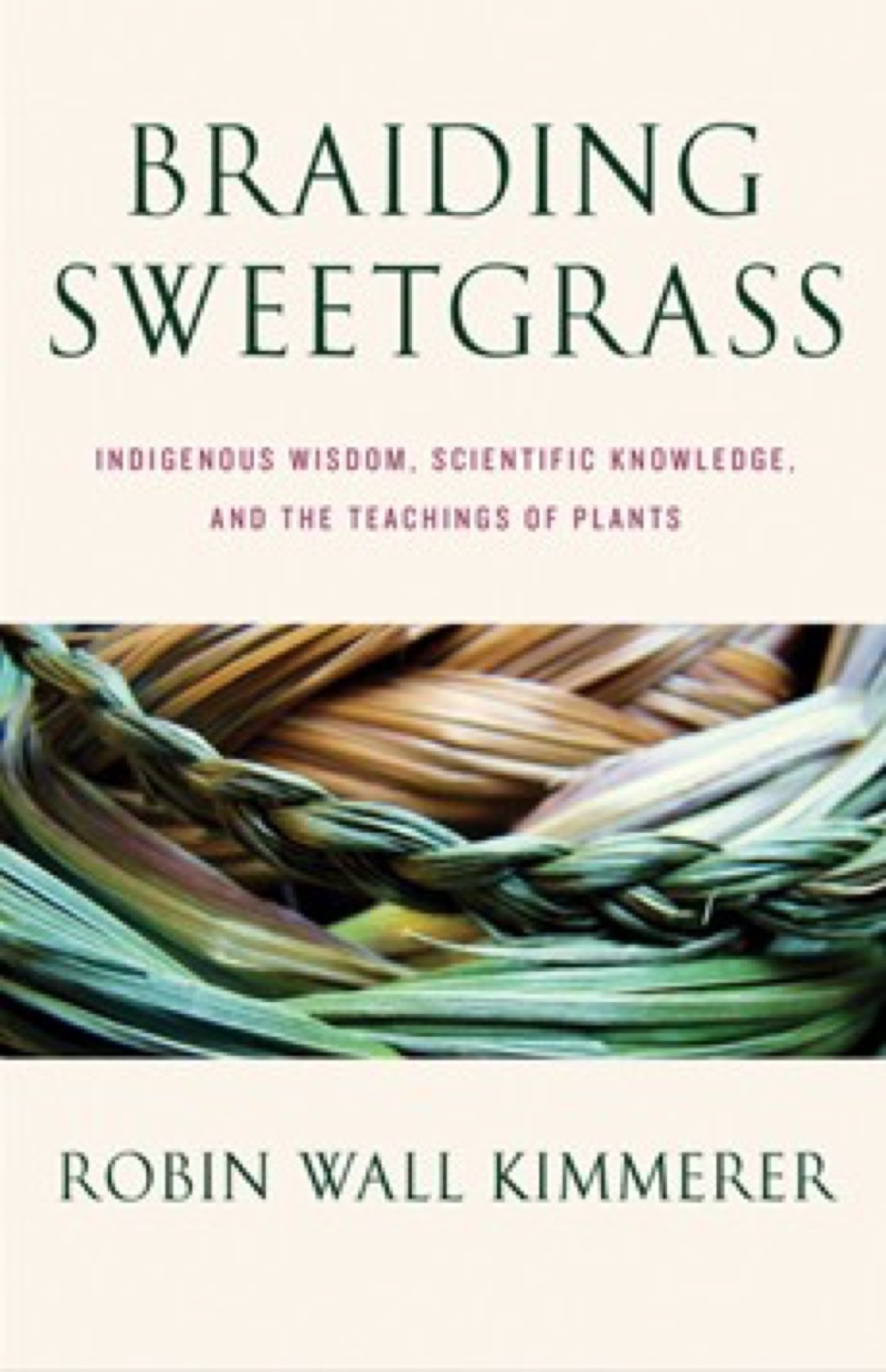
Braiding Sweetgrass: Indigenous Wisdom, Scientific Knowledge and the Teachings of Plants
Applying the lessons from "Braiding Sweetgrass" by Robin Wall Kimmerer to your life can be a transformative exercise in shifting your perspective from one of extraction to one of reciprocity. Here are some ways you might integrate these lessons:
-
Adopt a Philosophy of Reciprocity in Leadership: - As a leader and venture capitalist, you can move beyond transactional interactions by viewing your professional relationships as ecosystems of mutual benefit. Instead of focusing solely on what a startup or a partnership can provide for you, consider what you are actively giving back to that ecosystem to ensure its long-term vitality.
-
Practice the "Honorable Harvest" in Business: - Whether you are scaling a healthcare company or evaluating a new investment, apply the principles of the Honorable Harvest: take only what you need, use it well, and minimize waste. This translates to sustainable growth strategies that prioritize ethical considerations and community impact alongside financial returns.
-
Use the Grammar of Animacy in Clinical and Legal Practice: - In medicine and law, it is easy to view cases or patients through a purely technical or objective lens. By consciously choosing to see the "animacy" or the unique spirit and agency in every individual you serve, you foster deeper empathy and more effective communication, which are essential for true healing and justice.
-
Leverage Diverse Knowledge Systems for Innovation: - In your role as a serial entrepreneur and lifelong learner, seek out "The Three Sisters" of knowledge. Don't rely solely on data or MBA frameworks; combine them with the "indigenous wisdom" of lived experience and the intuitive insights gained from your time as a pilot. This synthesis allows for a more holistic approach to problem-solving.
-
Guard Against the "Windigo" of Hyper-Growth: - Within the high-stakes world of VC and entrepreneurship, the pressure for endless expansion can be intoxicating. Use Kimmerer’s warning about the Windigo to recognize when the drive for more becomes a pathology. Set boundaries for "enough" to ensure that your pursuits lead to genuine fulfillment rather than perpetual hunger.
-
Commit to Ecological and Social Restoration: - View your philanthropic and professional efforts as acts of restoration. Just as Kimmerer seeks to heal the land, you can use your resources to repair social systems or healthcare disparities. Ask yourself how your work is making the "soil" of your community more fertile for the next generation.
By integrating these lessons, you can harmonize your drive for success with a deeper sense of purpose and stewardship. Embracing the interdependence of all systems—whether biological, economic, or social—allows you to lead with a
What the book covers
"Braiding Sweetgrass: Indigenous Wisdom, Scientific Knowledge and the Teachings of Plants" by Robin Wall Kimmerer is a profound exploration of the relationship between humans and the natural world, narrated through the dual lenses of a botanist and a member of the Citizen Potawatomi Nation. Kimmerer bridges the gap between objective western science and subjective indigenous knowledge, arguing that plants and animals are our oldest teachers. The book serves as a call to action for a more reciprocal, grateful, and sustainable way of living on the Earth.
Summary:
-
The Myth of Skywoman and the Spirit of the Gift: - Kimmerer opens with the Potawatomi creation story of Skywoman, who fell to Earth and, with the help of animals, created a home of abundance and cooperation. This narrative contrasts sharply with Western scarcity-based models, establishing the Earth as a garden of gifts rather than a warehouse of commodities. - She emphasizes that a gift creates a bond between the giver and the receiver, necessitating a cycle of reciprocity. Unlike a purchase, which ends at the transaction, a gift requires the recipient to care for the source and pass the bounty along, a concept central to indigenous ecology.
-
The Three Sisters and Symbiotic Growth: - Using the agricultural tradition of planting corn, beans, and squash together, Kimmerer illustrates the power of biological and social cooperation. The corn provides a ladder for the beans, the beans fix nitrogen in the soil to feed the others, and the squash covers the ground to manage moisture and weeds. - This section highlights how different strengths can be leveraged for a collective good. It serves as a metaphor for how scientific and indigenous ways of knowing can support one another to create a more resilient understanding of the world than either could achieve alone.
-
The Honorable Harvest and Ethical Consumption: - Kimmerer outlines the "Honorable Harvest," a set of unwritten rules for taking from the Earth. These include asking permission, never taking the first or more than half, and always giving a gift in return (like tobacco or a prayer) to acknowledge the sacrifice made by the plant or animal. - This framework challenges the extractive nature of modern capitalism. It suggests that even in a world of consumption, we can act with restraint and respect, ensuring that our presence on the land is life-sustaining rather than life-depleting.
-
Language, Animacy, and the Grammar of Concretions: - The author explores how the English language often objectifies the natural world by using "it" for living things like trees or birds, whereas the Potawatomi language treats them as beings with agency and spirit. This "grammar of animacy" fundamentally changes how one interacts with the environment. - By recognizing the personhood of other species, Kimmerer argues that we move from a mindset of ownership to one of relationship. This shift is essential for ecological restoration, as humans are more likely to protect what they perceive as family rather than property.
-
The Windigo and the Pathology of Greed: - Drawing on the Algonquian legend of the Windigo—a monster made of ice that becomes hungrier the more it eats—Kimmerer critiques the modern obsession with endless growth and consumption. She identifies the Windigo spirit within a culture that prioritizes individual wealth over communal health. - She posits that the cure for this destructive hunger is the "medicine" of gratitude and the sweetgrass of the land. By focusing on what we have rather than what we lack, society can begin to thaw the frozen heart of the Windigo and return to a state of balance.
-
Restoration and the Return of the Salmon: - The final sections focus on ecological restoration, specifically the efforts to bring back species like the Atlantic salmon and the cleaning of Onondaga Lake. Kimmerer argues that restoration is not just a technical fix, but a moral act of returning the gifts we have taken. - She demonstrates that humans can be a positive force for biodiversity. Through careful stewardship and the application of both scientific data and traditional wisdom, we can heal the landscapes we have damaged and reintegrate ourselves into the web of life.
This work is a vital contribution to environmental literature, offering a poetic yet rigorous framework for addressing the climate crisis and ecological degradation. By braiding together the analytical and the spiritual, Kimmerer provides a path forward that honors the intelligence of the natural world and our responsibility as its keepers.