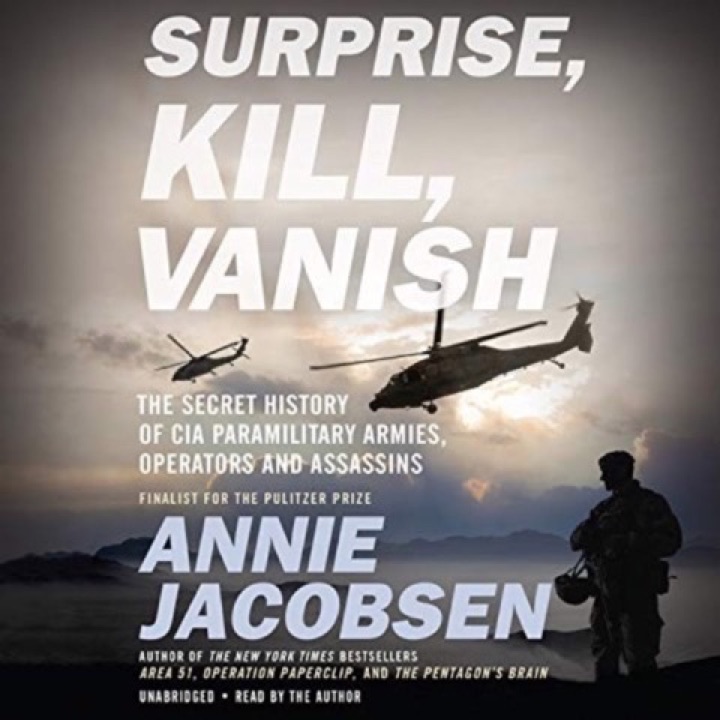
Surprise, Kill Vanish: The Secret History of the CIA, Paramilitary Armies, Operators and Assassins
Applying the lessons from "Surprise, Kill, Vanish" by Annie Jacobsen to your life involves drawing parallels between the themes of the book and your personal experiences, values, and aspirations. Here are some ways you might integrate these lessons:
-
Complexity and Moral Ambiguity: - Recognize that life, like covert operations, often involves complex decisions with moral ambiguities. Embrace the complexity of situations and strive to make decisions that align with your core values of kindness and empathy, even when the right path isn't clear.
-
Impact and Influence: - Understand the impact of your actions on others, much like the CIA's operations have shaped global events. Use your influence, whether in personal relationships or professional settings, to promote positive change and support the causes you are passionate about, such as equality and anti-human trafficking.
-
Accountability and Oversight: - Emphasize the importance of accountability in your life. Reflect on your actions and decisions, ensuring they align with your ethical beliefs. Seek feedback from others and be open to criticism, using it as an opportunity for growth.
-
Adaptability and Innovation: - Like the CIA's need to adapt to evolving threats, be flexible and open to change in your personal and professional life. Embrace new technologies and ideas that can enhance your life and contribute to societal betterment.
-
Human Element and Personal Stories: - Value the human element in your interactions, recognizing the personal stories and struggles of those around you. Approach others with empathy and understanding, remembering your belief that everyone is fighting a battle you know nothing about.
-
Resilience and Persistence: - Draw inspiration from the resilience and persistence required in covert operations. Apply these qualities to your own life, especially when facing challenges or setbacks. Your superpower of persistence can help you overcome obstacles and achieve your goals.
-
Ethical and Legal Considerations: - Maintain a strong ethical framework in your decisions, balancing your actions with legal and moral considerations. Your commitment to kindness and empathy can guide you in navigating difficult situations.
-
Learning from Failure: - Acknowledge that failures, like those in covert operations, can provide valuable lessons. Use your experiences, especially the painful ones, as opportunities for personal growth and development.
By integrating these lessons into your life, you can continue to live with purpose, resilience, and a commitment to making a positive impact on the world around you.
What the book covers
"Surprise, Kill, Vanish: The Secret History of the CIA, Paramilitary Armies, Operators, and Assassins" by Annie Jacobsen is an in-depth exploration of the covert operations and paramilitary activities conducted by the Central Intelligence Agency (CIA) throughout its history. The book delves into the clandestine world of espionage, highlighting the agency's role in shaping global events through secret missions, assassinations, and the use of paramilitary forces.
Summary:
-
Origins and Evolution of the CIA: - The book traces the origins of the CIA from its precursor, the Office of Strategic Services (OSS) during World War II, to its establishment in 1947. It highlights the agency's initial focus on intelligence gathering and analysis, which gradually expanded to include covert operations and paramilitary activities.
-
Cold War Operations: - Jacobsen details the CIA's involvement in various Cold War conflicts, including operations in Korea, Vietnam, and Latin America. The agency's use of paramilitary forces and covert action to influence political outcomes and counter communist influence is a central theme.
-
Assassination Programs: - The book examines controversial assassination programs, such as the Phoenix Program in Vietnam, which targeted Viet Cong leaders and operatives. Jacobsen discusses the ethical and moral implications of these operations and their impact on U.S. foreign policy.
-
Post-Cold War and War on Terror: - With the end of the Cold War, the CIA shifted its focus to new threats, including terrorism. The book covers the agency's role in the War on Terror, highlighting operations in Afghanistan and Iraq, and the use of drone strikes and targeted killings.
-
Key Figures and Operations: - Jacobsen profiles key figures within the CIA and their contributions to its paramilitary operations. She provides detailed accounts of specific missions, shedding light on the planning, execution, and outcomes of these covert actions.
-
Ethical and Legal Challenges: - The book addresses the ethical and legal challenges faced by the CIA in conducting covert operations. Jacobsen explores the tension between national security interests and adherence to international law and human rights standards.
Key Takeaways and Lessons:
- Complexity of Covert Operations:
-
Covert operations are complex and often involve moral ambiguities. The book highlights the challenges in balancing national security with ethical considerations.
-
Impact on Global Politics:
-
The CIA's paramilitary activities have had significant impacts on global politics, often shaping the political landscape of entire regions. Understanding these operations is crucial to comprehending contemporary international relations.
-
Accountability and Oversight:
-
The need for accountability and oversight of intelligence agencies is a recurring theme. Jacobsen emphasizes the importance of transparency and legal frameworks to prevent abuses of power.
-
Evolution of Threats:
-
The nature of threats has evolved over time, requiring the CIA to adapt its strategies and operations. The book underscores the importance of flexibility and innovation in intelligence work.
-
Human Element:
- The personal stories of operatives and agents highlight the human element of intelligence work. Their experiences provide insight into the sacrifices and challenges faced by those involved in covert operations.
In summary, "Surprise, Kill, Vanish" offers a comprehensive look at the secretive world of the CIA's paramilitary operations, providing readers with a deeper understanding of the agency's role in shaping history and the ongoing ethical and legal debates surrounding its activities.