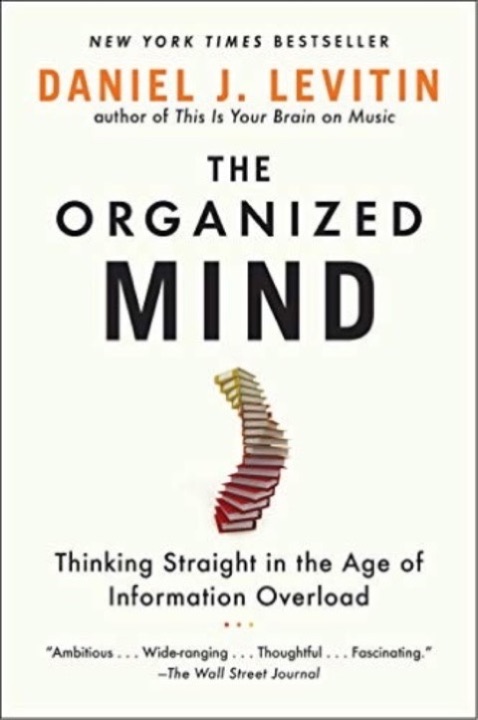
The Organized Mind: Thinking Straight in the Age of Information Overload
Applying the lessons from "The Organized Mind" by Daniel J. Levitin to your life can help you manage information overload and enhance your cognitive efficiency. Here are some tailored suggestions based on your personal narrative:
-
Focus on Single Tasks: - Given your busy schedule and varied interests, prioritize tasks and focus on one at a time. For instance, when flying or working out, immerse yourself fully in the experience without distractions.
-
Externalize Information: - Use tools like digital calendars, lists, and apps to manage your commitments and hobbies. This will free up mental space for more complex decision-making and allow you to enjoy activities like reading, cooking, and spending time with your grandchild.
-
Organize by Categories: - Categorize your tasks and responsibilities, such as work, family, hobbies, and personal growth. This can help streamline decision-making and reduce cognitive load, allowing you to focus on what truly matters.
-
Create Efficient Environments: - Design your workspace and home to minimize distractions. For example, create a dedicated reading nook or a clutter-free cooking area to enhance your enjoyment and efficiency in these activities.
-
Leverage Technology Wisely: - Use technology to assist in organizing your life, but set boundaries to prevent it from becoming a source of distraction. For example, schedule specific times to check emails or social media.
-
Prioritize Rest and Downtime: - Ensure you get adequate rest and engage in activities that promote cognitive health, such as exercise and leisure. This aligns with your routine of working out and spending quality time with family.
-
Embrace Your Strengths and Address Weaknesses: - Use your resilience, humor, and empathy to navigate challenges. At the same time, work on impulsivity and balance by setting aside time for reflection and self-evaluation, as you already do.
-
Live in the Moment: - Practice mindfulness to enhance your ability to live in the moment, a dream you aspire to achieve. This can be integrated into your daily routine through meditation or mindful breathing exercises.
-
Reflect on Your Values: - Continue to let kindness and empathy guide your actions, as these values are central to your identity. Apply them in your interactions and decision-making processes.
-
Plan for the Future:
- Given your aspirations for societal change and personal growth, set specific goals and action plans to work towards these objectives, such as engaging in advocacy work or exploring new hobbies like skydiving.
By incorporating these strategies, you can better manage the information and responsibilities in your life, allowing you to focus on what truly matters and continue to grow personally and professionally.
What the book covers
"The Organized Mind: Thinking Straight in the Age of Information Overload" by Daniel J. Levitin is a comprehensive exploration of how our brains process information and how we can better organize our lives in an era of constant information bombardment. Levitin, a neuroscientist and cognitive psychologist, delves into the science of attention, memory, and decision-making, offering practical advice on managing the overwhelming amount of information we encounter daily.
Summary:
-
The Nature of Information Overload: Levitin begins by discussing the unprecedented amount of information available to us in the digital age. He explains how our brains are not naturally equipped to handle the vast amounts of data we encounter, leading to stress and cognitive overload.
-
The Brain's Organizational Systems: The book explores how the brain organizes information, focusing on attention, memory, and categorization. Levitin explains that our brains use a combination of conscious and unconscious processes to filter and prioritize information.
-
Attention and Multitasking: Levitin argues that multitasking is a myth and that it actually reduces productivity and increases errors. He emphasizes the importance of focusing on one task at a time and creating environments that minimize distractions.
-
Memory and Externalizing Information: The book discusses the limitations of human memory and the benefits of externalizing information. Levitin suggests using tools like lists, calendars, and digital devices to offload information from our brains, freeing up cognitive resources for more complex tasks.
-
Decision-Making and Categorization: Levitin examines how we make decisions and the role of categorization in simplifying complex information. He provides strategies for organizing information into meaningful categories to improve decision-making and reduce cognitive load.
-
Organizing Our Homes and Workspaces: Practical advice is given on organizing physical spaces to enhance efficiency and reduce stress. Levitin suggests decluttering, creating designated areas for specific activities, and using systems that align with our natural tendencies.
-
The Role of Technology: While technology can contribute to information overload, Levitin also highlights its potential to help us organize and manage information effectively. He discusses the use of apps and digital tools to streamline tasks and improve productivity.
-
The Importance of Rest and Downtime: Levitin emphasizes the need for rest and downtime to maintain cognitive health. He explains how activities like sleep, exercise, and leisure can enhance creativity and problem-solving abilities.
Key Takeaways and Lessons:
-
Focus on Single Tasks: Avoid multitasking to improve efficiency and accuracy. Concentrate on one task at a time to enhance productivity.
-
Externalize Information: Use tools and systems to offload information from your brain, allowing you to focus on more complex tasks.
-
Organize by Categories: Simplify decision-making by organizing information into meaningful categories.
-
Create Efficient Environments: Design your physical and digital spaces to minimize distractions and support your natural organizational tendencies.
-
Leverage Technology Wisely: Use technology to assist in organizing and managing information, but be mindful of its potential to distract.
-
Prioritize Rest and Downtime: Ensure you get adequate rest and engage in activities that promote cognitive health and creativity.
Overall, "The Organized Mind" provides a blend of scientific insights and practical strategies to help readers navigate the challenges of information overload and improve their cognitive efficiency in both personal and professional contexts.